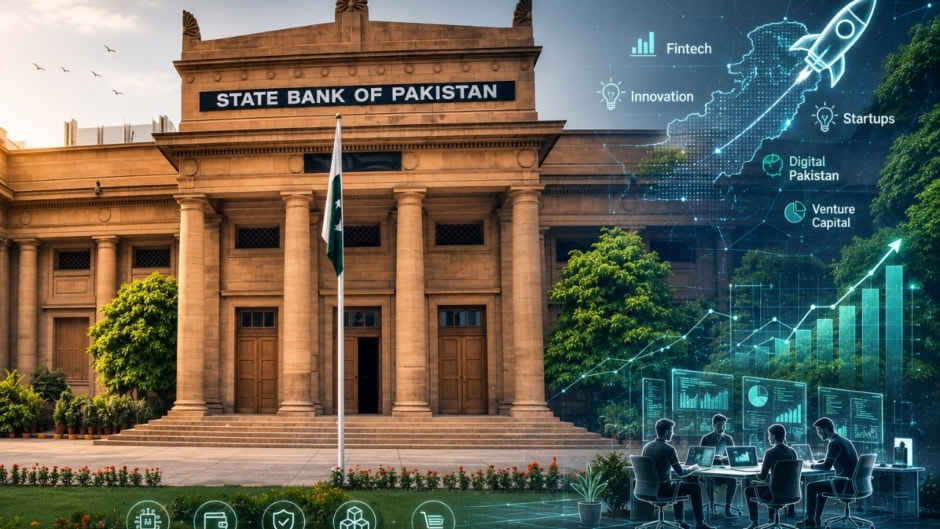
Pakistan’s central bank has finally put startups on the map, and the recognition matters even if the money does not follow immediately. The State Bank of Pakistan (SBP) introduced a separate startup category under its revised Prudential Regulations for SME Financing, a shift that could reshape how early-stage businesses reach formal finance. Experts caution, though, that recognition alone will not transform lending without deeper banking reform.
For the first time, the SBP classifies startups as businesses operating for up to five years and still in early development. The revised rules also widened the SME brackets, so micro enterprises now sell up to Rs30 million annually, small enterprises up to Rs400 million, and medium enterprises up to Rs2 billion. Higher thresholds should pull more businesses into the framework overall.
Yet the startup category is the real headline. It hands banks a regulatory basis to design financing products for businesses that have long struggled to borrow. Ahmed Ali Siddiqui of the IBA Centre for Excellence in Islamic Finance said the change aligns regulation with Pakistan’s economic realities, opening room for Islamic banks to offer asset-backed and partnership-based financing tailored to young firms.
The caution comes quickly, however. Kapeel Kumar of The Founder’s Space called it a milestone while warning it guarantees nothing, since banks remain tethered to collateral-based lending. He praised the five-year window for covering the brutal “valley of death” phase, when most young businesses fail. To change that, he urged a government-backed credit guarantee scheme, so banks could lend against future cash flow rather than physical assets.
The timing of this reform is telling, though, since it arrives after a punishing stretch for Pakistani startups. The ecosystem peaked in 2021 and 2022, when startups raised over $350 million in a single record year, powered by names like Airlift, Bazaar, Tag, and Retailo. Airlift alone raised a $85 million round, then the largest in the country’s history, and briefly made Pakistan look like South Asia’s next big tech story.
Pakistan’s Revised SME and Startup Definitions
| Category | Annual sales threshold |
|---|---|
| Micro enterprise | Up to Rs30 million |
| Small enterprise | Above Rs30 million to Rs400 million |
| Medium enterprise | Above Rs400 million to Rs2 billion |
| Startup | Any business operating up to five years |
The crash that has followed and plagues the startup scene was severe. Airlift shut down in 2022 as global funding dried up, and annual startup investment collapsed from those highs to a fraction of the peak by 2023 and 2024. Investors fled, valuations sank, and the optimism curdled. So this new definition arrives at a moment when the sector badly needs institutional support rather than hype.
On the other end, we have startups such as Careem, acquired by Uber, and Motive, formerly KeepTruckin, which proved Pakistani founders can build global unicorns. However, complex capital rules, shifting taxes, and weak infrastructure keep pushing founders toward Dubai and Singapore. Pakistan’s real challenge was never talent or ideas, since it is keeping the companies, and the wealth they create, inside the country.