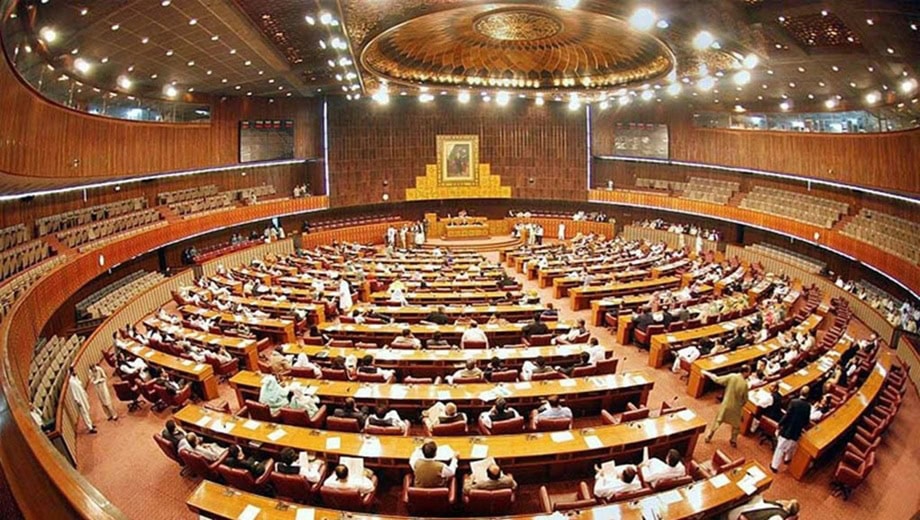
The Senate Standing Committee on Industries and Production on Friday reviewed the National Electric Vehicle (NEV) Policy and the affairs of Pakistan Steel Mills (PSM), expressing concerns over the adequacy of charging infrastructure, policy consistency, and the continued deterioration of the state-owned steelmaker.
The meeting, held at Parliament House, was chaired by Senator Khalida Ateeb in the absence of Committee Chairman Senator Aon Abbas Buppi. Senators Masroor Ahsan, Danesh Kumar, Husna Bano, Saleem Mandviwalla, and Anusha Rahman Ahmad Khan attended the session.
The Ministry of Industries and Production informed the committee that the National Electric Vehicle (NEV) Policy will remain in force for five years, in line with the ministry’s longstanding practice of introducing five-year policies to ensure continuity and stability.
Officials said the government plans to establish 3,000 electric vehicle charging stations by 2030, adding that more than 72 licenses have already been issued for charging stations under a public-private partnership model with government support to improve project viability.
The committee was informed that Pakistan is expected to have 2.2 million electric vehicles on its roads by 2030. So far, over 12,800 electric vehicles and nearly 160,000 electric motorcycles have been manufactured locally.
Officials also highlighted the government’s Rs. 9 billion subsidy for electric two- and three-wheelers, under which eligible buyers receive Rs. 80,000 per electric motorcycle. Around 5,700 beneficiaries have availed financing through banks, while subsidized motorcycles cannot be transferred for two years.
Senator Anusha Rahman Ahmad Khan raised concerns over policy inconsistency, stating that frequent changes in taxation and regulatory frameworks discourage investment. She also recommended that EV subsidies be paid directly to Original Equipment Manufacturers (OEMs) to improve transparency.
Senator Saleem Mandviwalla appreciated the government’s focus on local EV manufacturing but questioned whether the planned charging network would be sufficient, noting that Karachi alone may require 4,000 to 5,000 charging stations. He also emphasized the need to expand charging facilities to remote areas.
The ministry informed lawmakers that electric motorcycles equipped with 3–7 kilowatt batteries can be charged using a standard 220-volt power supply, while improvements in battery technology have increased vehicle ranges to 400–500 kilometres. Companies including Star Charge and HUBCO have expressed interest in developing charging infrastructure in Pakistan.
The committee recommended that the Ministries of Industries and Production, Petroleum, and Power jointly brief members on the implementation of the EV policy during the next meeting.
The committee also reviewed the affairs of Pakistan Steel Mills, where officials confirmed that employees’ salaries had recently been released, including payments to guarantors who had stood surety for colleagues.
Senator Mandviwalla criticized the prolonged closure of Pakistan Steel Mills, noting that the facility has remained non-operational for 11 years while privatization efforts have made little progress. He called for a comprehensive investigation into theft incidents at the mills.
Officials informed the committee that approximately Rs. 15 billion in employee-related liabilities remain pending with the Finance Division.
The committee was further told that theft incidents have increased since the closure of Pakistan Steel Mills, with personnel from the DSF, local police, and some PSM security staff allegedly implicated. Authorities said 83 suspects have been arrested during the past three months in connection with theft cases.
Lawmakers expressed concern that no convictions have been secured despite repeated theft incidents. The chairperson noted reports that material worth nearly Rs. 10 billion had been stolen from the mills, while officials said an FIA inquiry into the matter has remained pending since 2020.
The committee adopted the report of a sub-committee on Pakistan Steel Mills and constituted another sub-committee to investigate the growing incidents of theft and address the operational and administrative issues affecting the organization’s employees.