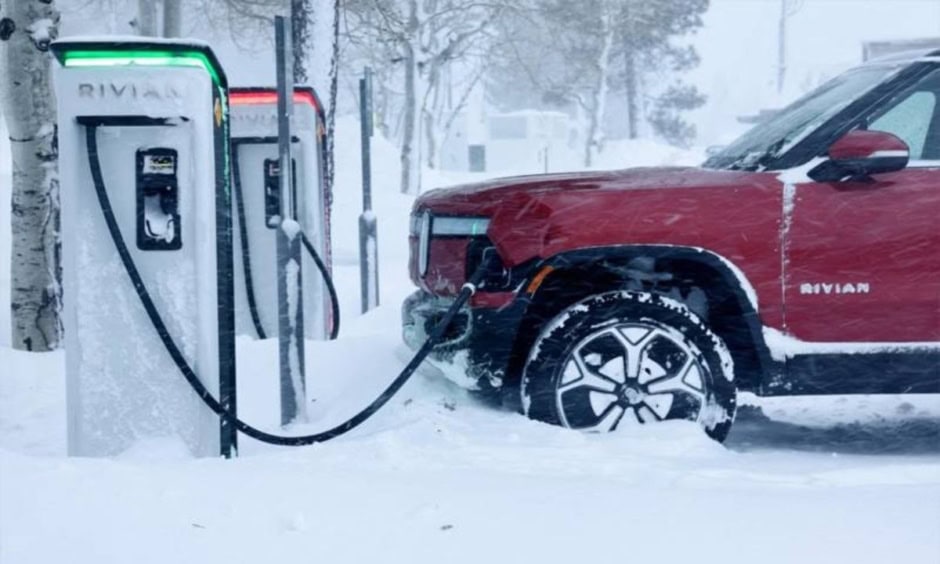
Automobile and battery manufacturers worldwide are competing to develop a new generation of electric vehicle batteries that charge faster, deliver longer driving range, perform better in cold weather, cost less and offer improved safety.
CATL, the largest EV battery maker in the world, unveiled its third-generation Shenxing battery at a technology event in Beijing. The company claims the battery can charge from 10 percent to 98 percent in under six and a half minutes and says it will begin appearing in vehicles from 2026.
Chinese company BYD has introduced its second-generation Blade Battery, which it says can charge from 10 percent to 97 percent in just nine minutes. The battery uses advanced Cell-to-Pack technology designed to improve energy storage, safety, charging speed and cost efficiency.
CATL is also leading efforts to extend driving range. Its Qilin battery, built on advanced lithium-ion technology, offers an energy density of up to 255 watt-hours per kilogram, allowing vehicles to travel farther on a battery of the same size or achieve the same range with a smaller battery.
Both CATL and BYD are simultaneously developing sodium-ion batteries, with large-scale commercial production expected to begin in 2026. Experts say sodium-ion batteries could prove suitable for low-cost electric vehicles, hybrid vehicles and energy storage projects because of their relatively low cost, better raw material availability and stronger cold-weather performance.
Meanwhile, companies including Toyota, Nissan, Honda, Samsung SDI and QuantumScape are investing in solid-state battery technology, widely regarded as the future of electric vehicles. The technology is expected to deliver longer range, faster charging, improved safety and lighter batteries, though mass production at low cost remains a major challenge.
Toyota aims to launch new electric vehicles equipped with solid-state batteries between 2027 and 2028 and claims some future models will be able to travel nearly a thousand kilometers on a single charge. Nissan is preparing to introduce its own all-solid-state battery technology in 2028.
Experts believe no single battery technology will dominate the market. Instead, different battery types will serve different needs. Lithium iron phosphate (LFP) and sodium-ion batteries are expected to play a key role in low-cost vehicles, while nickel-based lithium-ion and solid-state batteries will be preferred for high-range, high-performance vehicles.
Analysts note that if new batteries succeed in reducing charging time from the current 20 to 30 minutes to just 5 to 10 minutes, the biggest barrier to EV adoption, concerns over range and charging, would be significantly reduced. Competition would then shift from building bigger batteries to developing a better overall battery ecosystem.