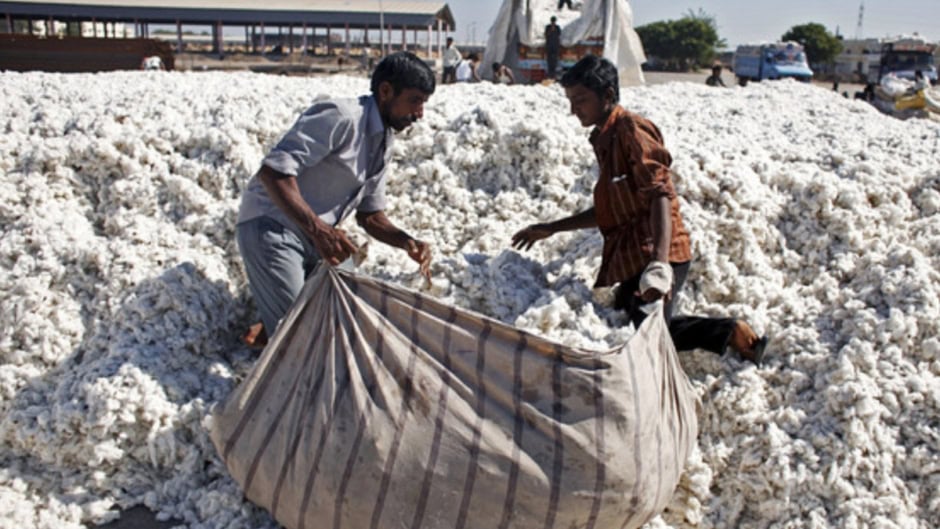
Pakistan’s textile sector is facing a growing raw material crisis after national cotton inventories reportedly dropped below 10,000 bales ahead of the new ginning season, raising fears that some textile mills may partially suspend operations.
Industry officials said the country has never witnessed such critically low cotton stocks before the arrival of a new crop season. The shortage has increased pressure on textile manufacturers already struggling with rising production costs and disrupted import supplies.
The crisis intensified after the temporary closure of the Pakistan-Afghanistan border halted the arrival of nearly 500,000 cotton bales from Afghanistan. Ongoing regional tensions involving the United States, Israel, and Iran have also disrupted trade routes and cotton imports.
As supply shortages worsened:
- Cotton prices surged to around Rs. 22,000 per maund
- Deferred payment deals reportedly touched Rs. 23,500 per maund
- Mills warned of possible production slowdowns and operational disruptions
Industry experts expect some relief after Eid ul Adha when the new cotton ginning season begins. Large-scale arrivals of the fresh cotton crop are expected from the third week of June.
Ihsan ul Haq urged the government to introduce emergency measures to increase domestic cotton production and reduce dependence on imports.
He also called for restrictions on sugarcane cultivation in designated cotton-growing areas, arguing that stronger cotton production could help Pakistan reduce billions of dollars in import costs.
Meanwhile, farmers are also facing higher input expenses during the ongoing sowing season:
- DAP fertilizer prices have reached around Rs. 16,000 per bag
- Urea prices have climbed close to Rs. 4,500 per bag
Experts warned that reduced fertilizer usage due to rising costs may further lower crop yields and force Pakistan to rely more heavily on imports in the coming months.