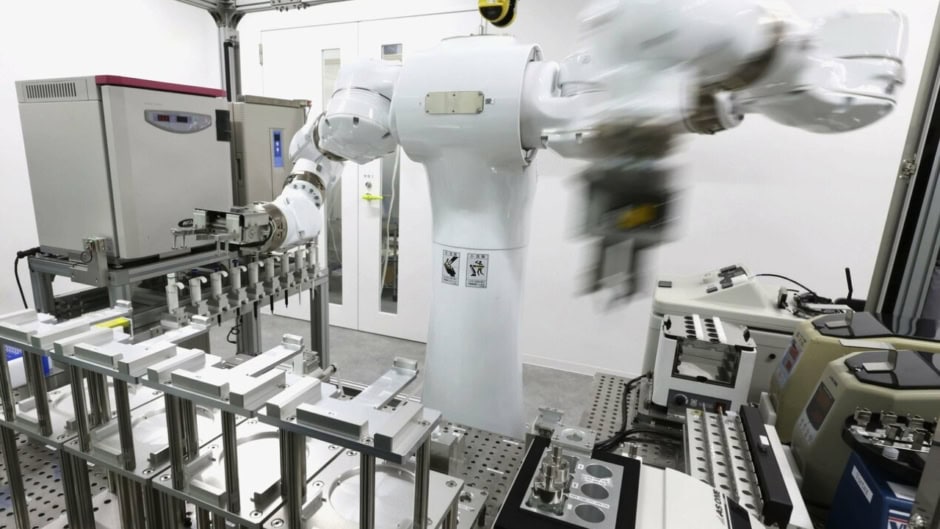
A Tokyo-based university launched a laboratory where robots conduct medical experiments without human staff present. The Institute of Science Tokyo opened the Robotics Innovation Center at its Yushima campus in mid-April. The facility currently operates 10 robots including a humanoid model called Maholo LabDroid.
The robots use two arms to perform delicate tasks. They transfer fixed amounts of reagents and open temperature-controlled equipment doors. Cell cultivation has already been programmed for automatic operation. The university plans to expand the robot fleet to around 2,000 units by 2040.
Keiichi Nakayama, head of the center, stated the facility aims to make Japan’s science the best globally. He cited artificial intelligence and robotics as key tools to achieve that goal. Robots participated in the ribbon-cutting ceremony alongside human attendees. The university plans to integrate automation systems with AI in the long run.
The move addresses challenges facing research institutions including labor shortages. Human error reduction in experimental work represents another key benefit. The university aims to eventually automate nearly the entire research process from hypothesis generation to experimental verification.
Maholo has already been deployed at a hospital in Kobe, Hyogo Prefecture. The ophthalmology-focused facility uses the robot for clinical research involving induced pluripotent stem cells. Cell culture tasks represent one of its primary applications. Researchers operating Maholo in Kobe joined the Tokyo center. The facility represents a significant step toward fully automated scientific research in Japan.