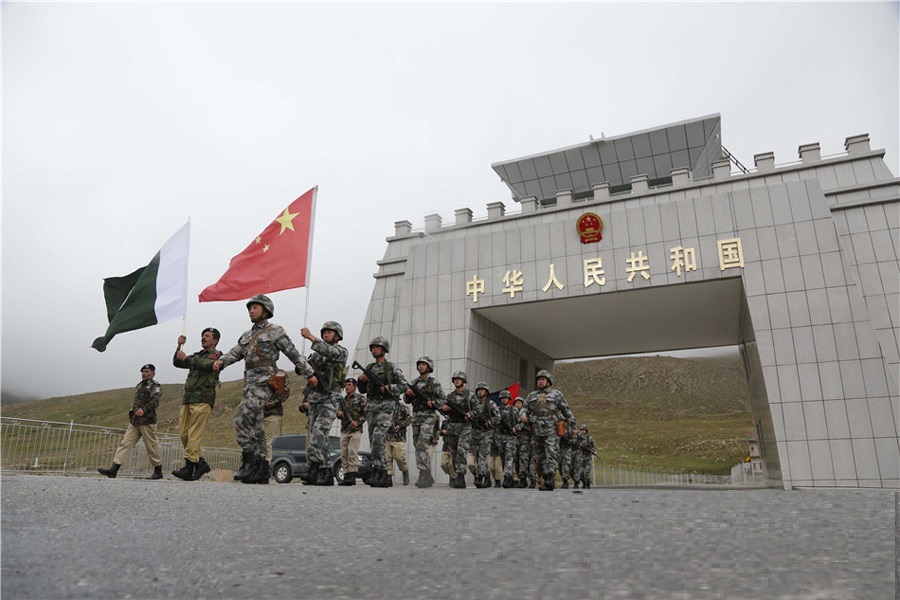
Pakistan and China have officially opened a new chapter of the China Pakistan Economic Corridor (CPEC) as Federal Minister for Planning Ahsan Iqbal inaugurated the 14th Joint Cooperation Committee (JCC) meeting in Beijing. The session marked the start of CPEC Phase II, focused on high-quality growth, youth empowerment, and stronger regional connectivity.
Launched in 2015, CPEC has already transformed Pakistan’s energy and infrastructure landscape. Under Phase I, 17 power projects worth nearly $18 billion added more than 8,000 MW to the grid, while 888 kilometers of modern highways were completed. Gwadar emerged as a maritime gateway, with new hospitals, airports, and training centers established through Chinese support.
In his address, Ahsan Iqbal stressed that Phase II will be defined by youth and exports. Plans include 10,000 PhD scholarships in advanced sciences, new industrial zones in Karachi and Islamabad, and a Pakistan–China Digital Silk Road to boost 5G, AI, and fintech collaboration. He also highlighted agriculture modernization, renewable energy expansion, and the creation of five new corridors Growth, Innovation, Green, Livelihood, and Regional Connectivity.
Upcoming projects include upgrading the ML-1 railway, expanding Gwadar Port, realigning the Karakoram Highway, and developing mineral corridors. Special focus will be on modern farming, climate smart initiatives, and joint ventures in electric vehicles, biotech, and robotics. The government also assured enhanced security for Chinese personnel and projects to safeguard long-term cooperation.
Experts see Phase II as a shift from government-to-government ties toward business-to-business partnerships, with $8.5 billion in MoUs already signed at a recent investment conference. This transition is expected to strengthen trade, attract foreign investment, and create opportunities for Pakistan’s youth.