As Pakistan moves closer to wider 5G adoption, early user tests are starting to paint a clearer picture of real-world performance. While official nationwide rollout details are still limited, some users have already begun sharing live speed results from major cities, offering a glimpse into what the next generation of connectivity could deliver.
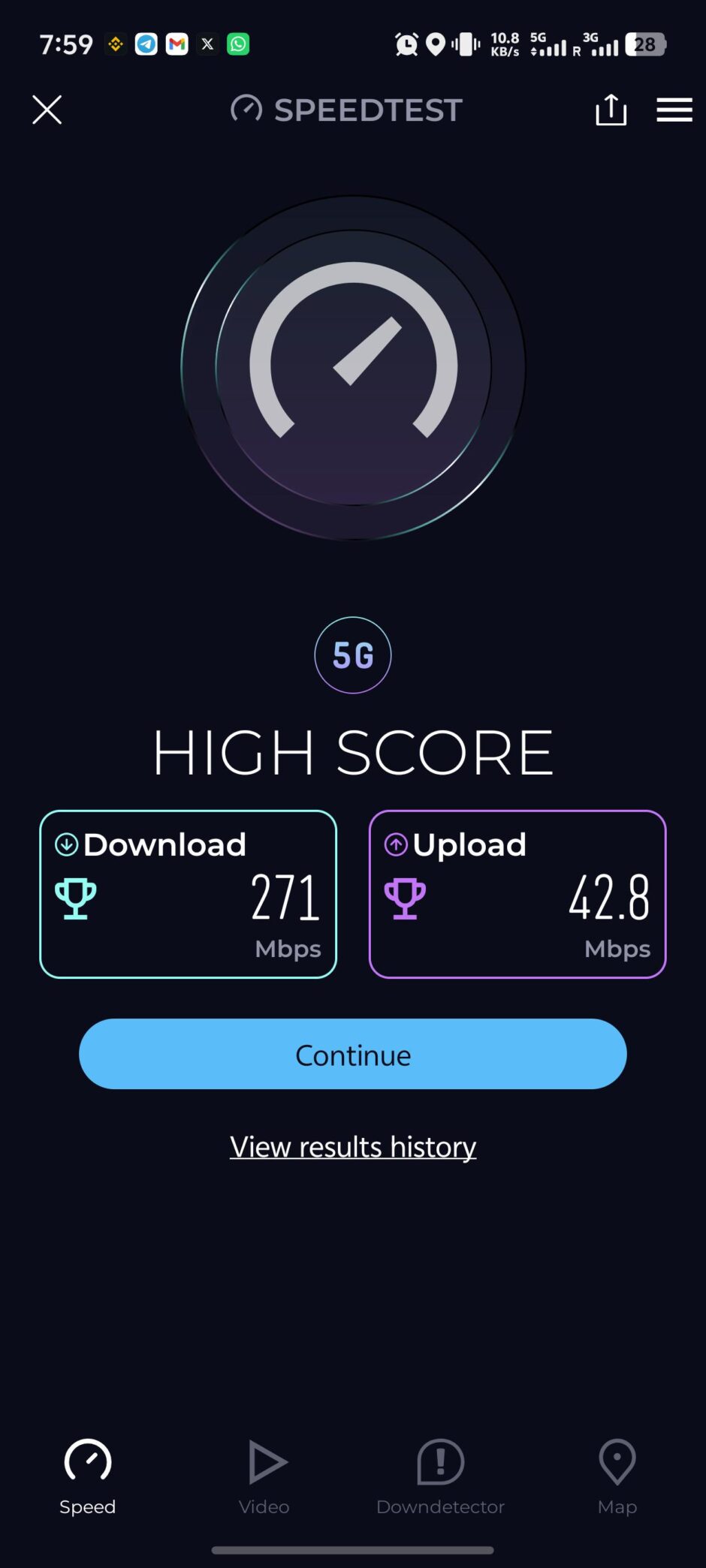
Recent posts on Reddit highlight 5G speed tests conducted in Karachi and Islamabad. In Karachi, one user reported a download speed of 271 Mbps and an upload speed of 42.8 Mbps. Meanwhile, a user in Islamabad recorded a download speed of 250 Mbps. These numbers suggest that, under the right conditions, 5G in Pakistan can already deliver high-speed performance.
However, the conversation around these results tells a more mixed story. Not every user is experiencing such speeds. Some users pointed out that their internet barely crosses 1 Mbps on WiFi, which highlights the gap between peak performance and everyday reality. This contrast shows that infrastructure and network conditions still vary widely across different areas.

Other users explained that such high speeds depend heavily on device compatibility and network load. If many users are connected at the same time, speeds can drop quickly. Network congestion remains a key challenge, especially in densely populated areas. In fact, some users mentioned that they rely entirely on mobile data instead of WiFi, which adds even more pressure on cellular networks.
At the same time, frustration is clearly visible in user feedback. Some believe that if networks become overloaded, operators should take steps to improve capacity. A few users even shared that they have stopped using mobile data altogether due to poor performance in their areas. The situation becomes worse during power outages, when connectivity often drops further.
Overall, while early 5G speed tests in Pakistan show promising results, the user experience remains inconsistent. High speeds are possible, but they are not yet the standard. As rollout expands, network stability and infrastructure upgrades will play a key role in shaping how reliable 5G becomes for everyday users.