Bitcoin slipped below the $78,000 mark for the first time since early May, as renewed macroeconomic and geopolitical pressures weighed heavily on risk assets.
The world’s largest cryptocurrency briefly touched $77,614, according to market data, as concerns over US bond markets and global energy disruptions continued to unsettle investors. The decline has erased most of Bitcoin’s recent monthly gains.
Analysts say multiple factors are contributing to the downside pressure, including rising crude oil prices, uncertainty in global supply chains, and escalating geopolitical tensions affecting investor sentiment.
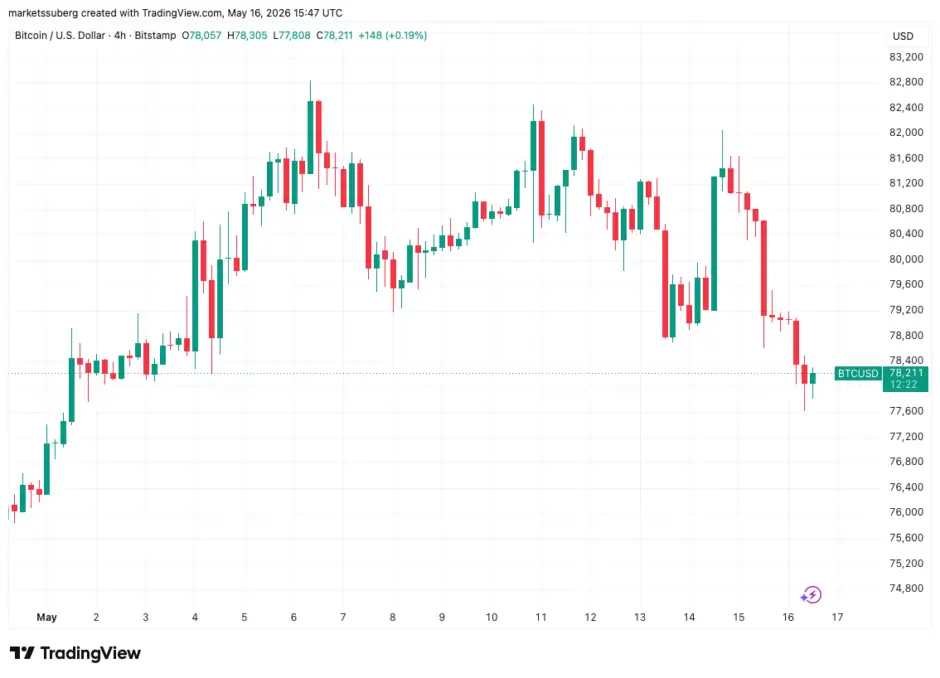
Despite the bearish momentum, market sentiment remains divided. Some traders argue that the current price action may represent a “bear trap,” where heavy short positions could precede a sharp rebound.
Data from trading activity shows increasing open interest alongside negative funding rates, suggesting that bearish positions are building even as broader market structure remains uncertain. This has led some analysts to warn that overly aggressive shorting could backfire if prices reverse direction.
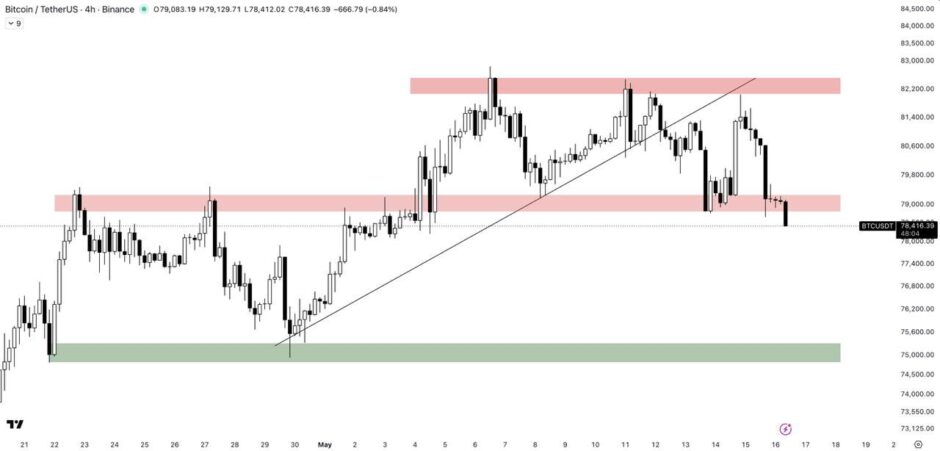
However, downside risks remain in focus. Some analysts see potential support near $75,000, while others point to deeper liquidity zones around $71,000 as possible targets if selling pressure continues.
The broader crypto market is now closely watching whether Bitcoin can stabilize above key support levels or extend its correction further amid ongoing global economic uncertainty.