Pakistan wants to send its first citizen into space. Consequently, the government has proposed a Rs. 1.29 billion allocation for the Pakistan Manned Space Mission. Officials included this substantial fund in the Public Sector Development Program (PSDP) for the 2026-27 fiscal year.
Budget documents reveal that this landmark initiative carries a total approved cost of Rs. 2.19 billion. Furthermore, the government expects to spend an estimated Rs. 900 million by June 30, 2026. Therefore, the proposed Rs. 1.29 billion will fund the next critical phases over the upcoming fiscal year.
The human spaceflight program is not an isolated project. Instead, it forms a major part of a broader expansion under the Space and Upper Atmosphere Research Commission (SUPARCO). Currently, the national agency is implementing multiple major schemes simultaneously. Alongside the manned mission, SUPARCO is actively pursuing satellite deployment, lunar exploration, deep space observation, and advanced infrastructure projects.
The Journey to the Tiangong Space Station
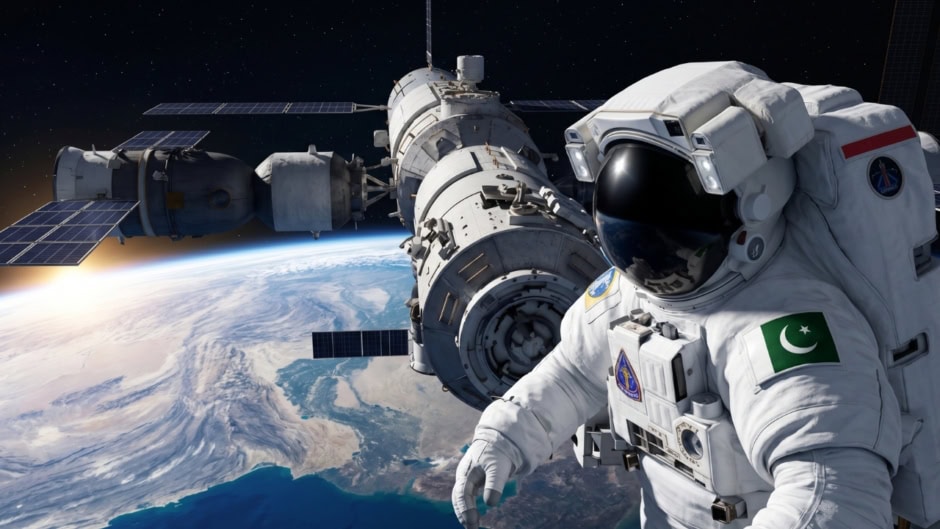
The manned mission gained serious momentum in February 2025. Pakistan and China signed a landmark astronaut cooperation agreement at that time. Under this pact, China agreed to select and train Pakistani astronauts for future missions aboard its Tiangong Space Station.
Progress has accelerated significantly over the past year. As previously reported, two Pakistani astronaut candidates were successfully shortlisted after undergoing rigorous medical, psychological, and aptitude assessments in China. Now, these candidates will receive advanced astronaut training. Ultimately, one candidate will participate in a mission to the Chinese space station. This individual will potentially become the first Pakistani citizen to travel into space.
On a global scale, this proposed allocation appears modest compared to the budgets of major international agencies. However, the move remains highly significant locally. Pakistan continues to dedicate vital public funds to a human spaceflight program, even at a time when overall national development spending faces intense economic strain.