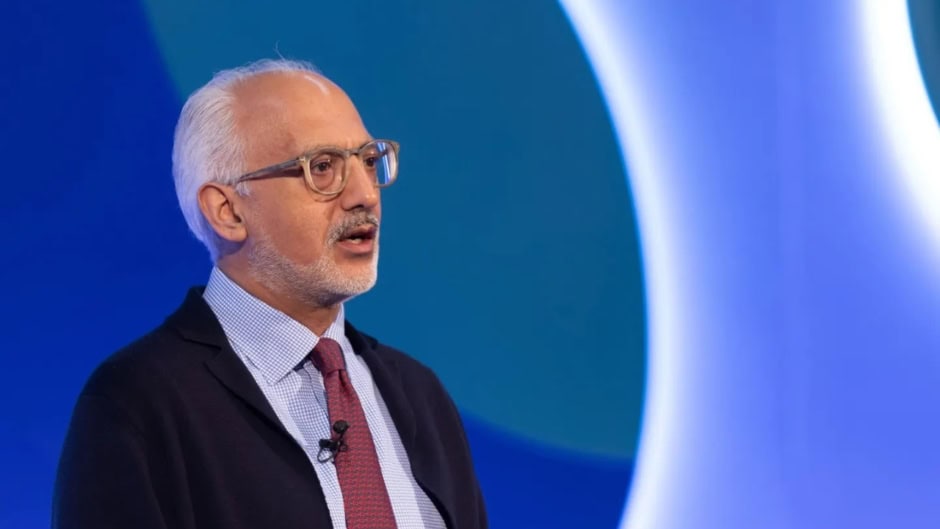
Ilyas Khan, a British-Pakistani quantum computing pioneer, became a billionaire, when Quantinuum completed its initial public offering on Nasdaq at $60 per share. His stake of approximately 15% is now worth over $2 billion, marking a remarkable journey from South Asian heritage to global tech leadership.
From Lancashire to Billionaire Status
Khan was born and raised in Lancashire in northwest England, but his roots run deep into South Asia. His grandparents emigrated from the region to Britain in the 1930s, establishing the family that would eventually produce a quantum computing pioneer. Khan’s early education occurred in Lancashire’s Pennine mill towns of Haslingden and Accrington, traditional working-class communities far from the tech corridors of Silicon Valley.
His academic path strengthened his connection to his heritage. Khan studied at the School of Oriental and African Studies (SOAS) at the University of London, graduating in 1983 with a BA honours degree in South Asian Studies, a choice reflecting genuine engagement with the region his family came from.
Building a Global Quantum Empire
Before quantum computing, Khan spent 20 years in Hong Kong and Hong Kong and founded merchant banking and natural resource companies. But his true impact came through founding Cambridge Quantum Computing in 2015, which merged with Honeywell’s Quantum Solutions in December 2021 to form Quantinuum.
The $1.68 billion IPO valued Quantinuum at approximately $15.7 billion, making Khan’s stake worth more than $2 billion. Shares opened at $68 on their first trading day, hitting a session high of $71.35.
Significance for South Asian Tech
Khan’s billionaire status holds particular significance for South Asian representation in frontier technology. As quantum computing emerges as a critical domain for global competitiveness, Khan’s success demonstrates that founders from South Asian heritage can build world-leading companies. His path contrasts sharply with the broader underrepresentation of South Asian founders in quantum computing and deep tech sectors globally.