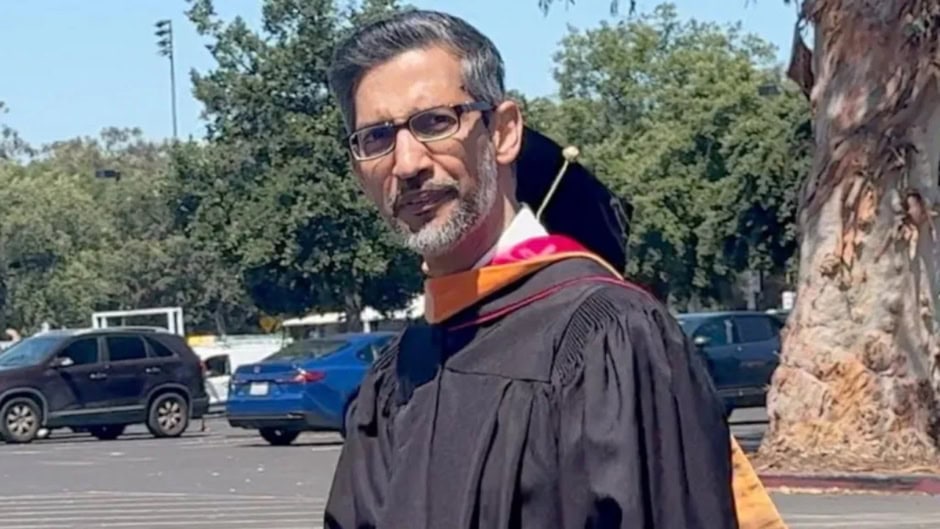
About 200 Stanford graduates walked out of their commencement ceremony on June 14 as Google and Alphabet CEO Sundar Pichai took the stage to deliver his address, protesting the company’s defense and government contracts rather than concerns about AI replacing jobs.
Pichai, who earned his graduate degree in materials science and engineering at Stanford, continued his speech despite the walkout, boos, and verbal outbursts from the audience, without appearing to react.
The protest was organized by the Stanford chapter of Students for Justice in Palestine, a nationwide student activist network. Demonstrators carried signs reading “ICE SPIES WITH GOOGLE AI” and “GENOCIDE RUNS ON GOOGLE,” while some waved Palestinian flags and chanted “free Palestine.”
In a statement posted on Instagram, the group accused Google of collaborating with the Israeli government and with Palantir, the data analytics firm that holds contracts supporting both the Israeli military and the Trump administration’s immigration enforcement efforts.
The central target of the protest was Project Nimbus, a $1.2 billion contract Google and Amazon signed with Israel’s government in 2021 to provide cloud computing and AI services to Israeli government, defense, and security agencies. The deal has drawn sustained criticism since it was signed, and Google fired more than two dozen employees in 2024 after they staged a sit-in protest against the contract, a move that fueled the broader No Tech for Apartheid campaign.
Separately, students cited a report from the Electronic Frontier Foundation alleging Google shared a PhD candidate’s information with ICE after the student attended a pro-Palestinian protest, reportedly breaking a long-standing company commitment to notify users before sharing their data with law enforcement. Reports indicate the student’s information was handed over before they had an opportunity to challenge the subpoena.
Notably, Pichai avoided discussing artificial intelligence in his address, a departure from his usual focus on Google’s Gemini-powered AI agents. The choice came after several other tech executives drew boos at graduation ceremonies this spring over remarks tied to AI and its impact on jobs. A Google spokesperson, when asked for comment, referred only to Pichai’s remarks during the speech itself.