The federal government is considering a major shift in its automobile import policy that could allow the import of used vehicles up to five years old, a move aimed at increasing competition and expanding consumer choice in Pakistan’s auto market.
The proposal came under discussion during a meeting of the National Assembly Standing Committee on Finance and Revenue, where Federal Commerce Secretary Jawad Paul briefed lawmakers on the proposed reforms while deliberating on the Finance Bill 2026.
The committee, chaired by Syed Naveed Qamar, was informed that the government is pursuing comprehensive tariff reforms under the National Tariff Policy to simplify the tax structure and reduce import duties.
According to officials, the Additional Customs Duty (ACD) will be phased out over the next five years, while regulatory duties will be gradually reduced and eventually eliminated. Customs duties are expected to be capped at 15 percent within five years, with regulatory duties limited to a maximum of 20 percent.
The proposed reforms also include the abolition of smaller duty slabs of 1 percent, 2 percent, and 2.5 percent, as part of efforts to streamline the tariff regime.
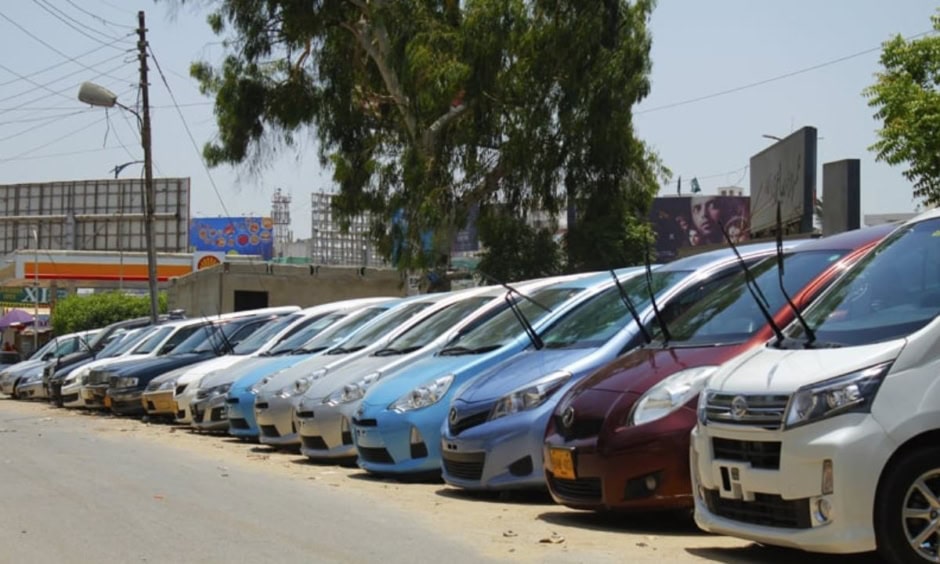
In a significant development for the automotive sector, the regulatory duty on imported used vehicles is expected to decrease from 40 percent to 30 percent. At the same time, the government is reviewing restrictions that currently limit the import of older used vehicles, including the possibility of allowing imports of cars up to five years old.
Commerce Secretary Jawad Paul told the committee that the objective of the reforms is to promote competition, improve market efficiency, and provide consumers with a wider range of vehicle options.
Chairman Syed Naveed Qamar observed that Pakistan’s automobile industry has remained heavily protected for years, noting that increased competition from imports could help bring down vehicle prices and benefit consumers.
The committee was also informed that 62 safety standards currently applicable to imported vehicles will now be enforced equally on locally manufactured cars to ensure a level playing field across the industry.
Officials further highlighted past misuse of the personal baggage scheme, under which passports of individuals who had spent at least 180 days abroad were allegedly used for vehicle imports.
The proposed measures form part of the government’s broader agenda to modernize Pakistan’s tariff framework, improve transparency, and align trade policies with international standards.