When US President Donald Trump released his financial earnings this week, one massive figure stood out. His family’s crypto venture, World Liberty Financial (WLF), earned him over $500 million from token sales alone in 2025. Interestingly, Pakistan was among the first countries to partner and strike a crypto deal with this firm.
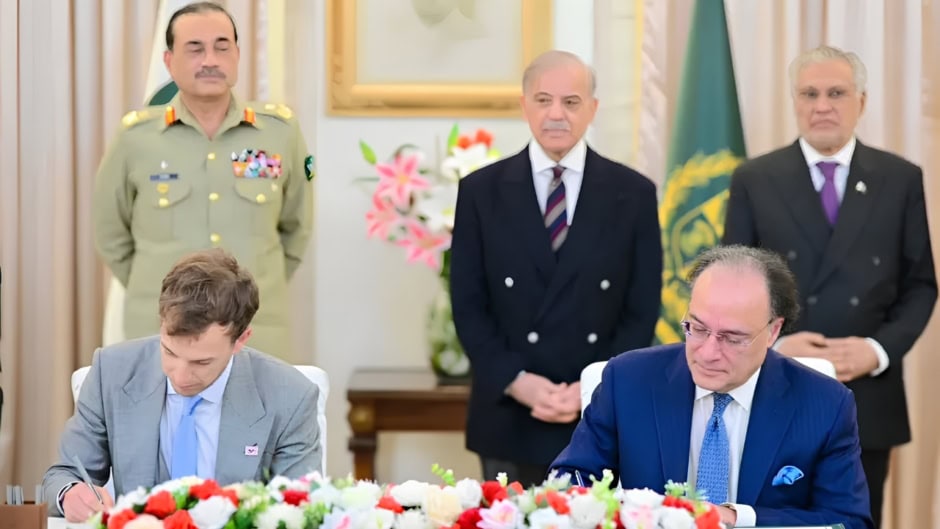
In January 2026, Pakistan’s Ministry of Finance signed a memorandum of understanding (MoU) with a WLF affiliate. The stated goal of this crypto deal was to explore using the firm’s dollar-pegged stablecoin, USD1, for cross-border payments. Finance Minister Muhammad Aurangzeb and WLF executive Zach Witkoff signed the agreement in Islamabad. Prime Minister Shehbaz Sharif and Army Chief Field Marshal Asim Munir both attended the high-profile ceremony.
Fast forward nearly six months to today. Officials confirm that Pakistan has not launched a pilot project. The government has issued no licenses for the firm. Furthermore, no known transactions using the USD1 stablecoin have actually taken place.
Yet, analysts argue the crypto deal is a massive success. Pakistan achieved something just as valuable as Trump’s half-a-billion-dollar payday, i.e., rare, direct access to the Trump administration.
The Illusion of Utility vs. Real Diplomatic Gains
Stablecoins like USD1 are digital currencies pegged to the US dollar. They allow users to move money without traditional banks. WLF earns interest on the reserves backing each coin. Therefore, wider use of USD1 directly generates income for the Trump family.
However, financial experts question the utility of USD1 for Pakistan. The country already receives record-breaking formal remittances. In the last financial year, Pakistan secured a historic $38.3 billion in remittances, a 27% year-over-year increase. May 2026 alone saw a record $4.25 billion. A banking and finance professional, Ibrahim Khalil, noted:
Why are people using USDT in the first place, considering Pakistan is receiving record remittances through the banking channel, and transfers now happen instantaneously in many cases?
He argued that USD1 will not solve the issue of people avoiding banking channels. Furthermore, Pakistan’s central bank only held $16.5 billion in reserves in late June. Converting USD1 tokens back into dollars could add friction rather than remove it.
A senior banking executive also confirmed the MoU is merely an “exploratory, technical dialogue” with no firm commitment to deploy any specific stablecoin. Consequently, experts view the MoU strictly as a diplomatic tool. Karachi-based economist Khurram Husain called the agreement an “instrument of access” with no real policy basis. He stated:
Access was the calculation, and it paid off spectacularly.
The tangible gains for Islamabad were getting good access to the Trump White House, which was then added to by the diplomacy in the context of the Iran war.
A Timeline of Strategic Influence Behind the Crypto Deal
The diplomatic logic behind the crypto agreement is hard to ignore. The timeline reveals a clear strategic push by Islamabad to build bridges with Washington.
- April 2025: The first WLF delegation arrived in Islamabad. This happened just days after an armed attack in Pahalgam, Kashmir, pushed India and Pakistan toward renewed tensions.
- June 2025: Pakistan nominated Trump for the Nobel Peace Prize, praising his statesmanship for defusing the standoff with India. That same month, Trump hosted Field Marshal Munir at the White House. This marked the first time a US president hosted a Pakistani army chief who was not also a head of state.
- January 2026: The WLF MoU was signed right before the US-Israeli war on Iran. During this conflict, Pakistan successfully positioned itself as a mediator between Washington and Tehran.
- June 2026: US Vice President JD Vance publicly credited Field Marshal Munir with helping broker a US-Tehran peace framework, calling the army chief a great “statesman”.
Bilal Bin Saqib, the current chair of the Pakistan Virtual Assets Regulatory Authority (PVARA), previously served as a WLF adviser. In March 2026, he noted that the crypto push actively opened doors and rebuilt trust with Washington. The White House subsequently denied any conflicts of interest regarding the deal.
Regulation Before Rollout
Despite the lack of USD1 deployment, Pakistan has moved rapidly to establish a domestic crypto framework. The country currently ranks third globally in crypto adoption.
In March 2026, the government passed the Virtual Assets Act. This created PVARA as a permanent regulator. Operating a crypto firm without approval now carries a prison sentence of up to five years. By April, the State Bank cleared local banks to open accounts for licensed crypto firms. Global exchanges like Binance and HTX have secured preliminary no-objection certificates, though they are not yet fully authorized to operate.
Ultimately, the technical rollout of a stablecoin matters far less than the political capital it has generated.
Prominent journalists observing the situation have emphasized this stark reality. Analysts online have repeatedly pointed out that despite the complete lack of a pilot project, licenses, or actual transactions six months after the MoU, the core mission was accomplished. As multiple observers have highlighted, Pakistan has secured something equally as valuable as the hundreds of millions earned by Trump’s firm: unprecedented, high-level access to the US administration.