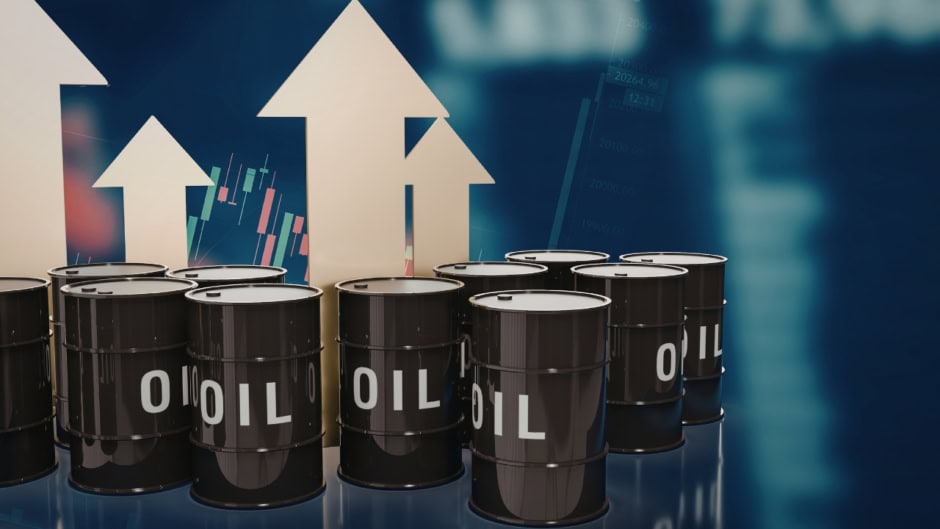
Global oil prices surged more than 4% on Monday after renewed military strikes between the United States and Iran heightened concerns over energy shipments through the strategically important Strait of Hormuz.
Brent crude futures climbed $3.10, or 4.08%, to $79.11 per barrel, while U.S. West Texas Intermediate (WTI) crude rose $2.95, or 4.11%, to $74.36 a barrel during early trading.
The latest rally came after the United States carried out another wave of military strikes against Iran on Sunday, targeting dozens of locations with precision-guided munitions, according to U.S. Central Command. In response, Iran’s Revolutionary Guards claimed they launched attacks on U.S. military bases in Kuwait and Bahrain.
The escalating conflict has renewed uncertainty over the security of the Strait of Hormuz, one of the world’s most critical energy transit routes. While U.S. President Donald Trump said the waterway remains open for commercial shipping, Iran has maintained that it closed the strait after a vessel allegedly violated its designated route and was subsequently struck.
Before the conflict began earlier this year, nearly 20% of the world’s oil and liquefied natural gas (LNG) passed through the Strait of Hormuz. Ship-tracking data showed that only six vessels transited the waterway on Sunday, marking the lowest traffic level in five weeks.
The renewed hostilities have also cast doubt on the future of the interim agreement reached between Washington and Tehran last month, which aimed to reopen the strait and pave the way for further negotiations.
According to the International Energy Agency (IEA), global oil supply increased by 4.1 million barrels per day in June following the agreement but remained 9.4 million barrels per day below pre-war production levels.
Market analysts said the latest escalation has weakened hopes of a quick resolution to the conflict, although the moderate rise in oil prices suggests investors still believe the current tensions fall short of a complete breakdown in the fragile ceasefire.