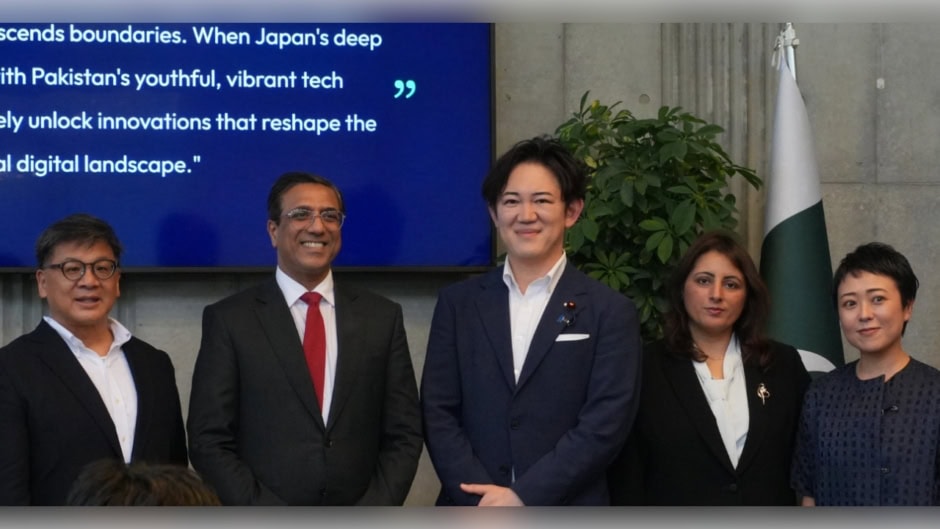
The Asia Web3 Alliance Japan (AWAJ) recently hosted a cross-border tech summit at the Embassy of Pakistan in Tokyo. The event directly addressed the gap between governments, startups, and investors. Led by AWAJ President Hinza Asif, the summit aimed to build an institutionalized innovation corridor. Consequently, this strategic partnership connects Pakistan’s massive tech talent pool with Japanese capital to solve Japan’s pressing engineer shortage.
AWAJ Summit Bridging the Gap Between Policy & Capital
The entire summit revolved around a strategic triangle. First, governments must provide clear regulations. Second, startups must supply momentum and innovation. Finally, investors must inject the fuel. If one pillar fails, cross-border partnerships die.
Asif emphasized that neither country can build this corridor alone. Furthermore, she pointed to Japan’s Startup Visa as an underused but highly practical route for Pakistani founders. Japan currently faces an acute shortage of technology professionals. By 2030, the country will lack hundreds of thousands of IT engineers. Therefore, Pakistan’s talent pipeline serves as an immediate, strategic asset for Japanese tech infrastructure.
Government Playbooks & Record IT Exports
Government officials from both nations brought hard numbers and new policies to the table. Japan’s Parliamentary Vice-Minister for Digital Affairs, Kawasaki Hideto, delivered the keynote address. He outlined Japan’s newly liberalized digital playbook. This framework includes relaxed AI data-consent rules, yen stablecoins, and updated FIEA token regulations. He stated that combining Japan’s deep experience with Pakistan’s youthful momentum will unlock a new “Digital Silk Road”.
Meanwhile, Pakistan’s Federal Secretary for IT and Telecommunication, Zarrar Hasham Khan, joined via video link. He confirmed that Pakistan’s IT exports are on track to hit a record $4.5 billion. Moreover, freelance earnings recently topped $1.1 billion. Pakistan currently houses over 26,000 IT companies and produces more than 75,000 tech graduates annually. Consequently, he offered Japan remote delivery, offshore development, and skilled migration options.
Connecting Founders with Corporate Investors
Diplomats and industry leaders anchored the practical side of the event. Ambassador Abdul Hameed noted that Pakistan’s young, English-proficient workforce naturally complements Japanese innovation goals. Trade and Investment Counsellor Madiha Ali served as the Master of Ceremonies to maintain the diplomatic focus.
During the panel discussions, investors laid out the operational groundwork. Jonathan T., a 500 Global mentor and VC advisor, detailed exactly what emerging-market founders must demonstrate to secure cross-border capital. Tomoko Takasaki of Ibex Japan KK and Antler Ibex explained how Japanese corporations can tap directly into Pakistan’s founder pipeline to meet their demand for innovation.
Moving forward, AWAJ and the Embassy of Pakistan plan to institutionalize this corridor. Specifically, they will execute cross-border investment facilitation, corporate-startup pilot collaborations, structured talent-mobility programs, and ongoing government-to-government dialogue.