
Bitcoin prices came under pressure on Monday as renewed uncertainty over the reopening of the Strait of Hormuz weighed on global risk assets, while crude oil prices surged nearly 5%.
Bitcoin (BTC) fell below $64,500 after Wall Street opened, with the cryptocurrency dropping to around $64,447 before recovering slightly.
The decline came as markets reassessed prospects for reopening the Strait of Hormuz, a key global energy route. Concerns over continued disruption pushed US WTI crude oil prices up nearly 5% to $80.90 per barrel.
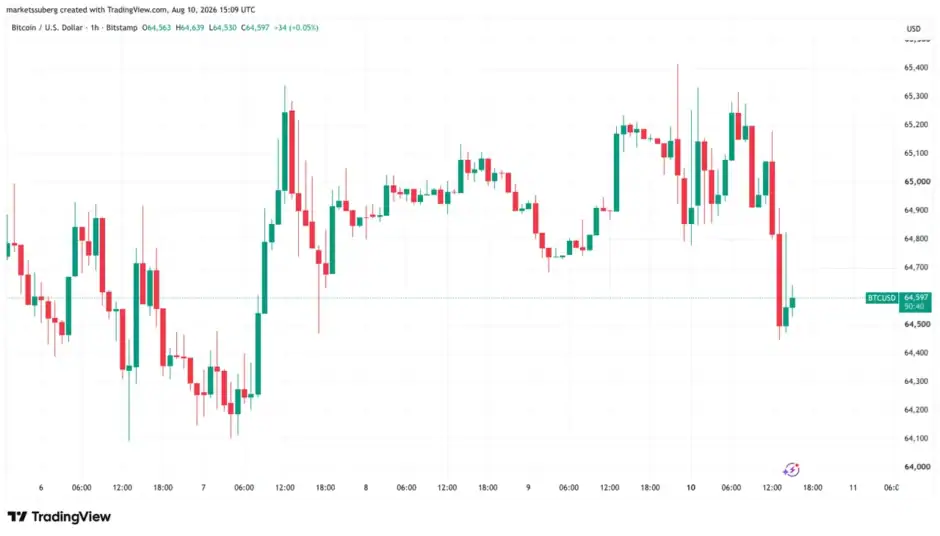
Market sentiment weakened after Iranian officials indicated that there was no military solution to reopening the Strait of Hormuz.
The uncertainty affected Bitcoin alongside US equities, although the S&P 500 later moved into positive territory after initially declining.
The Strait of Hormuz remains a major focus for financial markets because disruptions to the route can affect global oil supplies, inflation expectations and investor appetite for riskier assets.
The Japanese yen also remained under pressure, with the USD/JPY exchange rate reaching around 159, approaching the psychologically important 160 level.
Despite the latest price weakness, analysts pointed to strong institutional demand as a positive signal for Bitcoin.
Glassnode said Bitcoin’s attempted recovery remained tentative, noting that spot-market momentum was still relatively weak despite stronger spot taker buying.
The analytics firm also highlighted “exceptionally strong” institutional inflows, with US spot Bitcoin ETFs recording approximately $865.3 million in net inflows last week.
However, subdued centralized exchange activity suggested that the market remains in a broader consolidation phase rather than entering a sustained speculative expansion.
Other data also showed signs of growing institutional interest.
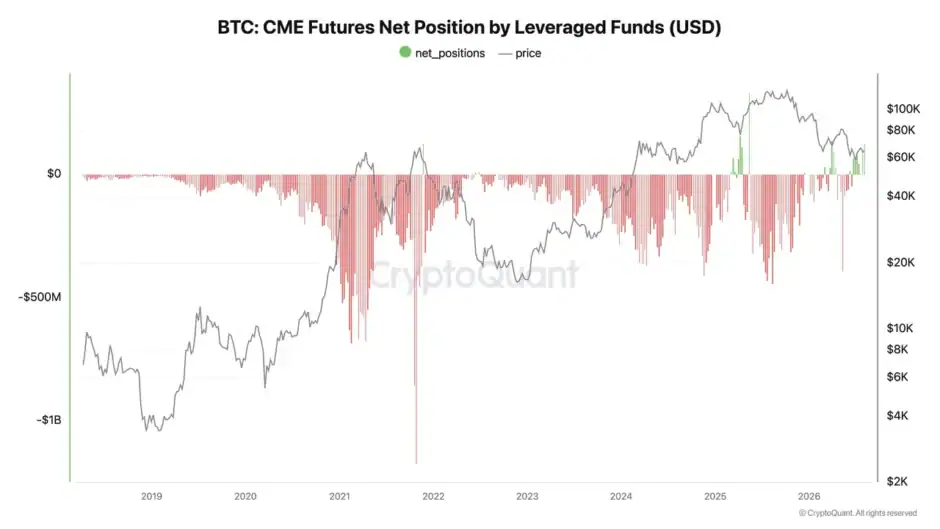
CryptoQuant data indicated that hedge funds had shifted to net-long CME Bitcoin futures positions, which CryptoQuant CEO Ki Young Ju described as a rare development.
The combination of strong ETF inflows and increased institutional positioning could provide support for Bitcoin if broader macroeconomic and geopolitical conditions stabilize.
For now, however, Bitcoin remains sensitive to developments surrounding the Strait of Hormuz, oil prices, global liquidity and US monetary policy, keeping the near-term outlook uncertain.