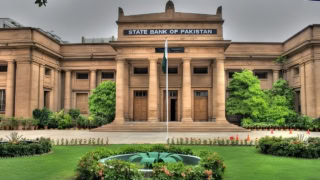
The State Bank of Pakistan (SBP) has officially designated Habib Bank Limited (HBL), United Bank Limited (UBL), and National Bank of Pakistan (NBP) as Domestic Systemically Important Banks (D-SIBs) for the year 2026. The central bank made this major announcement on Friday.
Consequently, this designation requires these three institutions to meet additional capital requirements. Specifically, the designated banks must comply with enhanced Common Equity Tier-1 (CET-1) capital standards. Furthermore, these new conditions will take effect starting March 31, 2027. Alongside capital requirements, the SBP will also enforce enhanced supervisory conditions as outlined in the D-SIBs framework.
SBP Sets Strict Regulatory Requirements for HBL, UBL & NBP
The central bank introduced these strict regulatory requirements to strengthen the resilience of these massive banks against potential economic shocks. Moreover, the updated guidelines aim to augment the risk management capacities of these institutions.
The SBP bases these designations on the ‘Domestic Systemically Important Banks (D-SIBs)’ framework. The central bank originally published this official framework in April 2018 and later amended it in December 2022. Importantly, this framework fully aligns with international standards while carefully considering the specific circumstances of the local financial industry and economy.
Global Banks & Assessment Methodology
The regulatory update also impacts Global-Systemically Important Banks (G-SIBs) operating within the country. Moving forward, local branches of these international banks must maintain additional CET-1 capital against their risk-weighted assets in Pakistan. Therefore, they will adhere to the specific rate prescribed by the Financial Stability Board for their respective principal G-SIB.
To properly select the domestic banks, the SBP conducted an annual assessment utilizing the financial statements of the institutions as of December 31, 2025. During this assessment, the central bank employed a thorough two-step process.
First, the SBP identified sample D-SIBs according to prescribed quantitative and qualitative criteria. Second, the regulators designated the final D-SIBs from that sample based on their composite systemic scores. These scores heavily evaluated the institutions in terms of their overall size, interconnectedness, substitutability, and structural complexity.
Ultimately, the SBP emphasized that designating D-SIBs remains a key element of its broader supervisory framework. The central bank stated that this move reflects its proactive approach to actively identifying and mitigating systemic risks. Through these decisive actions, the SBP continues to showcase its commitment to ensuring long-term financial stability and supporting sustainable economic growth.