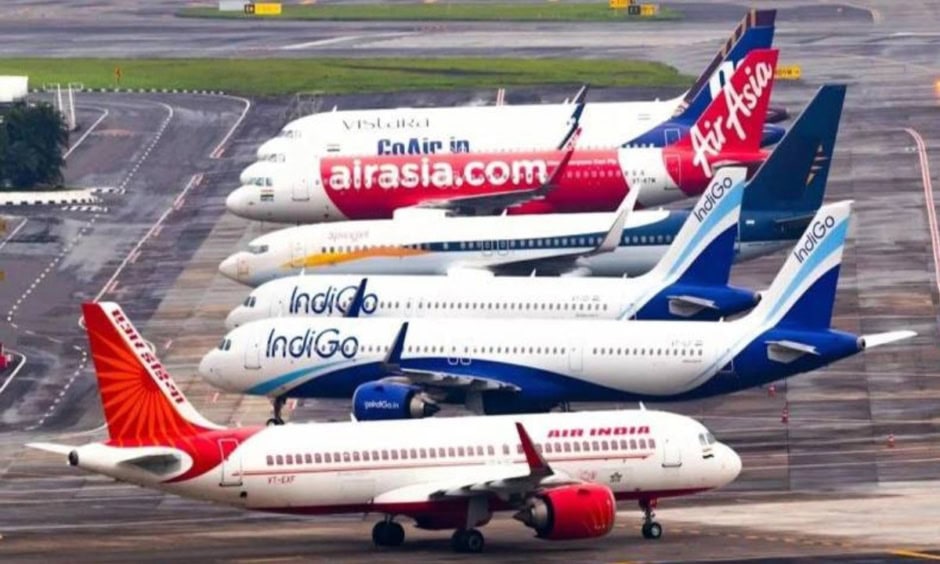
Indian airlines have lost more than $2 billion since Pakistan closed its airspace, with nearly 800 flights disrupted every week, according to data from the Pakistan Airport Authority (PAA) and World Flight Information.
Air India, IndiGo, Air India Express, Akasa Air and SpiceJet are the carriers most affected by the closure.
Delhi Indira Gandhi International Airport has borne the brunt of the disruption, with around 640 weekly flights affected. Routes from Delhi to the United States, United Kingdom, Germany, Turkey and Kazakhstan have all been forced onto longer paths as a result of the ban.
To avoid Pakistani airspace, Indian carriers have shifted to alternative routes that add between one and three hours to flight times. The longer journeys have driven up costs tied to refuelling, landing, takeoff and parking, while also requiring additional crew and higher operational spending.
Indian airlines have found little relief elsewhere, as air routes through Iran and the Gulf remain difficult to navigate because of Iran-US tensions and the wider security situation in the Middle East.
India rating agency ICRA has warned that domestic carriers could face a further $600 million in losses this year, adding to the financial strain already caused by the airspace restrictions.
The prolonged closure has raised concerns about the long-term viability of affected Indian airlines operations, with rising costs and extended routes placing sustained pressure on their finances.
By comparison, Pakistani airlines have faced a smaller impact, with only a handful of flights that previously used Indian airspace shifted to alternative routes. A spokesperson for the Pakistan Airports Authority confirmed that the restriction on Indian airlines will remain in place until September 2026.
The ban also extends to Indian military and cargo aircraft, none of which can use Pakistani airspace during this period. A NOTAM issued by the Pakistan Airports Authority keeps the restriction on Indian aircraft in force.