Callosum, a London-based AI infrastructure startup, has raised $100 million in seed funding led by Atomico. The round includes participation from investors Plural and DCVC, as well as a “significant” investment from the UK’s £500 million Sovereign AI fund. The funding represents one of Europe’s largest seed rounds.
Background & Workings
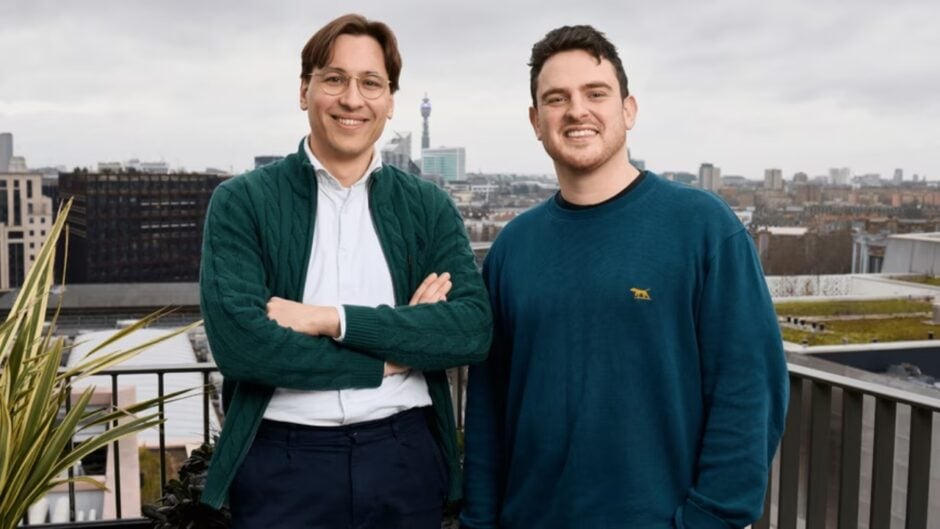
Callosum was established in 2025 by two Cambridge University neuroscientists, Danyal Akarca as CEO and Jascha Achterberg as CTO. The company develops software to match specific AI tasks with the least expensive and most suitable models and chips. Rather than routing all workloads through expensive flagship hardware, Callosum’s platform determines which models and processors best suit each individual task.
The startup’s thesis challenges a costly assumption buried inside the AI race: that better AI necessarily requires ever more expensive hardware. Simple requests can run on cheaper models and processors. Difficult reasoning problems route to more capable systems. At scale, this routing optimization could significantly reduce AI infrastructure costs.
This approach explains the UK government’s interest. The Sovereign AI Fund launched in April with £500 million to invest in British AI companies, support jobs, and strengthen the country’s position in AI infrastructure. Callosum is its first disclosed investment. The fund represents the British government’s commitment to building domestic AI capabilities.
Foundation of the Startup
The neuroscience foundation differentiates Callosum’s philosophy from competitors. The corpus callosum is the bundle of fibres connecting the brain’s two hemispheres, and the founders’ argument is that intelligence emerges from separate systems coordinating rather than from one very large one scaling further. The founders argue that distributed intelligence across specialized systems outperforms single-model approaches.
The round is led by Atomico with significant participation from Plural, DCVC, and the UK Sovereign AI Fund, alongside other world-class investors and angels. The company intends to use capital to scale its foundational systems software, expand its engineering team internationally, and accelerate deployment of programmable multi-chip networks.
The benchmark figures are the company’s own and have not been independently audited. A critical question remains whether this UK government backing attracts additional private capital or merely substitutes for it. A round of this size led by tier-one European venture capital with government as a minority participant suggests government investment may be attracting rather than replacing private funds.
In April, Callosum became the first equity investment made by the UK’s Sovereign AI Unit. It has also established partnerships with chipmaker Cerebras Systems and deals with Rebellions Inc and Axelera AI. These partnerships position the company as infrastructure layer connecting different chip vendors through a unified optimization platform.