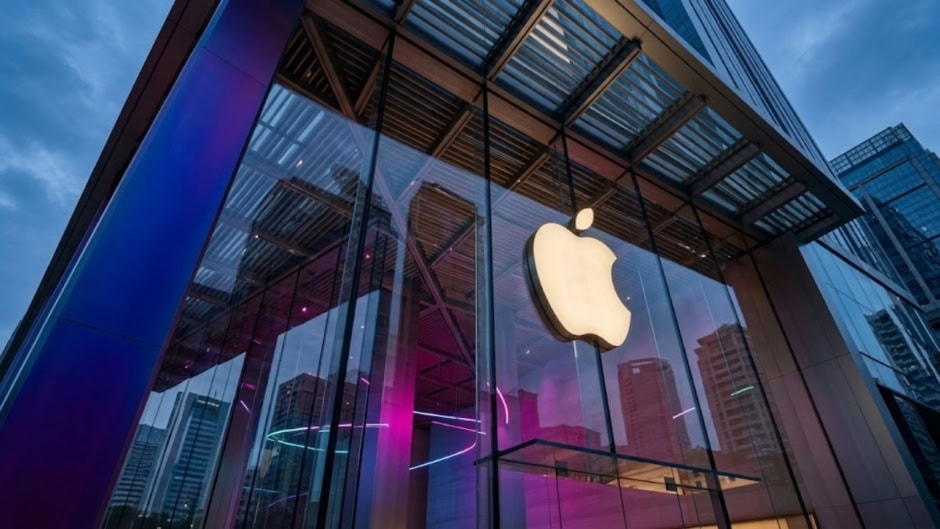
Apple intensified its legal confrontation with OpenAI by submitting a new court document accusing the AI firm of actively destroying vital evidence. The filing states that Chang Liu, a former engineer at Apple, not only downloaded a confidential circuit schematic but also utilized it during his work at OpenAI.
This document, submitted to the US District Court for the Northern District of California, adds tp Apple’s request for expedited fact-finding before the trial begins. As covered by TechJuice, Apple’s initial lawsuit alleges that OpenAI engaged in trade secret theft by recruiting numerous ex-Apple employees and acquiring Jony Ive’s hardware startup, io.
Central to the case is Liu, who left Apple in January 2026 after working there for eight years, and Tang Tan, a 24-year veteran of Apple now serving as OpenAI’s chief hardware officer.
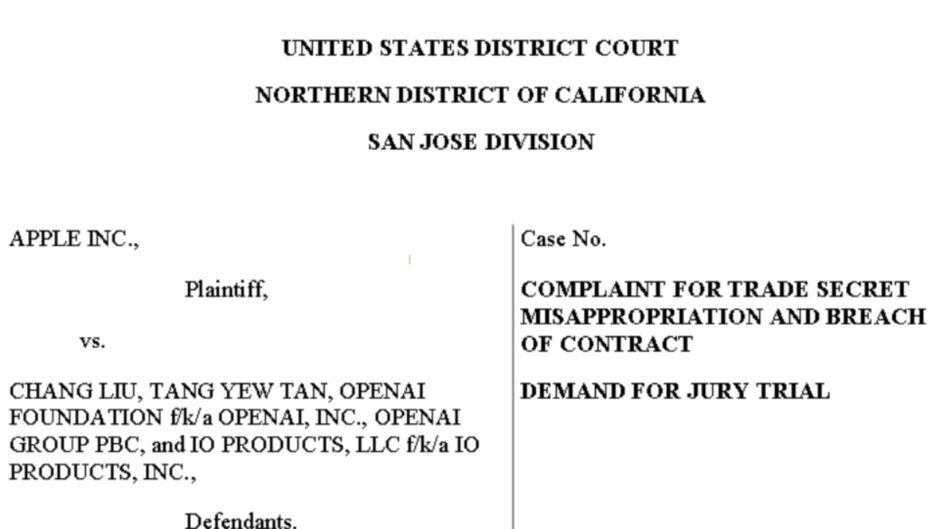
The new evidence surfaced after Liu’s legal team handed over his MacBook, issued by Apple, on August 21, an asset he kept after leaving the company. Following preliminary forensic analysis starting August 26, Apple claims the device contains evidence indicating Liu sent instructions to a fellow OpenAI employee to destroy relevant data, who reportedly agreed to do so.
Additionally, Apple alleges Liu accessed proprietary circuit information as recently as March, months after his departure, and subsequently trained an AI model using that confidential data.
“The MacBook represents the very limited information defendants provided so far (and only after weeks of delay), and shows Apple is not conducting ‘fishing expeditions’ but that its trade secrets are being used and evidence is being destroyed,” Apple’s lawyers wrote.
This last point could significantly influence the case, raising broader industry questions. As trade secrets and proprietary engineering knowledge increasingly leave the employment boundary and are incorporated into AI workflows, courts may soon face challenges in applying existing trade secret laws to AI systems trained on sensitive information.
Throughout this process, OpenAI has vehemently denied Apple’s assertions. The company sought to dismiss the lawsuit entirely, criticizing it as “careless, aggressive, and oddly personal,” and maintaining that it does not possess or seek Apple’s trade secrets. OpenAI also contended that former Apple employees retained access to files only because Apple failed to properly revoke their permissions upon their departure.
The timing of these developments is notable, as Apple’s veteran hardware chief, John Ternus, assumed the role of CEO on September 1, immediately inheriting this high-profile litigation. The defendants are required to respond to Apple’s supplemental filing by September 4, with a court hearing scheduled before Judge Edward J. Davila to consider arguments on October 1.