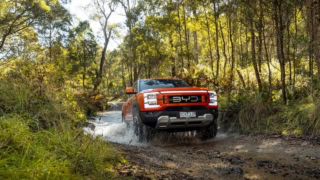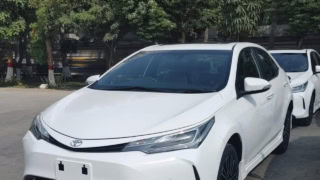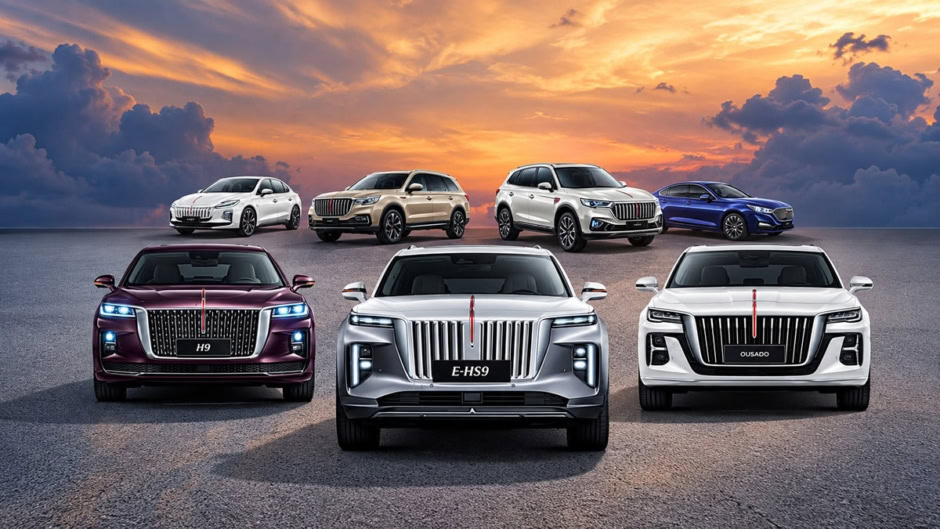
For decades, buying a new car in Pakistan usually meant choosing between Suzuki, Toyota or Honda. That picture has changed quickly. Chinese automakers have moved into almost every major part of the market. They now offer hatchbacks, sedans, SUVs, hybrids, plug-in hybrids and electric vehicles.
The bigger question is whether Pakistan has enough buyers for all these brands. The country is not a huge new-car market, despite its large population. The market recorded 155,631 car sales in FY2026. Sales of jeeps, SUVs, pickups and vans added another 50,814 units. That puts the combined volume at 206,445 units for the year.
At the same time, new brands continue to enter the country. Chinese companies are leading much of this expansion, while Japanese and Korean automakers still have strong positions.
So, how many Chinese auto brands are actually operating in Pakistan? And what happens if more companies continue fighting for the same pool of customers?
From Suzuki, Toyota, and Honda to a Chinese-led market
Pakistan’s auto market was once heavily controlled by the so-called Big Three. Suzuki, Toyota and Honda built strong positions through local assembly, dealer networks and established supplier relationships.
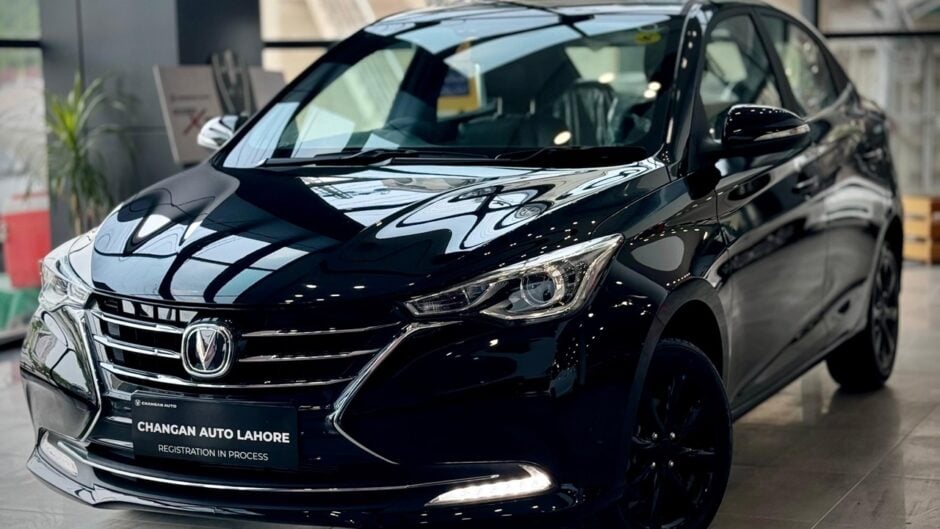
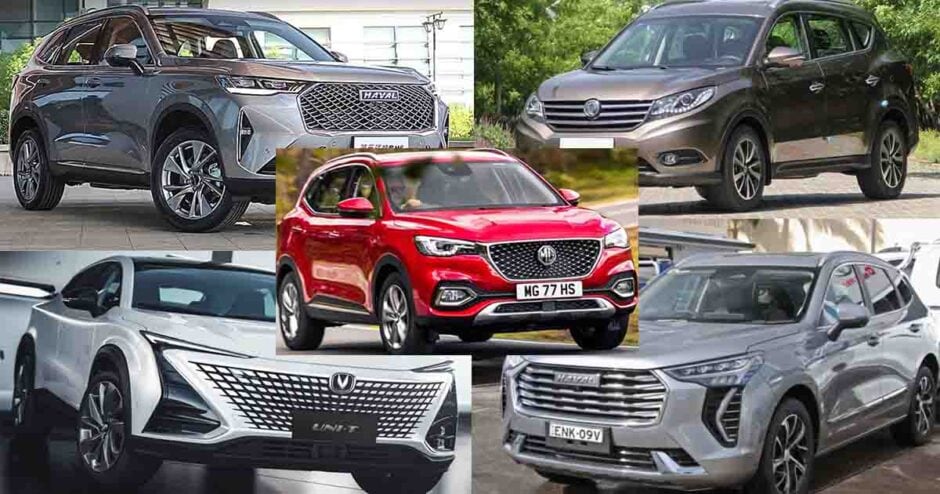
That dominance has weakened as new players entered the market. Changan, Haval, MG, Chery, BAIC and Jetour are among the Chinese brands that have established a presence.
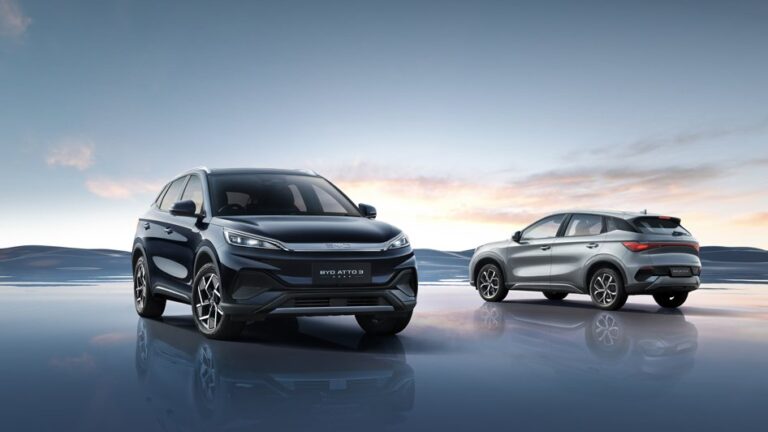
BYD has added another major name to the market with its electric and plug-in hybrid vehicles. The company started selling imported vehicles in Pakistan in 2025 and is also building a local assembly plant. BYD’s Gharo plant is expected to begin operations in the last quarter of 2026. The facility is designed to produce new-energy vehicles and has a planned capacity of 25,000 units annually.
Meanwhile, Master Changan has expanded beyond its original brand. Its current plans include Changan, Deepal, Nevo and Avatr, covering several types of powertrains. This shows how quickly the market is changing. It is no longer simply a fight between Japanese and Chinese manufacturers.
Korean companies such as Hyundai and Kia remain important. European brands also continue to operate in smaller segments. However, Chinese companies are adding the largest number of new products.
So, how many Chinese brands are there?
There is no single government figure that gives an exact count of Chinese car brands operating in Pakistan. The number also changes depending on the definition. Some brands already sell vehicles, while others have announced partnerships, launched models, or are waiting for their first deliveries.
Current market listings show more than 20 Chinese-origin brands with sales, launches, local partnerships, or active market plans in Pakistan. Some are established players, while others are still new or preparing to expand.
A recent industry report also identified around 20 major four-wheeler manufacturing and assembling companies in Pakistan. Only five were identified as non-Chinese among the major new-market players, including Suzuki, Toyota, Honda, Hyundai, and Kia.
The wider brand count is higher because several Chinese automakers operate multiple marques.
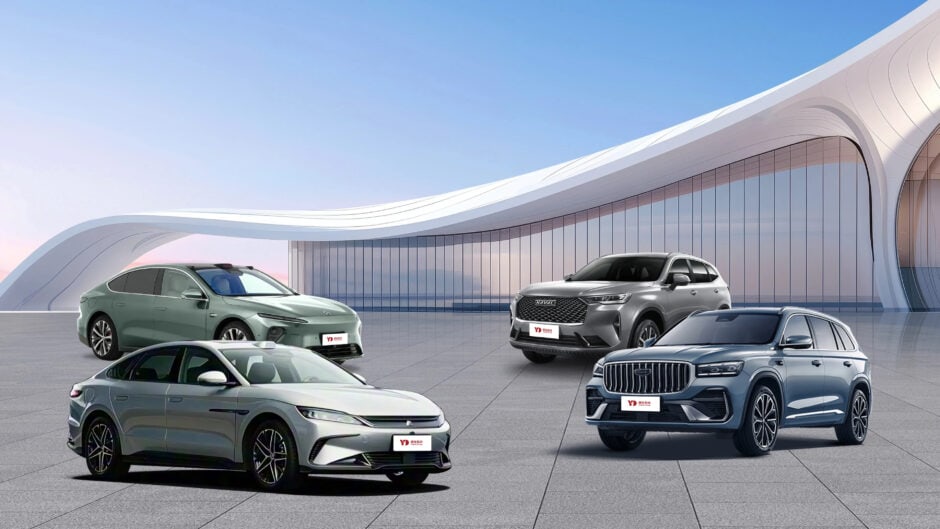
Major Chinese auto brands in Pakistan
| Chinese Brand | Pakistani Partner / Route | Main Focus in Pakistan | Market Position |
|---|---|---|---|
| Changan | Master Changan | Cars, MPVs, SUVs | Established |
| Deepal | Master Changan | EVs and REEVs | Established/New-energy |
| Nevo | Master Changan | EVs and hybrids | Expanding |
| Avatr | Master Changan | Premium EVs | Expanding |
| BYD | Mega Motor Company | EVs and PHEVs | Major new entrant |
| GWM | Sazgar | SUVs, hybrids and pickups | Established |
| Haval | Sazgar | SUVs and hybrids | Established |
| BAIC | Sazgar | SUVs and EVs | Established/Expanding |
| Chery | Chery Master Pakistan | SUVs, EVs and hybrids | Established/Expanding |
| Omoda | Nishat Group | EVs and SUVs | Established/New |
| Jaecoo | Nishat Group | SUVs, PHEVs and EVs | Established/New |
| Jetour | United Motors | SUVs and PHEVs | Established/Expanding |
| MG | MG JW / SAIC-linked operation | Cars, SUVs, hybrids and EVs | Established |
| GAC | Lucky Motor | EVs and new-energy vehicles | Entering/Expanding |
| Aion | Lucky Motor | EVs | Entering |
| Hyptec | Lucky Motor | Premium EVs | Entering |
| Seres | Local distribution | EVs and SUVs | Smaller player |
| JAC | Local distribution | Pickups and commercial vehicles | Smaller player |
| DFSK | Local operation | Cars and commercial vehicles | Established/Smaller player |
| Honri | Dewan | Small EVs | New-energy |
| Kaiyi | Q-Autos | Cars and SUVs | New entrant |
| Xpeng | Local market entry | EVs | New entrant |
| Zeekr | Local market entry | Premium EVs | New entrant |
| Arcfox | Sazgar/BAIC | EVs and REEVs | Upcoming/Expanding |
The list is not static. For example, Sazgar is preparing Arcfox vehicles for Pakistan, adding another Chinese marque to its portfolio. Changan is also expanding its portfolio through Nevo, while Master Changan already has Deepal and plans Avatr products.
Geely is another major Chinese automaker entering the market. Bestway has been appointed its authorised distributor, with CBU sales planned first and local assembly targeted later. Bookings are expected before the end of 2026.
That means the number could rise further before the market has time to absorb the brands already here.
Japan still has the strongest foundation
The arrival of Chinese brands does not mean Japanese companies have disappeared. Suzuki, Toyota and Honda still have major advantages. Their vehicles have been sold in Pakistan for decades, and their dealer and parts networks are much deeper.
Suzuki remains particularly important because its cars serve the country’s large entry-level market. Toyota also has a strong position in sedans, SUVs and pickups. Honda continues to compete in the sedan and crossover segments. Hyundai and Kia have also built strong positions in the market.
The important change is that these companies no longer face competition from only a handful of rivals. They now face brands offering more features, newer platforms and a much wider range of electrified vehicles.
Pakistan’s auto market is still relatively small
This is where the sustainability question becomes important. Pakistan has a population of more than 240 million people. However, population size does not translate directly into new-car sales.
PAMA data shows that car sales reached 155,631 units in FY2026. Jeeps, SUVs and vans added 50,814 units. For comparison, Pakistan’s total annual sales are still far below the volumes needed to comfortably support a very large number of mass-market manufacturers.
The problem becomes clearer when production capacity is considered.
PIDE says Pakistan’s automobile production capacity has grown from around 275,000 units in 2006 to more than 500,000 today. Yet actual production remains well below that capacity.
This creates an unusual situation. Pakistan has added more factories and brands without seeing a similar expansion in overall vehicle demand. PIDE has described this as a problem of increasing brands without increasing the size of the automobile market.
How many cars are already on Pakistani roads?
The latest complete official registration data provides another useful way to understand the market. According to the Pakistan Economic Survey, Pakistan had 4,997,143 registered motor cars, jeeps and station wagons in 2024. The total included nearly 5 million vehicles in this category.
That figure is the existing vehicle stock, not annual new-car sales. The difference matters. Millions of people already own vehicles, but only a much smaller number buy new cars each year.
Pakistan therefore has a large used-car market alongside a relatively limited new-car market. This creates a difficult environment for manufacturers that need high sales volumes to recover factory, dealership, and localisation investments.
Chinese brands are competing at very different price points
Chinese manufacturers are not entering Pakistan with one pricing strategy. Some brands are targeting buyers below Rs5 million. Others are competing around Rs8 million to Rs15 million. Premium Chinese EVs can cost much more.
- Changan, for example, currently offers the M9 from Rs2.349 million. The Alsvin starts at Rs4.189 million, while the Oshan X7 reaches Rs8.55 million.
- BYD is positioned higher in the market. Its Atto 2 is listed at Rs7.29 million, while the Atto 3 costs Rs8.99 million. The Seal ranges from Rs14.79 million to Rs16.99 million.
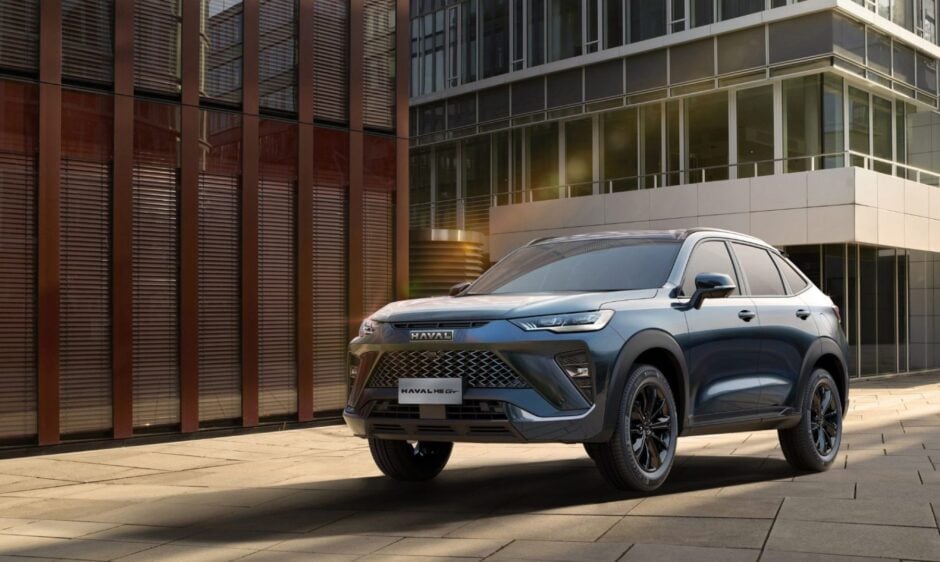
- Haval also competes mainly in the SUV segment. Its Jolion starts at around Rs7.80 million, while the H6 ranges from around Rs8.92 million to Rs11.52 million.
- Jetour’s range starts with the Dashing at Rs7.899 million. Its X70 Plus costs Rs8.299 million, while the T2 reaches Rs13.59 million.
- Deepal is targeting the electric and range-extender market. Its S05 is priced at Rs9.999 million, while the L07 and S07 are priced at around Rs13.999 million and Rs14.999 million.
Prices of major Chinese brands
| Brand | Major Model | Powertrain | Approx. Price in Pakistan |
|---|---|---|---|
| Changan | M9 | Petrol | Rs2.349 million |
| Changan | Alsvin | Petrol | Rs4.189m–Rs4.999m |
| Changan | Oshan X7 | Petrol | Rs7.949m–Rs8.550m |
| BYD | Atto 2 | EV | Rs7.290 million |
| BYD | Atto 3 | EV | Rs8.990 million |
| BYD | Seal | EV | Rs14.790m–Rs16.990m |
| Haval | Jolion | Petrol/HEV | Rs7.796m–Rs9.116m |
| Haval | H6 | Petrol/HEV/PHEV | Rs8.924m–Rs11.523m |
| Jetour | Dashing | Petrol | Rs7.899 million |
| Jetour | X70 Plus | Petrol | Rs8.299 million |
| Jetour | T2 | Petrol/PHEV | Rs12.795m–Rs15.590m |
| Deepal | S05 | EV/REEV | Rs9.999 million |
| Deepal | L07 | EV | Rs13.999 million |
| Deepal | S07 | EV | Rs14.999 million |
| Chery | Q | EV | Rs5.554 million |
| Chery | Tiggo 7 | Hybrid | Rs9.499 million |
| Chery | Tiggo 8 | PHEV | Rs10.999 million |
| Chery | Tiggo 9 | SUV | Rs14.299 million |
Prices are ex-factory figures and can change with taxes, exchange rates and company revisions. Current market listings show the latest available figures.
Plug-In Hybrid Imports Surge
Pakistan’s demand for plug-in hybrid vehicles has also jumped sharply in 2026. China’s customs data shows a major rise in hybrid vehicle exports to Pakistan during the first half of the year. Between January and June 2026, Pakistan imported $191 million worth of plug-in hybrid station wagons in the 1.0-1.5-litre class. Imports stood at only $16.3 million during the same period a year earlier.
That represents a 1,073% increase in value. The jump was driven mainly by higher vehicle volumes, with imports reaching 12,513 units, an 857% increase year over year. Plug-in hybrid saloon cars also recorded strong growth. Their import value climbed from $9.2 million to $90.3 million during the same period, while unit volumes increased nearly tenfold.
EVs are making the Chinese influx different
The Chinese expansion is not only about selling more petrol cars. A large part of the new competition is coming from electric vehicles, hybrids, plug-in hybrids and range-extender vehicles.
Industry data compiled by Arif Habib Limited showed that around 23 new vehicle models were expected to enter Pakistan between June and December 2026. Nine were fully electric, while 11 were PHEVs or REEVs. That means around 87% of the expected new models had an electrified powertrain. Chinese manufacturers were behind much of this pipeline.
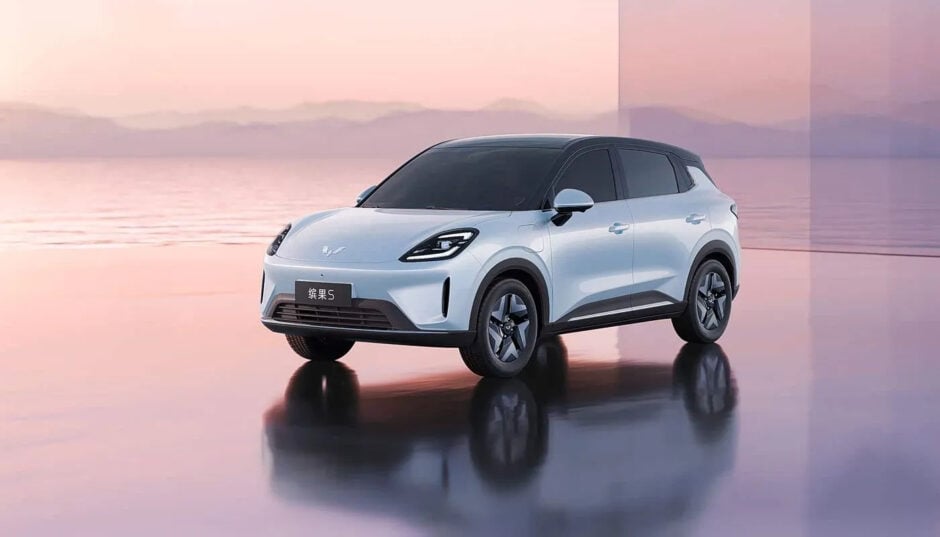
This gives Chinese companies an important advantage. Many Chinese manufacturers already have large EV supply chains at home. They can bring electric platforms, batteries and software-focused vehicles to markets that traditional automakers are only starting to target.
Pakistan is also trying to accelerate EV adoption. The government’s New Energy Vehicle Policy is pushing for greater electric vehicle adoption through 2030. However, EV growth still faces major problems.
Charging infrastructure remains limited outside major cities. Battery replacement costs are also a concern for buyers. Local production of high-value EV components remains limited.
The biggest challenge may be localisation
Bringing a vehicle to Pakistan is not the same as building a sustainable automobile business. Manufacturers need sufficient volumes to justify assembly plants. They also need suppliers, trained workers, after-sales networks and affordable financing.
Pakistan’s dependence on imported components remains a major problem. CKD and SKD imports for local assemblers reached $2.118 billion in FY2026. That was a 92% increase from $1.101 billion a year earlier.
The number shows that vehicle demand has recovered, but it also highlights how dependent local assembly remains on imported parts. PIDE has warned that the local vendor industry still struggles to produce high-value and high-tech components. The country remains heavily dependent on imported CKD kits.
This matters even more for Chinese EVs. Electric vehicles depend on batteries, power electronics, software and other components that are still largely imported. Without deeper localisation, Pakistan could simply replace one type of import dependence with another.
What happens to Pakistani companies behind these brands?
The Chinese influx has also changed the strategy of Pakistani business groups. Local companies are no longer relying on one international brand alone. Lucky Group, for example, has partnerships with Kia, Peugeot and GAC. Nishat Group works with Hyundai as well as Chery’s Omoda and Jaecoo brands.
Sazgar has partnerships covering GWM, Haval, BAIC, ORA and Tank. Master Group works with Changan and Deepal, while United Group has a relationship with Jetour.
This approach can spread risk. If one brand struggles, the local partner may have another product line to support its business. But it also creates another problem. Several companies could end up competing for the same customers with similar SUVs, hybrids and EVs.
The strongest local partners are likely to be those that can build service networks, localise production and keep prices competitive.
Why are so many Chinese companies coming to Pakistan?
There are several reasons behind the influx. First, Chinese automakers have become extremely competitive in EVs and hybrids. Their technology is improving quickly, while production costs remain competitive.
Second, Pakistan is trying to attract new investment and reduce its dependence on imported fuel. EVs offer a way to reduce petrol and diesel consumption over time. Third, the existing market has room for new products because consumers have long complained about limited choices.
Chinese companies can therefore enter with features and technologies that were previously available mainly in expensive imported vehicles. There is also a regional factor. Chinese automakers are expanding into overseas markets as competition intensifies in China. Pakistan offers a right-hand-drive market and could eventually become a production base for nearby markets.
BYD, for example, has said its Pakistan operation could eventually support exports to other right-hand-drive countries.
Chinese Brands Are Taking Share From Legacy Players
The shift is more visible in newer segments than in the overall market. Japanese brands still dominate Pakistan’s traditional passenger-car market, with Suzuki, Toyota and Honda together accounting for more than 70% of passenger-vehicle sales, according to an industry estimate. Suzuki alone is estimated to hold around 47%.
However, Chinese manufacturers are gaining ground through SUVs, hybrids, EVs and range-extended electric vehicles. BYD, for instance, expects Pakistan’s EV and plug-in hybrid market to grow sharply, after the segment stood at around 1,000 units in 2024. The company has also targeted a 30% to 35% share of that segment.
But can all these brands survive?
This is the most difficult question for Pakistan’s auto industry. The answer is unlikely to be yes for every brand. Pakistan has already seen new entrants struggle when sales volumes failed to match expectations. PIDE notes that new companies have reduced the market share available to each brand without significantly expanding the overall market.
That pressure could increase as more Chinese brands arrive. A company selling only a few thousand vehicles each year may find it difficult to support a large dealership network. It may also struggle to maintain spare-parts inventory and invest in local assembly.
The situation becomes harder when several brands sell similar SUVs at similar prices. The market will eventually decide which companies can stay. Brands with strong local partners, competitive prices, reliable after-sales service and local assembly will have a better chance. Those relying mainly on expensive imported vehicles could face greater pressure.
For consumers, the Chinese influx is not entirely bad news. More competition can force companies to improve equipment, safety, technology and pricing. It can also give buyers more choices across different price segments.
The SUV market already provides an example. Haval has become a major success for Sazgar. The company recorded strong growth in FY2026, showing that a Chinese brand can build meaningful scale in Pakistan.
But one successful brand does not guarantee that every new entrant will achieve the same result. The market still needs more buyers. If annual sales remain around the current level, companies will have to fight harder for market share instead of relying on market growth.
More Chinese Brands Are Still Coming
The Chinese influx into Pakistan’s auto market is not over yet. Geely is preparing to enter with three SUVs, including one hybrid and two electric models, with bookings expected before the end of 2026.
Other Chinese marques are also expanding their lineups. GAC’s Aion ES is scheduled to open bookings in October, with deliveries expected in 2027. Meanwhile, Geely’s EX2 and EX5 are among the new models being introduced to the market.
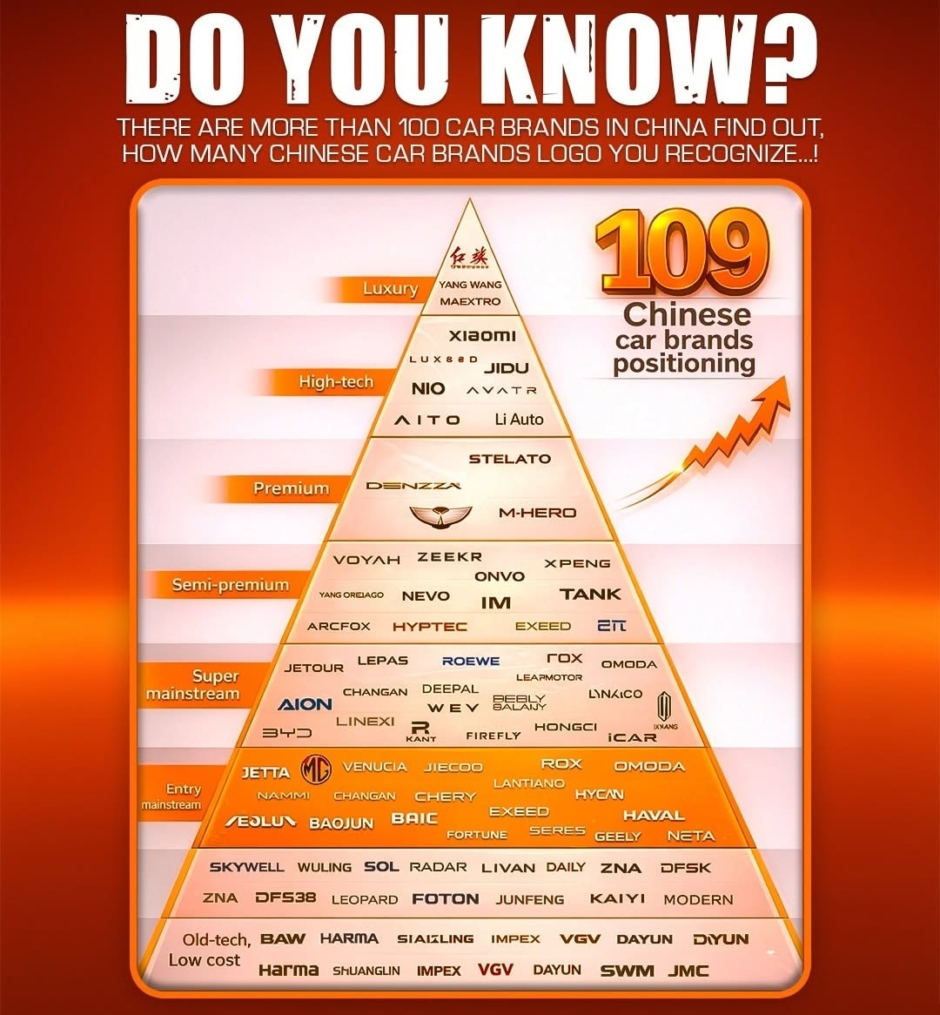
The pipeline goes well beyond a few new models. Industry data shows that 23 new vehicle models were expected in Pakistan between June and December 2026, with nine fully electric models and 11 PHEVs or REEVs. Chinese brands account for much of this upcoming wave.
Current market listings also show upcoming Chinese models from Geely, Arcfox, Denza, Nevo, Jaecoo, GWM, BYD, Aion and Deepal, among others. This suggests that Pakistan could see several more Chinese marques and sub-brands compete for buyers before the end of 2026.
Pakistan’s auto market is entering a sorting phase
The next few years could be less about how many brands enter Pakistan and more about how many remain. China has already changed the competitive landscape. The old three-brand dominance has been broken, and consumers now have more choices.
The question is whether Pakistan can turn that competition into a stronger local industry. The country’s installed production capacity has already crossed 500,000 vehicles, according to PIDE, while actual annual demand remains much lower.
That gap cannot be solved simply by adding more brands. Pakistan needs higher vehicle sales, stronger local suppliers, better financing and deeper localisation. It also needs a clear policy for EVs and hybrids. Otherwise, the country could end up with a crowded showroom landscape but underused factories.
For now, Chinese automakers are clearly here to stay. BYD is building a plant, Master Changan is expanding its multi-brand strategy, Nishat is adding Chery brands, Sazgar is expanding its Chinese portfolio, and Geely is preparing its entry.
The real question is no longer whether Chinese brands can enter Pakistan. It is whether Pakistan’s market is large enough for all of them to survive.