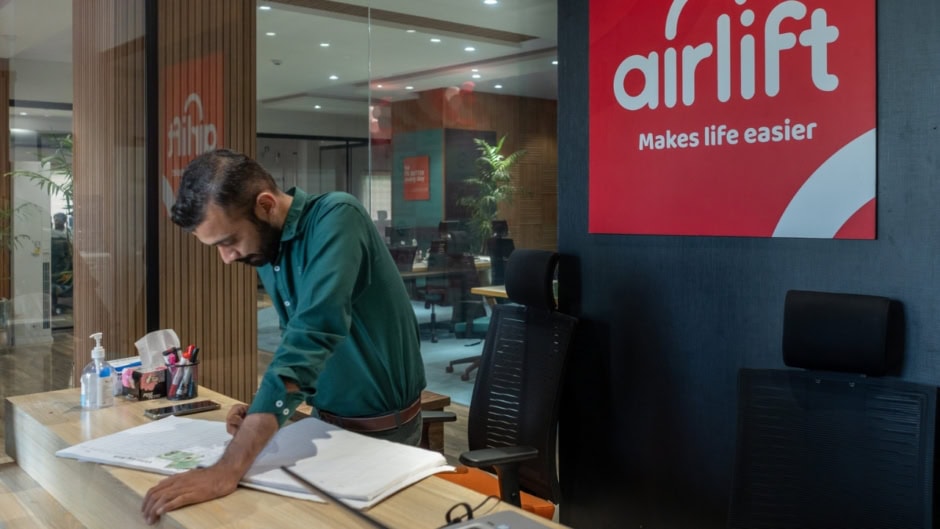
Usman Gul, co-founder of Airlift, announced this week that his new startup Metal has secured a strategic investment from US-based Rebel Fund.
The news naturally invites a question Pakistan’s startup ecosystem has never fully answered: what actually killed Airlift, and has anyone on the team learned from it?
The Rise and the Hype
Airlift launched in 2019 as a mass-transit service running Uber-style buses across Pakistani cities. When Covid-19 shut down public transport in 2020, the company pivoted hard into quick commerce, promising grocery delivery in 30 minutes. Investors loved the story. Airlift raised $85 million in a 2021 Series B co-led by Harry Stebbings of 20VC and Buckley Ventures, the largest such round in Pakistan and MENA at the time. Total funding reached $110 million. The valuation hit $275 million. Many called Airlift Pakistan’s first likely unicorn.
Experts argued that the company focused more on inflating investor confidence than building sound business economics. Airlift had already failed to make its first mass-transit model work, then placed all its chips on quick commerce, a model under fire worldwide for thin margins and unsustainable burn.
How the Money Disappeared
In the first quarter of 2022, Airlift reported $21.9 million in gross revenue but just $900,000 in net revenue, a 4% margin, while burning $5.3 million in cash at the adjusted EBITDA level. The company expanded into South Africa at the same time, layering international costs onto an already cash-hungry operation.
Leadership projected confidence right up to the end. In June 2022, the founders said that Airlift was “remarkably close to profitability.” Weeks later, the company was gone. A planned Series C collapsed when investors who had agreed to fund the round said they needed over two months to wire the money. Airlift did not have two months. On July 12, 2022, it ceased all operations permanently.
The human cost was severe. Around 300 corporate employees and thousands of warehouse and delivery staff lost their jobs overnight. Airlift published a public database of 113 terminated staffers marked “open to work.” The collapse shocked an ecosystem that had treated the company as its poster child.
What Insiders Admit Now
Not every popular explanation holds up. A detailed post-mortem by a former Airlift insider rejected the common claim that fraud or inventory wastage sank the company, noting shrinkage stayed near industry norms. At its peak, Airlift hit roughly $90 million in annualized revenue. The real causes were more structural. The company scaled aggressively on the assumption that cheap venture capital would keep flowing. When markets turned in 2022 and funding dried up globally, a business engineered for growth rather than survival had no buffer left.
That is the central lesson. Airlift did not fail because Pakistanis cannot build startups. It failed because it built a cash-burning machine dependent on perpetual fundraising, then met a market that stopped funding burn. TechJuice explored more on this in this article when Airlift ceased operations.
Can Metal Be Different?
Metal is a very different company. It is an AI platform that helps founders manage fundraising, a software product with far lower capital intensity than grocery delivery. Founded in 2023 and backed by Y Combinator and a16z, it sells to other founders rather than racing to capture consumer market share. On paper, it avoids the exact trap that destroyed Airlift.
Yet the Rebel Fund announcement carries familiar warning signs. Gul disclosed no investment amount, no valuation, and no terms, describing it only as “strategic.” Rebel Fund itself runs an algorithm-driven model, targeting Y Combinator startups “pre-Demo Day” with a near 100% deal win rate. A check from a high-volume fund into a YC company is routine, not a singular endorsement. Local coverage also labeled Metal “Pakistan-based,” though Y Combinator and a16z list it in Los Angeles.
None of this means Metal will fail. It means the ecosystem should resist the reflex that helped inflate Airlift: celebrating a vague funding announcement before asking what is actually in it. As is with any field, the next Pakistani success will come from a company built to survive a downturn, not one built to raise through it.