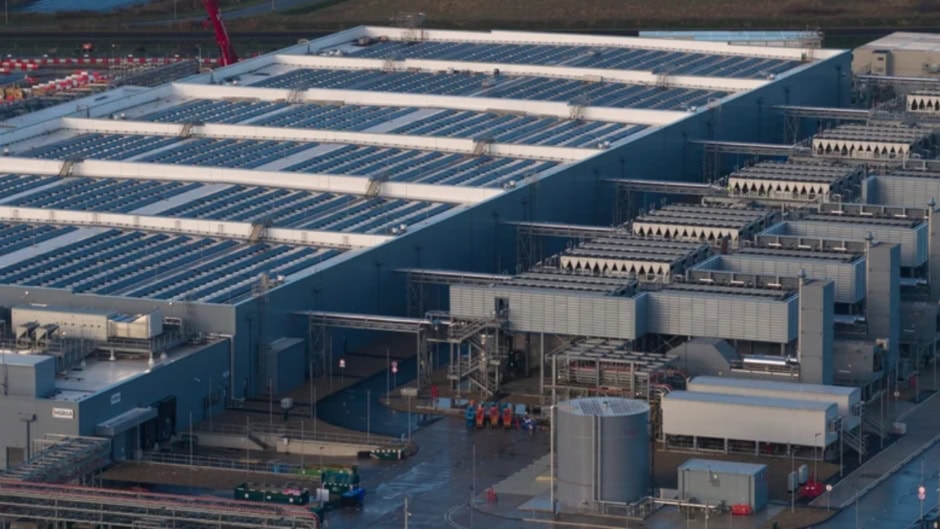
Amazon has unveiled a new data center architecture called Resilient Network Graphs, or RNG, that the company says will make its facilities both more resilient and dramatically more power efficient.
According to a 2026 Wired report, Amazon claims the technology will allow AWS data centers to use 69% fewer routers and switches and 40% less power, while delivering 33% better throughput than current designs.
The breakthrough rests on two key innovations. A hardware device called ShuffleBox randomizes physical cable connections between network components, while custom software called Spraypoint handles traffic routing within that randomized structure. Rather than relying on a traditional fat-tree network, where data flows through a limited number of fixed paths and can become congested, RNG creates many alternative routes between any two points in the network.
The underlying concept traces back to 1959, when Hungarian mathematicians developed the Erdős–Rényi model of random network graphs. The approach connects points randomly but according to fixed probability rules, producing different network layouts each time while keeping their statistical properties predictable.
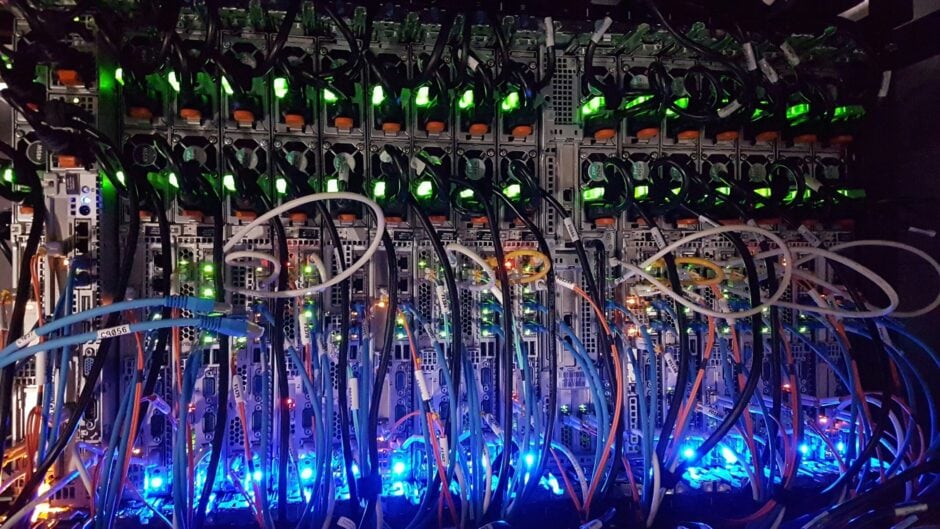
Amazon’s implementation pairs this quasi-random structure with optical circuit switching, which transmits data as light through fiber optic cables without converting it back and forth into electrical signals at each node, a process that consumes significant energy in conventional networks. Spraypoint then “sprays” data packets across multiple neighboring routers instead of sending them down a single fixed path, spreading traffic to avoid congestion and bottlenecks.
The efficiency gains matter because data centers are placing unprecedented strain on power grids worldwide. In New York State alone, 30 data centers currently seeking construction permits would collectively consume more electricity than the entire nation of Ireland if built. Experts say that households near new data centers can pay up to 267% more for utility bills than five years earlier.
Amazon was separately found in 2025 to operate roughly twice as many active data centers as previously estimated, and reports have linked its facilities to new gas plant construction, extended coal plant lifespans, and heavy water consumption for cooling in some of the world’s driest regions.
In Germany, the online marketplace DataCentres.com lists four Amazon data centers. The leaked data records 50. According to the leak, these data centers used at least 1.3 million megawatt hours of electricity in 2023, more than enough to power every household in Frankfurt, the city where all but a few of Amazon’s smallest German data centers are located. Amazon has leasing arrangements with 180 partners, the leaked data shows.