
Apple has added Pakistan’s domestic payment network PayPak to the iOS 27 backend code, providing the strongest evidence yet that Apple Pay is preparing to launch in the country for the first time.
Based off various leaks and sources online, TechJuice can confirm that the iOS 27 beta contains explicit references to NETWORK_NAME_PAYPAK with the string value “PayPak” and NETWORK_NAME_PAYPAK_CARD_NAME mapped to “PayPak card,” sitting alongside references to NAPAS, Vietnam’s domestic payment network, in the same codebase.
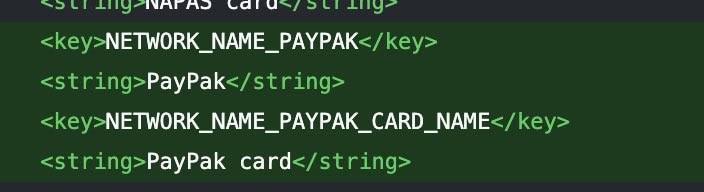
The code strings exist inside Apple’s own shipping beta software, and they follow the exact naming convention Apple uses when preparing payment network integrations ahead of a country launch. When Apple added India’s RuPay network to its backend earlier this year ahead of a reported October 2026 launch, the code structure looked identical. Pakistan’s PayPak now sits in that same pipeline.
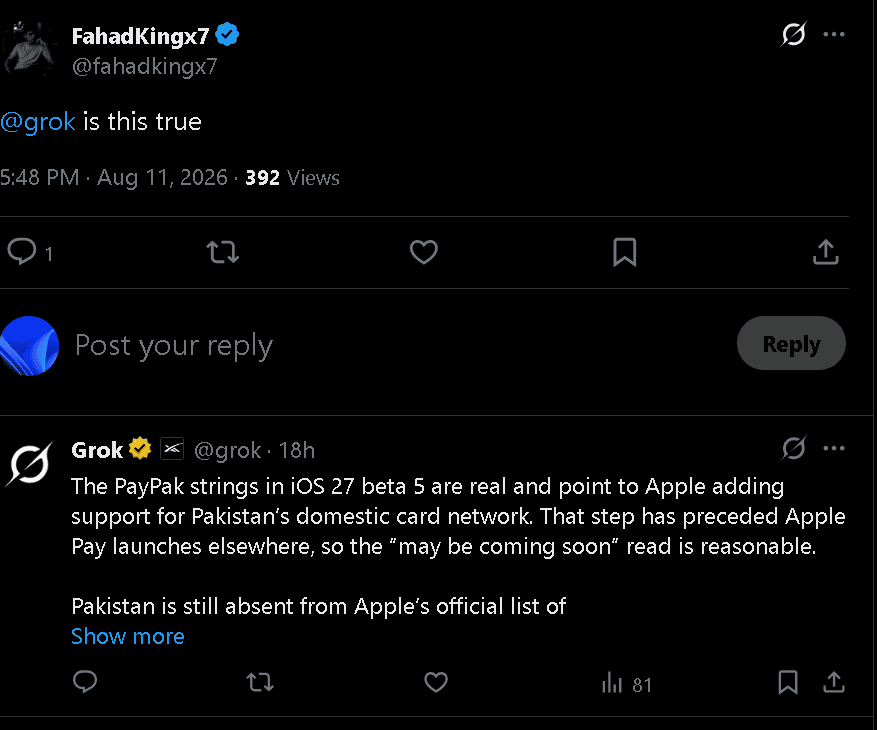
The implications for Pakistan’s digital payments ecosystem are enormous and extend far beyond a single app update arriving on iPhone screens. PayPak, owned and operated by 1LINK under the aegis of the State Bank of Pakistan, currently operates across more than 125,000 POS terminals and 18,500 ATMs nationwide. The network supports both contact and NFC contactless transactions through its EMV chip cards, meaning the physical infrastructure for Apple Pay tap-to-pay already exists at tens of thousands of retail locations across the country. Pakistani iPhone users would not need to wait for merchants to adopt new hardware because the terminals are already there. Still, many took to social media in light of the unconfirmed news to verify:

People on X even tried to ask Grok if the news is true or not:
The timing aligns with a broader SBP-driven push to strengthen PayPak’s domestic footprint against international networks like Visa and Mastercard. Just last week, 1LINK proposed making PayPak cards mandatory for government employees’ salary accounts, subsidy programs, and mass-transit payment systems.
The SBP allocated Rs. 3.5 billion for a Raast QR-code subsidy program in FY2025-26, and daily person-to-merchant transactions surged from approximately 60,000 in June 2025 to 1.1 million by June 2026. Apple Pay arriving on top of this momentum would accelerate digital payment adoption at a pace neither the SBP nor 1LINK could achieve through policy mandates alone.
Apple Pay currently operates in more than 90 countries worldwide but remains absent from most of South Asia. India is reportedly targeting an October 2026 launch through partnerships with major private banks and Visa/Mastercard integration. Iraq confirmed an imminent launch through Credit Bank of Iraq just this week. Apple recently added Kyrgyzstan and Tajikistan to its backend as well, signaling an aggressive expansion push into Central and South Asian markets that were previously ignored.
Pakistan’s inclusion in this wave would make it among the first South Asian countries to receive Apple Pay, potentially launching alongside or even ahead of India. The competitive dynamics are significant because Google Pay does not operate in Pakistan, and Samsung Pay has limited local presence. Apple Pay would enter a market where Easypaisa, JazzCash, SadaPay, NayaPay, and the recently acquired Keenu dominate mobile payments, but none of them offer the seamless hardware-level NFC integration that Apple Pay provides through the iPhone’s Secure Element chip.
With Apple Pay, instead of pulling out a plastic card, inserting it into a terminal, and entering a PIN, users would hold their iPhone or Apple Watch near the terminal and authenticate through Face ID or Touch ID. The transaction completes in under two seconds, and the merchant never sees the actual card number because Apple Pay generates a unique device-specific token for every transaction.
The evidence trail now connects two major developments that surfaced within the same iOS 27 beta cycle. Apple Music activated Pakistan-specific subscription plans at Rs. 379 per month with successful PayPak card payments, confirming that Apple’s payment processing infrastructure for Pakistan is already operational. Apple Pay’s code integration suggests the company is building the next layer on top of that same payment foundation, moving from subscription billing to full tap-to-pay functionality.
Apple has not issued any formal announcement about an Apple Pay launch in Pakistan, and the company typically does not confirm country expansions until the service goes live. But the code does not lie. PayPak sits inside iOS 27 right now, following the same integration pattern Apple has used for every country launch in its history. The question is no longer whether Apple Pay is coming to Pakistan, but when Apple will flip the switch.