
Bitcoin extended its losses on Wednesday, slipping below $62,000 as investors reacted to renewed geopolitical tensions in the Middle East following U.S. President Donald Trump’s declaration that the ceasefire with Iran was “over.”
The world’s largest cryptocurrency fell to around $61,500 during Wall Street trading, giving up recent gains as broader financial markets shifted toward risk-off assets.
The decline came after Trump said the ceasefire agreement with Iran had collapsed, while reports suggested both Washington and Tehran were considering measures that could disrupt shipping through the Strait of Hormuz, a key route for global oil supplies.
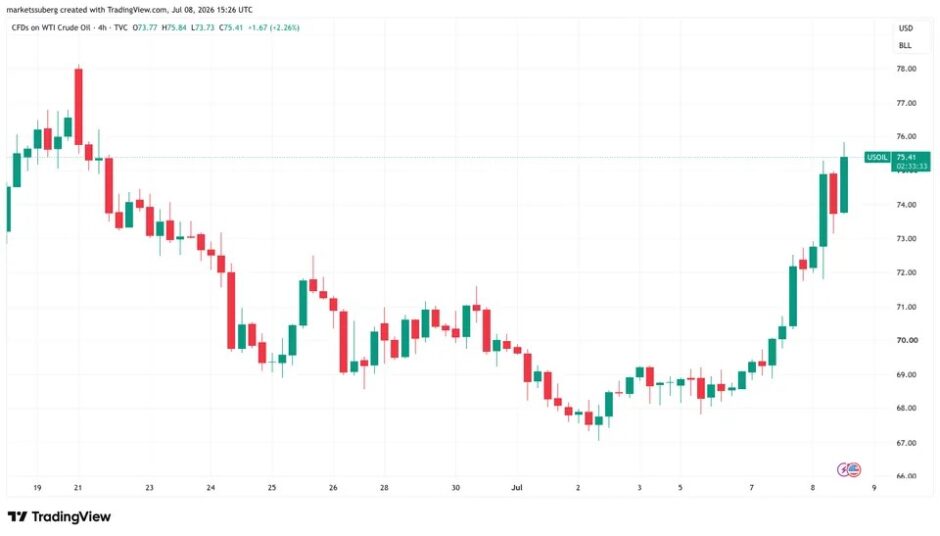
The escalating tensions pushed U.S. West Texas Intermediate (WTI) crude oil above $75 per barrel, its highest level since late June, fueling concerns over higher inflation and tighter global financial conditions.
The geopolitical uncertainty also affected expectations for U.S. monetary policy. Market participants increased bets that the U.S. Federal Reserve could raise interest rates later this year as rising oil prices threaten to add to inflationary pressures.
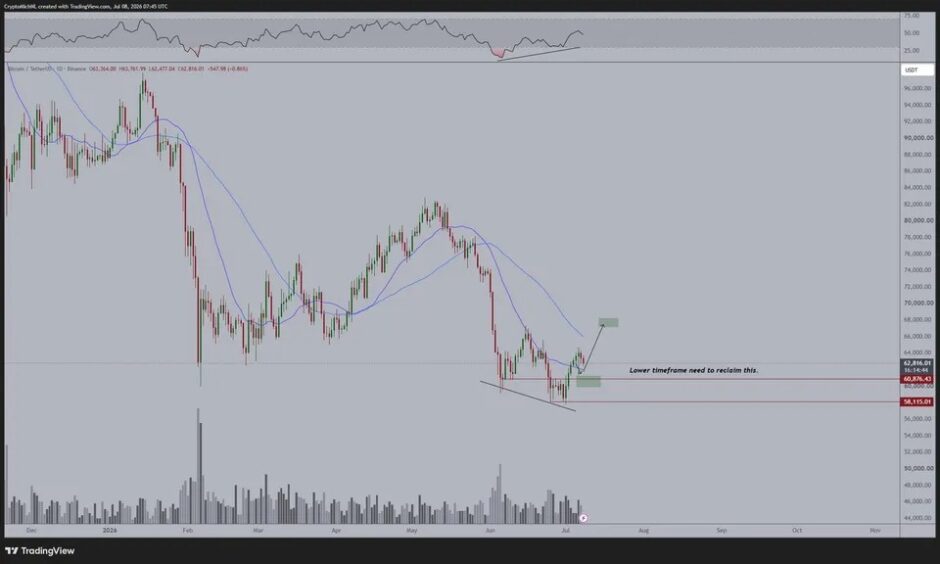
Crypto market analysts said Bitcoin could face additional downside in the near term, with the $61,000 level emerging as a key support zone closely watched by traders.
Some analysts believe the current weakness may prove temporary if geopolitical tensions ease, while others expect continued volatility as investors assess developments in the Middle East and their impact on global markets.
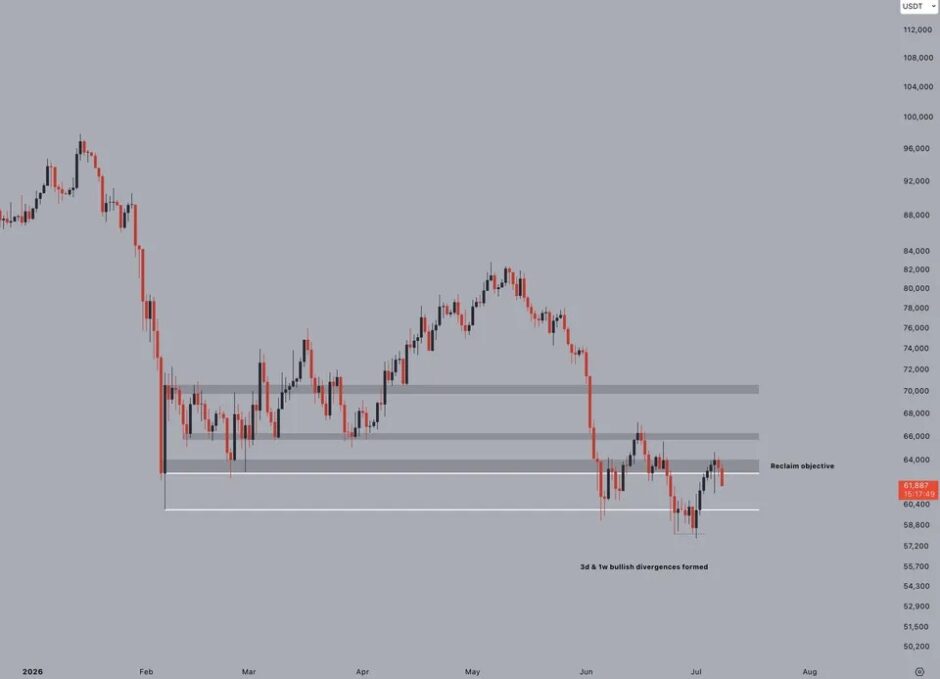
Bitcoin has remained under pressure in recent sessions as traders reduce exposure to risk assets amid heightened uncertainty across financial markets.