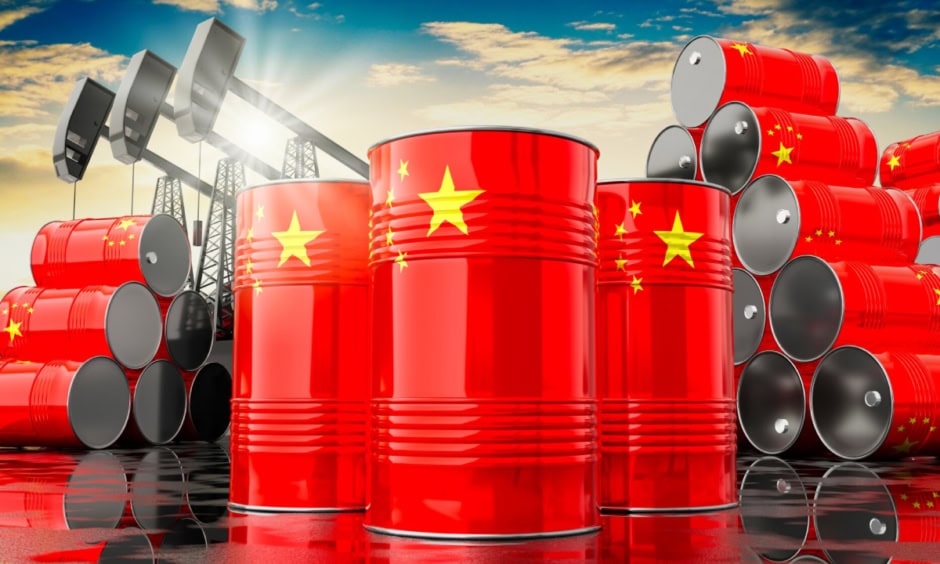
China has recorded a 5.5 percent decline in petrol demand as escalating tensions involving Iran and rising global crude oil prices continue to disrupt international energy markets.
According to international media and energy market reports, concerns over disruptions in the Strait of Hormuz have pushed oil prices higher, leading to weaker fuel consumption across China. Analysts say the decline reflects growing pressure from elevated fuel costs alongside China’s ongoing transition toward electric vehicles and renewable energy.
Reports indicate that fears of prolonged supply disruptions in the Gulf region have unsettled Asian energy markets, prompting China to reduce crude oil purchases and refinery activity in recent months.
Industry estimates show that China relied on nearly 5.4 million barrels per day of oil shipments passing through the Strait of Hormuz during early 2025, making it one of the countries most exposed to instability in the region.
Global oil prices have surged amid concerns of a potential blockade affecting oil transportation routes. Saudi Aramcoreportedly warned that prolonged disruption in the Strait of Hormuz could remove nearly 100 million barrels of oil per week from global markets.
At the same time, Chinese authorities have continued policies aimed at reducing dependence on petrol-powered vehicles by promoting electric vehicles and clean energy infrastructure.
Energy analysts noted that rapid electric vehicle adoption is already contributing to a long-term decline in gasoline demand across China. The country has significantly expanded its EV market and renewable energy capacity over recent years as part of efforts to lower reliance on imported oil.
Despite the recent slowdown, China remains one of the world’s largest consumers and importers of petroleum products. Reports indicate that the country consumed approximately 5.4 million barrels of gasoline per day during the first quarter of 2025, exceeding the combined gasoline consumption of India, Japan, and South Korea during the same period.
However, refinery output and fuel imports have weakened due to softer domestic demand, economic uncertainty, and sustained increases in global crude oil prices.
The latest drop in Chinese petrol demand is being closely monitored by global energy markets, as changes in China’s fuel consumption patterns can significantly affect international oil prices and global trade flows.