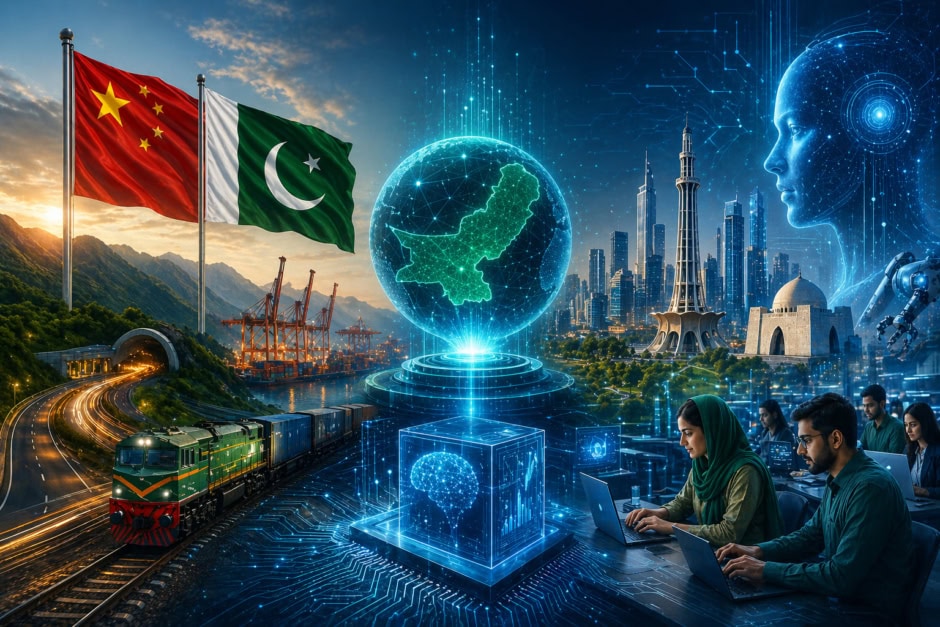
Pakistan’s push toward a knowledge-driven economy received a boost as the Pakistan-China Joint Chamber of Commerce and Industry said the combination of CPEC 2.0 and the government’s proposed $1 billion AI fund could help transform the country’s digital future.
Industry leaders say integrating advanced technologies into national development planning is becoming increasingly important for sustainable economic growth, especially as Pakistan’s young population presents a major opportunity for innovation-led development.
According to Nazir Hussain, the proposed AI fund could strengthen governance, promote innovation, and create new opportunities for Pakistan’s youth.
The initiative is expected to support:
- AI education in federally administered schools
- 1,000 fully funded PhD scholarships by 2030
- Training for one million non-IT professionals in AI-related skills
Stakeholders say these measures could help build a nationwide technology ecosystem while improving productivity and preparing traditional industries for digital transformation.
CPEC 2.0 Linkage
The chamber also linked the initiative with China-Pakistan Economic Corridor and the government’s Uraan Pakistanprogram, saying the policy convergence could improve exports, efficiency, energy affordability, and environmental sustainability.
Officials believe collaboration with China could also support technology transfer, joint research, and digital infrastructure development through public-private partnerships.
Digital Economy Growth Potential
Citing International Monetary Fund estimates, industry experts note digital economies in developing markets can grow two to three times faster than traditional sectors.
With Pakistan contributing less than 1% to global AI research output, analysts say investment in local talent, datasets and indigenous solutions will be critical to unlocking long-term gains.