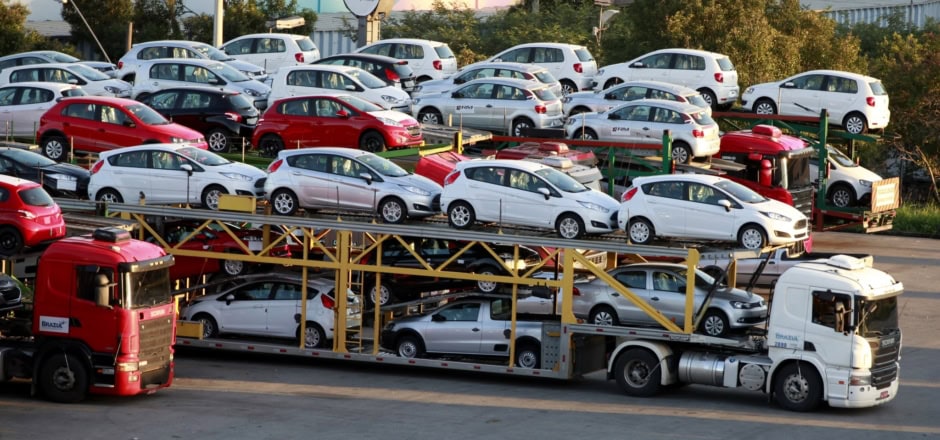
Pakistan is planning a new pilot project to import, refurbish, and re-export used vehicles and auto parts, using a system similar to the one operating in the UAE. Officials say the initiative could help the country increase exports, attract investment, and create thousands of jobs.
In the UAE, used vehicles are imported into the Jebel Ali free zone, repaired, and upgraded to meet international standards before being shipped abroad again. Since the vehicles are not registered for local use, the model has helped the Gulf state earn foreign exchange and build a strong position in the global automotive trade.
Now, Pakistani authorities want to introduce a similar setup through the country’s first Import-Refurbishment-Export (IRE) model. The project is being backed by the Special Investment Facilitation Council (SIFC), a government body formed in 2023 to bring foreign investment into key sectors.
“The SIFC has been working on this project since October 2023, and this year facilitated the alignment of regulatory frameworks under Pakistan’s Import Policy Order (IPO) 2022 and Export Facilitation Scheme (EFS) 2021 during the first quarter.”
According to the official, the project remained delayed for years due to regulatory differences between several departments. These included the ministries of industries and commerce, the Federal Board of Revenue (FBR), and the Engineering Development Board (EDB).
“The aligned regulatory frameworks are aimed at establishing Pakistan’s first Import-Refurbishment-Export (IRE) model for used vehicles and auto parts,” the official said.
The move comes as Prime Minister Shehbaz Sharif looks for ways to increase exports and support long-term economic growth. So far, export numbers remain under pressure. Pakistan’s exports fell more than 6 percent to $25.2 billion during the current fiscal year until April. During the same period last year, exports stood at $26.9 billion, according to the Pakistan Bureau of Statistics.
Officials estimate the IRE project could attract an initial investment of up to $30 million. Later, that amount could grow to nearly $300 million. The government also expects the initiative to create jobs and improve export earnings. However, officials did not clarify whether the investment would come from the public or private sector.
“The authorities have incorporated the IRE initiative in the draft Auto Policy 2026-31, thus positioning Pakistan for integration into the global automotive refurbishment and re-export value chain,” the official added.
Shahzad Ali, spokesperson for Special Assistant to the Prime Minister on Industries and Production Haroon Akhtar Khan, said discussions on the new auto policy are still ongoing with industry groups. These include the Pakistan Automotive Manufacturers’ Association (PAMA) and the Pakistan Association of Automotive Parts and Accessories Manufacturers (PAAPAM).
“I cannot say anything about it now,” Ali said when asked whether the IRE initiative had officially become part of the upcoming auto policy.
Last week, Pakistan’s commerce ministry secured approval from the Economic Coordination Committee (ECC) to amend the Import-Cum-Export Scheme under IPO 2022 and EFS 2021.
In a statement, the Finance Division said the ECC approved amendments “to allow temporary import of used vehicles and auto parts for repair, refurbishment, and subsequent re-export under a pilot project, with directions for review after one year.” The approval will allow the government to run the pilot project through certified operators under EDB supervision.
“The proposed framework draws upon international best practices, including Dubai’s Jebel Ali refurbishment-export model,” the official said.
Authorities also made it clear that imported vehicles will not enter Pakistan’s local market. Instead, every vehicle brought under the scheme must be re-exported within a fixed time period. “The scheme requires that 100 percent of the vehicles will be exported, and no quantity can be supplied in the domestic market.”
Pakistan’s automobile industry has repeatedly opposed the idea of importing used vehicles. Companies such as Toyota, Honda, Suzuki, Hyundai, Kia, and Changan Automobile have previously warned that allowing used car imports could damage local manufacturing and eventually force plants to shut down.