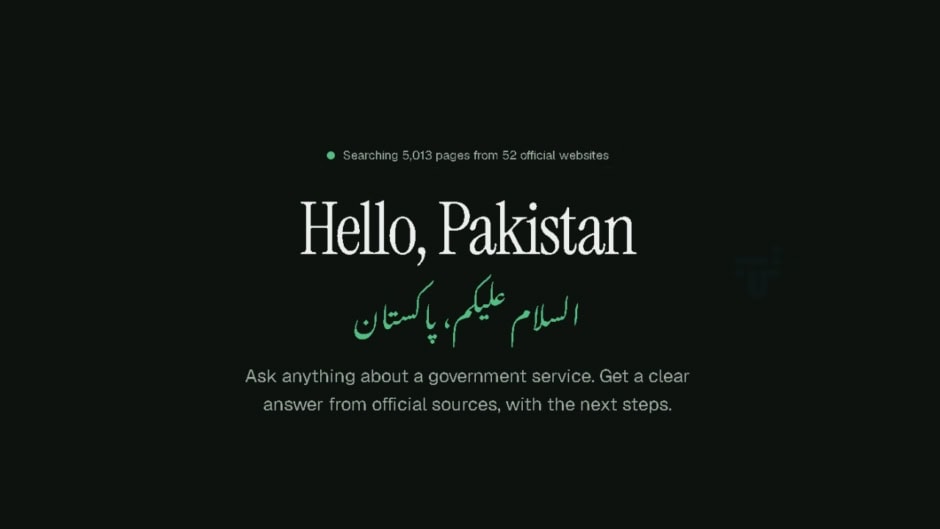
Days after the White House launched America.gov on September 29, a Karachi-based developer built Pakistan’s own version. Raheel Siddiqui launched pakistangov.online, an independent AI-powered tool that answers questions about Pakistani government services by pulling information exclusively from official .gov.pk websites.
The tool went viral within hours of its launch. In its first three days, pakistangov.online served over 480,000 requests. However, the attention also brought attacks. Siddiqui reported that the platform blocked more than 1,300 attack requests across three separate DDoS attempts. It also stopped over 10,900 bot requests and caught two prompt injection attacks that reached its AI layer. Despite all of this, no data was compromised and no financial losses occurred.
America.gov covers 29,000 federal websites and uses Gemini and Grok models to answer citizen queries about services like Medicare, passports, and job searches. pakistangov.online takes a similar approach on a smaller scale. Users can ask about any Pakistani government service and receive AI-generated answers with source citations and next steps. The tool restricts all response links to official government domains only.
Siddiqui, an AWS Community Builder, NED University graduate, and GitHub Campus Expert, built security measures into the platform from day one. The system stores no citizen data. Scripts cannot access the AI layer directly. Every user has a daily usage limit. “Build the limits before you need them,” Siddiqui wrote on LinkedIn while sharing the platform’s first three-day stats.
The tool is not affiliated with the Government of Pakistan. Its website states this clearly as a disclaimer. Still, it joins a growing list of AI civic tools in the country. The Pakistan Telecommunication Authority launched its own AI chatbot for digital public services in June 2026. Meanwhile, Code for Pakistan developed GovGPT with the KP IT Board to provide verified access to provincial policies.
pakistangov.online’s early traction shows strong public demand for accessible government information. And its survival through three DDoS attacks suggests that independent developers can build secure civic tools without institutional backing.