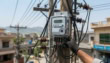
The Ministry of Information Technology and Telecommunication (MoITT) wants to overhaul Pakistan’s telecom infrastructure. Authorities have proposed a massive Rs. 1.888 billion project for the upcoming federal budget. The primary goal is to migrate the current telecom billing setup to a modern Convergent Billing System.
However, actual progress remains at absolute zero. The ambitious telecom project spans a timeline from 2025 to 2028. MoITT has requested an allocation of Rs. 945 million specifically for the upcoming FY2026-27.
The proposed platform will support roughly 4 million subscribers. It aims to unify billing across multiple critical services. These include cellular, Wireless Local Loop (WLL), Digital Cross Connect (DXX), Long Distance International (LDI), cloud, and Fiber to the Home (FTTH).
Officials claim this shift is essential. A convergent platform will eliminate redundancies, manage revenue efficiently, and align customer management with global standards. Yet, the reality on the ground exposes a glaring lack of execution.
Currently, the initiative is effectively stalled. Authorities have recorded no physical or financial progress. Official documents confirm zero expenditures so far. The project remains firmly trapped in the early planning stages. Officials are still preparing working papers and the essential PC-I document. They will eventually submit these drafts to the relevant forums for approval in due course.
Telecom sector experts acknowledge the forward-looking nature of the MoITT proposal for a modern Convergent Billing System. However, they explicitly warn about the consequences of slow execution. Constant bureaucratic delays will severely dilute the project’s impact.
Meanwhile, telecom operators face immense pressure right now. They desperately need to upgrade their existing systems to support next-generation services. If government approvals continue to drag out, this vital Rs. 1.888 billion initiative will lose its relevance before it even launches.