Samsung SDS has made a pointed bet on Korean silicon, and the timing fits a global pattern. The company launched a cloud service on Monday running on chips from domestic startup FuriosaAI, pushing aggressively into the market for cheaper AI infrastructure. It is Korea’s first deep learning service powered by a homegrown chip.
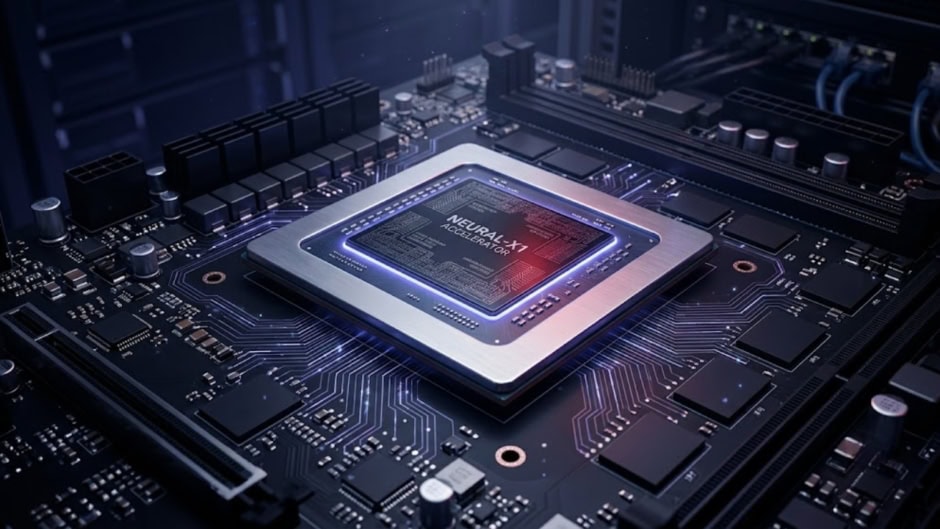
The service introduces Neural Processing Unit as a Service, or NPUaaS, built on FuriosaAI’s second-generation RNGD chip. Where GPUs train massive models, NPUs specialize in inference, meaning the phase where a trained model actually generates text or analyzes images. So Samsung is not fighting NVIDIA on raw training power, since it is targeting the cheaper, higher-volume work instead.
The pitch to businesses is all about cost. RNGD promises drastically lower power consumption than traditional GPUs, which matters enormously as energy bills balloon across the AI industry. Clients lease computing through the cloud rather than buying and maintaining their own servers, scaling across one, two, four, or eight chips as needed. That flexibility suits companies wary of huge upfront hardware spending.
The deeper motive is sovereignty, though. The service runs inside a sovereign cloud environment aimed squarely at public-sector and defense-adjacent clients who demand strict data security. So the play is not only cheaper compute, since it also keeps sensitive Korean workloads off foreign hardware entirely.
In parallel, China is building chips like the DF1000 to escape US controls, the UAE just won license-free NVIDIA access through diplomacy, and now Korea backs a domestic challenger for inference. Each represents a different route around the same NVIDIA dependence.
As Samsung SDS executive Lee Ho-jun framed it, customers can now deploy high-performance AI with greater flexibility and lower cost. The lesson here for marketers is that inference, not training, may be where affordable local AI realistically begins.