The Pentagon has a problem that universities might actually solve faster than traditional defense contractors.
Real-time identification of biological and chemical dangers remains critical for combat leaders. Troops on the ground face split-second choices regarding hazardous environments. Present detection hardware tends to be heavy, energy-intensive, and prone to failure during active engagements. To counter this, the Army Research Laboratory took the initiative to place scientists right inside academic settings.
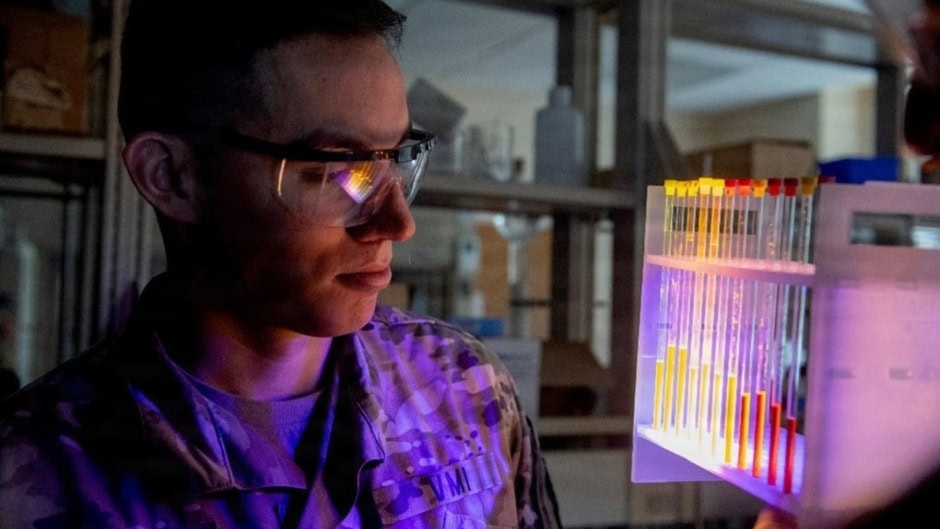
This approach took root at West Point and the Virginia Military Institute. Rather than stopping at traditional journal publications, Army researcher Dan Harrison and his VMI peers integrated themselves into the Army’s Power and Energy Sciences Division. Concurrently, an Army postdoc divided their schedule between ARL investigations and instructing cadets at the Military Academy.
The breakthrough yielded iridium-based chromophores: compounds capable of absorbing and radiating light uniformly. While that might sound purely theoretical, integrating these molecules into sensor arrays creates practical threat-spotting devices. Chemical agents, biological threats, and industrial poisons can all be identified within moments, eliminating the need for heavy gear or external power.
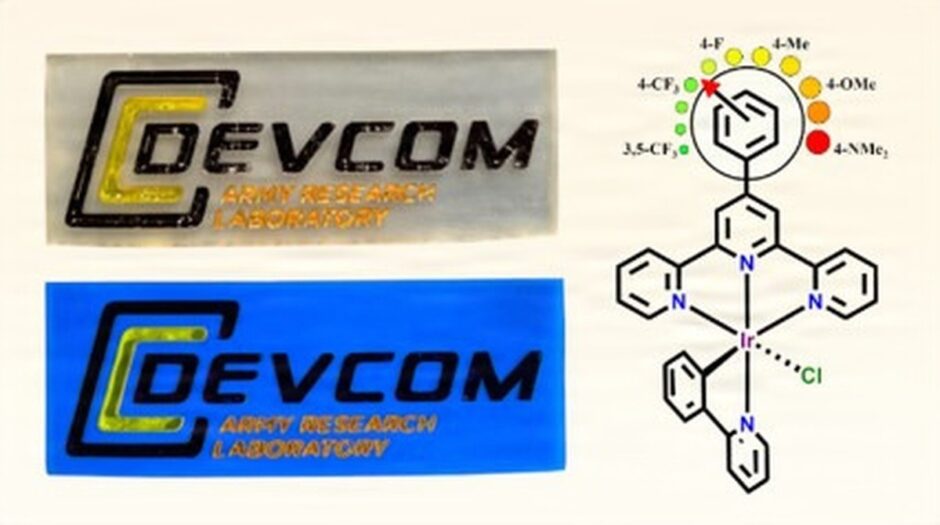
For defense operations, this capability is vital because quick detection preserves lives. Equipping a soldier with a phone-sized passive sensor instead of cumbersome monitoring gear transforms the tactical landscape. Options multiply, reaction windows shrink, and exposure to surprise attacks drops.
“For the Army, these materials could play an important role in on-site generation of fuels or as early indicators of the presence of chemical warfare agents,” said Dr. Thomas Rohrabaugh, an ARL scientist and principal collaborator on the project. “Their versatility makes them a promising tool for strengthening safety and readiness across a range of missions… Our design strategy demonstrated that we could predictably engineer optical behavior… This represents a superior methodology compared to traditional trial-and-error processes and is applicable across various classes of materials. Ultimately, this pushes the field of transition metal photophysics forward in a meaningful way, paving a path for next-generation materials of interest to the Army.”
Printed in the American Chemical Society’s Inorganic Chemistry, the findings remain entirely unclassified. This transparency allows the work to undergo rigorous peer review and international evaluation. The Department of Defense recognized a counterintuitive truth: addressing tough security challenges often relies on open academic publication rather than secrecy.
Ultimately, the collaborative framework outweighs the individual invention. The military lacks infinite funds, and traditional contractors merely fulfill specific procurement requests, whereas universities pursue open-ended inquiry. Neither pathway suffices on its own.