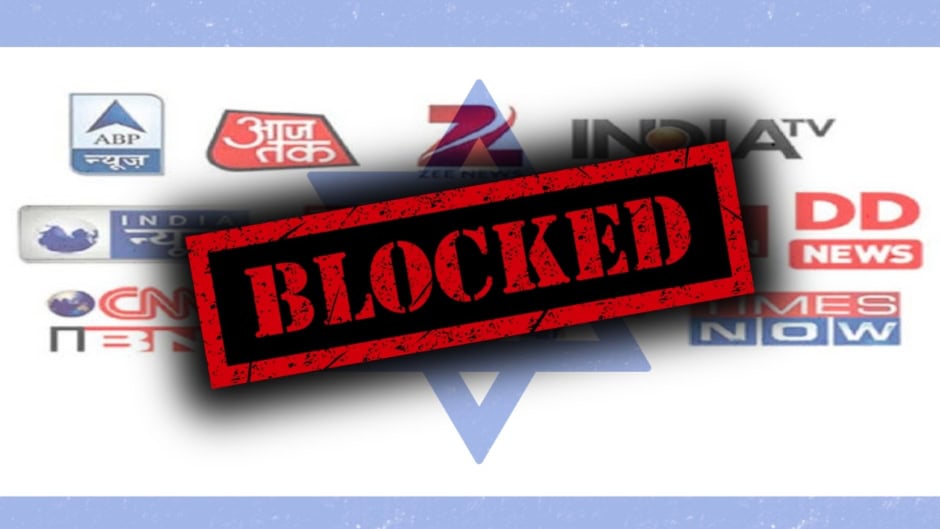
A recurring question in Pakistani online discussions is why websites based in Israel remain accessible while many Indian websites face restrictions. The short answer is that Pakistan does not operate a “ban everything from Country X” system. Website blocking is selective, reactive, and driven by specific legal triggers rather than a site’s country of origin.
How Website Blocking Works in Pakistan
The Pakistan Telecommunication Authority (PTA) blocks content under Section 37 of the Prevention of Electronic Crimes Act (PECA) 2016. Through July 2026, the PTA had processed 1,726,303 URLs and blocked 1,542,800 of them. The vast majority fell under “decency and morality” (1,075,762 URLs), followed by terrorism (179,285) and content against the glory of Islam (136,891). At no point does the PTA’s categorization system include a country-of-origin filter. Blocking is content-driven, not geography-driven.
The Case of Indian Websites
During the May 2025 conflict following the Pahalgam attack, the PTA blocked 16 Indian YouTube channels, 31 video links, and 32 Indian websites on May 7 alone. The Open Observatory of Network Interference (OONI) independently confirmed blocks on India Today, NDTV, The Hindu, Hindustan Times, Times of India, and three other major outlets across 25+ Pakistani ISPs.
The blocking was reciprocal. India blocked 12 Pakistani news sites including Dawn, Geo TV, and ARY News, while restricting 8,000+ X (Twitter) accounts and 16 Pakistani YouTube channels. In January 2026, the Editors Guild of India condemned the mutual bans as “against the spirit of democracy.”
However, not every Indian website is banned. Commercial, educational, and entertainment sites remain reachable. The restrictions focus on news and politically hostile content.
The Case of Israeli Websites and the Palestine Question
Pakistan does not recognize Israel, and Pakistani passports state they are “valid for all countries of the world except Israel.” Despite this firm stance, Israeli news sites like Haaretz and The Jerusalem Post remain accessible. Technology platforms like Wix, used by thousands of Pakistani small businesses, operate without restriction.
This raises a sharper question: Israeli media outlets regularly publish content that Pakistan would consider anti-Palestinian. The Jerusalem Post and Times of Israel routinely frame Israeli military operations in Gaza as defensive actions, while Palestinian casualties receive comparatively less coverage. If Pakistan’s blocking system truly protected its stated pro-Palestine position, these outlets would be obvious targets.
However, the PTA has never issued blocking orders against Israeli media for anti-Palestinian content. Instead, the censorship of pro-Palestine voices has come from an entirely different direction. Human Rights Watch documented over 1,000 cases across 60 countries where Meta suppressed pro-Palestinian content on Facebook and Instagram after October 7, 2023, through methods including post removal, account suspension, and shadow banning. TikTok faced similar accusations from governments including Malaysia. Pakistani digital rights organization Media Matters for Democracy received complaints from users globally about such suppression.
In other words, Pakistan’s internet policy does not extend its diplomatic stance on Palestine into active website blocking. The passport says “except Israel,” but the firewall does not.
Why the Difference Exists
India is a contiguous neighbor with active territorial disputes and intense information warfare. Israeli media, by contrast, rarely produces content targeting Pakistani domestic politics. Furthermore, the PTA’s system is complaint-driven. Indian news coverage spikes during bilateral crises and gets flagged far more frequently. Israeli websites simply do not generate comparable volumes of complaints or blocking orders.
Additionally, blocking Indian media during tensions serves as a visible reciprocal measure mirroring India’s own actions. A broad ban on Israeli websites would carry different diplomatic costs without delivering the same political utility, since there is no equivalent Israeli media war directed at Pakistan. VPN usage in Pakistan surged 6,000% in 2024 during the X ban, further demonstrating the practical limits of any blocking regime.
In short, Israeli websites remain operational not because of preferential treatment, but because they have not triggered the same volume of blocking orders that Indian news platforms receive during bilateral hostility. Pakistan’s firewall follows complaint volumes and crisis cycles, not passport stamps.