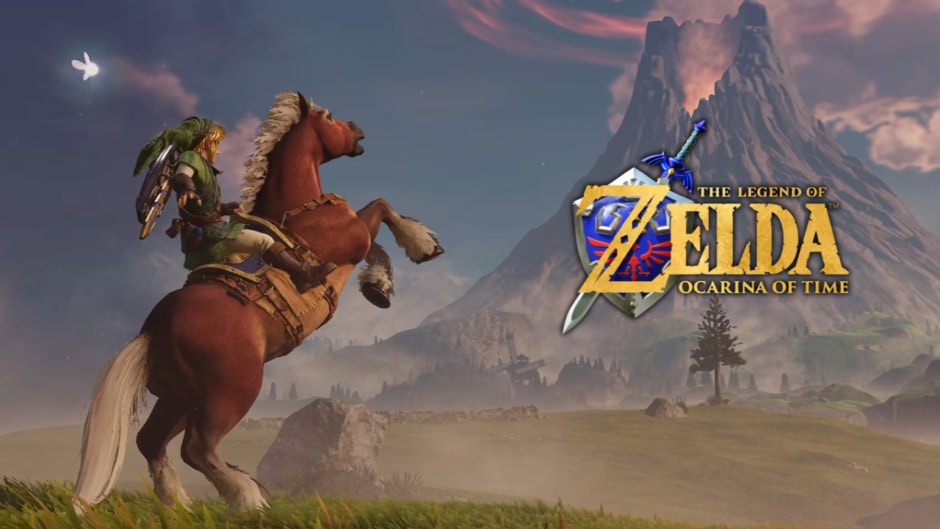
The highly anticipated Legend of Zelda: Ocarina of Time remake launched yesterday, November 5. Surprisingly, independent developers already have the Switch 2 exclusive running on PC. Multiple independent projects successfully bypassed Nintendo’s hardware restrictions. As a result, the Legend of Zelda: Ocarina of Time remake now runs as a native PC application.
Recent advances in AI coding tools made this rapid turnaround possible. Previously, developers needed large teams and lengthy development periods to reverse-engineer games. Now, AI-assisted recompilation reliably transforms console exclusives into PC games. Emulation also benefits from this recent AI boost. Furthermore, earlier projects successfully targeted games like Zelda: Tears of the Kingdom and Link’s Awakening.
Zelda: Ocarina of Time Remake Playable on PC, But Far From Perfect
Technically, the Zelda: Ocarina of Time remake runs on PC. However, the term “playable” requires a lot of heavy lifting. Multiple gameplay videos surfaced on social media yesterday. These clips show the game running through experimental Switch 2 emulation.
OOT Remake looking great so far
by
u/SpecialAd5480 in
SwitchPirates2
Unfortunately, players face substantial technical issues. The game suffers from severe graphical glitches and constant stuttering. Moreover, frame rates frequently drop as low as 15 FPS. Regardless of the specific project, early emulation performance historically improves over time. Therefore, these initial efforts will likely produce fully playable PC versions soon.
AI Tools Face New Corporate Restrictions
The growing popularity of static recompilation and game decompilation has attracted corporate attention. AI tool developers now face mounting pressure from copyright holders. Consequently, companies are implementing new restrictions.
In late October 2026, Anthropic’s official, Addy Osmani, confirmed a major update. The company instructed its Claude Code Opus 5.5 model to discourage recreations of copyrighted games. Anthropic framed this change as a way to protect original game development. However, users reported that these new rules blocked legitimate reverse engineering. Anthropic subsequently revised the restrictions in Claude Code version 2.1.317. Now, developers can reference existing games when describing mechanics for their original projects.
Nintendo Prepares for a Legal War
Nintendo aggressively protects its intellectual property. The company frequently pursues legal action against emulators, fan translations, and unofficial ports. However, Nintendo has not yet launched a coordinated crackdown specifically targeting AI-assisted reverse engineering.
The legal teams may simply be gathering evidence. A notable exception occurred in October 2026. Developer Oliver Sauter created a browser-based port of Super Mario 64 using Anthropic’s Claude. Nintendo quickly took notice and filed a copyright complaint. X subsequently restricted posts promoting the project.
Despite the complaint, the port remains active on Sauter’s website as of early November 2026. Sauter requires users to supply their own game files. This common tactic reduces the risk of piracy litigation.
Meanwhile, the rapid emergence of PC ports for the Ocarina of Time remake sends a clear message. The technical barriers protecting console exclusives are falling rapidly. Consequently, developers and copyright holders will soon engage in an increasingly complex game of cat and mouse.