
Pakistan’s National Computer Emergency Response Team has accelerated a sweeping cybersecurity audit of government websites following a fresh wave of hacker attacks targeting state-run digital infrastructure.
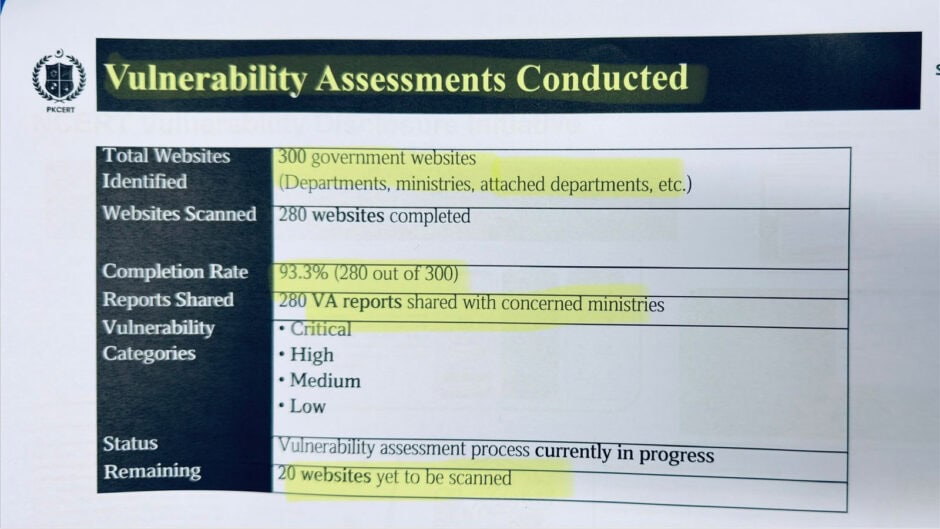
According to a National CERT document, 300 government websites were selected for security scanning to assess the deployment of cybersecurity controls. The sites span multiple federal ministries, subordinate departments, and other public-sector agencies. Of those 300, security scans have been completed on 280, bringing the audit completion rate to 93.3%, with only 20 sites remaining.
The completed scans revealed vulnerabilities across systems, servers, and web applications at every severity level, from critical and high to medium and low. Security reports for all 280 audited websites have already been sent to the relevant ministries.
Sources familiar with the process told TechJuice that government agencies have been instructed to take immediate corrective action to reduce the risk of hacking and data leaks. Recommended measures include applying pending security updates and effectively implementing web application firewalls.
The audit’s pace reflects growing urgency. Government websites have faced repeated intrusions in recent months, and the push to complete the remaining 20 scans signals that National CERT views the current threat environment as requiring a faster, more coordinated response across federal institutions.
For Pakistan’s broader digital ambitions, the stakes are high. The government is simultaneously building new digital platforms for SMEs and public services, making the security of existing infrastructure a prerequisite rather than an afterthought. The 93.3% completion rate is a notable milestone, but the real test will be whether ministries act on the vulnerability reports they have now received.