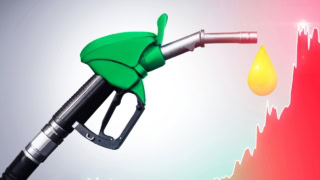
Imagine pulling fuel right out of thin air. Japan’s largest oil refiner, ENEOS Corporation, actually made this a reality. The company successfully produced synthetic liquid fuel using carbon dioxide and hydrogen. They built a demonstration plant at their Central Technical Research Laboratory in Yokohama. This facility produced roughly one barrel, or 160 liters, of synthetic fuel per day.
Furthermore, this “drop-in” fuel works perfectly in existing combustion engines without requiring any infrastructure modifications. Therefore, it offers a closed carbon loop. This breakthrough is especially attractive for resource-poor countries like Japan that depend entirely on energy imports.
The Three-Step Science
The production process relies heavily on three established technologies. First, Direct Air Capture (DAC) extracts carbon dioxide directly from ambient air or industrial emissions. ENEOS began testing this specific DAC technology back in 2023 to evaluate its large-scale feasibility. Second, electrolysis splits water into hydrogen and oxygen using renewable electricity. Finally, the well-established Fischer-Tropsch synthesis combines the captured carbon and hydrogen into liquid hydrocarbons.
Consequently, the process creates synthetic diesel or aviation fuel. The fuel even successfully powered a shuttle bus for the Expo 2025 Osaka. This real-world trial proved the technology absolutely works beyond laboratory experiments.
ENEOS Early Ambitions & The Harsh Economic Reality
Despite the scientific success, ENEOS officially paused the project in 2025. The problem is not the underlying science. Instead, massive production costs and scalability challenges halted the momentum. Some initial industry reports suggested this could eventually become a discounted alternative for countries like Pakistan, India, Bangladesh, and Sri Lanka. However, the hard data proves otherwise.
Producing green hydrogen via electrolysis is incredibly energy-intensive. According to the International Energy Agency, e-fuels demand several times more renewable energy than battery-electric alternatives to achieve the same output. As a result, synthetic fuels currently remain vastly more expensive than conventional fossil fuels and other low-carbon options. ENEOS originally aimed to scale production to 10,000 barrels per day by 2040. Yet, reaching that scale requires affordable carbon capture systems and massive hydrogen infrastructure, which simply do not exist at a viable price point right now.
The Global Pivot
The pause at ENEOS reflects a much broader global pattern. Companies and governments worldwide are struggling to deploy e-fuels economically. Most global projects remain stuck in pilot phases. Therefore, ENEOS is shifting its strategic focus toward biofuels and sustainable aviation fuels. These specific alternatives currently sit much closer to commercial viability.
Ultimately, synthetic e-fuels will not act as a universal replacement for standard petrol in the near future. Instead, the global energy sector views them as targeted solutions. Sectors like aviation, shipping, heavy industry, and heavy transport cannot easily electrify due to strict energy density requirements. For those specific heavy industries, liquid synthetic fuel remains a necessary, albeit currently expensive, long-term goal.