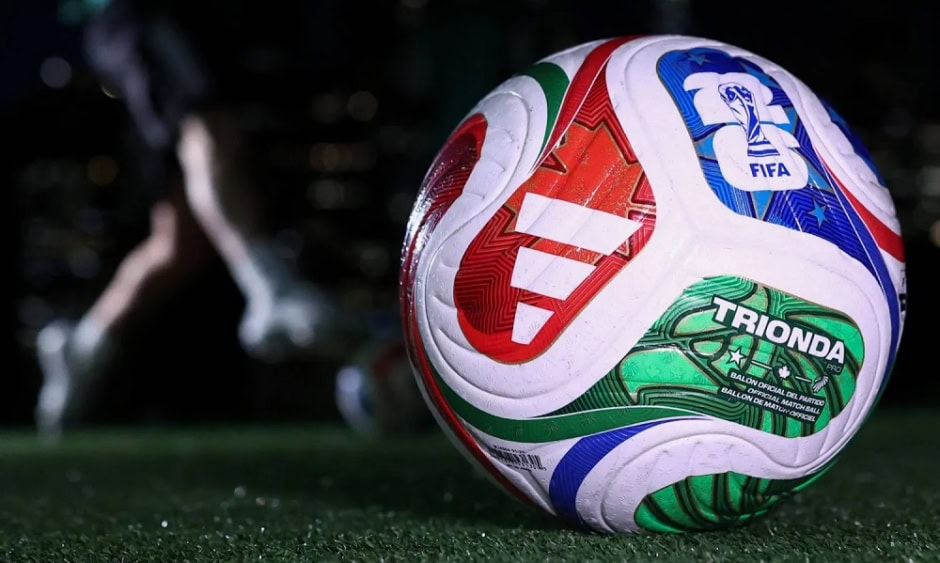
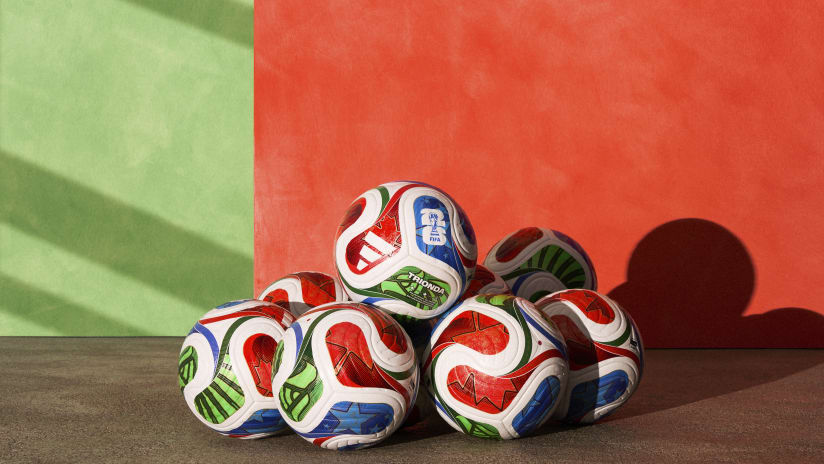
FIFA has officially unveiled the match ball for the 2026 World Cup, named “Trionda,” introducing a new level of smart technology designed to assist refereeing decisions through real-time data.
The official match ball, named “Trionda,” introduces one of the biggest technology shifts in football history. Adidas has built the ball with Connected Ball Technology, bringing real-time data into VAR decision-making and changing how key moments are judged on the pitch.
For the first time in World Cup history, the official match ball includes an electronic sensor that must be charged before every game. This marks a major shift in how match equipment is powered and maintained at the highest level of football.
Connected Ball Technology at the Core
The Adidas Trionda uses Connected Ball Technology to support referees and VAR officials during matches. The built-in sensor tracks movement and ball contact in real time, helping officials review crucial incidents with higher accuracy.
This system is designed to improve decisions related to offsides, handballs, and other key match situations where timing matters.
Charging System and Battery Performance
Unlike traditional match balls, the Trionda requires charging before each game. The system is fully wireless and designed for quick preparation before kickoff.
Key details include:
- The ball is wirelessly charged before every match
- It takes around 90 minutes to reach full charge
- It provides up to 6 hours of active use during gameplay
This ensures the sensor remains active throughout the full match without interruption.
Built for Faster and More Accurate Decisions
The embedded sensor continuously sends match data to assist VAR systems. It helps officials pinpoint exact ball contact moments, which is critical in tight offside calls and penalty-area decisions. The technology is expected to reduce delays in decision-making while improving consistency across matches.
The Trionda represents a major evolution in World Cup equipment. By combining physical design improvements with smart electronics, FIFA and Adidas aim to bring more precision to modern football.