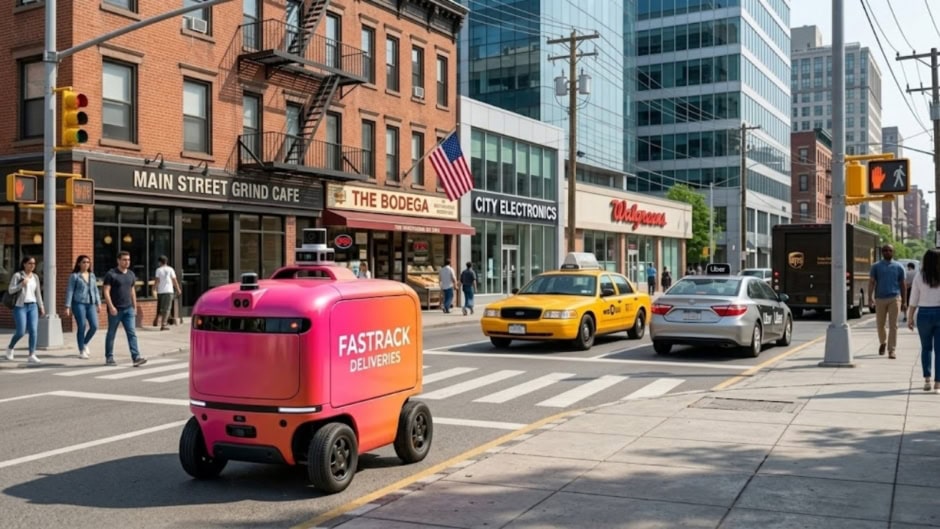
Autonomous delivery robots have begun appearing on sidewalks across cities in the US, UK, Japan, South Korea, and Germany, but a growing backlash from residents, local governments, and labor unions is now testing their future expansion.
The machines use cameras, sensors, and GPS to deliver groceries and fast food, and operators say they reliably avoid obstacles and reduce traffic and emissions. Many residents and officials disagree.
In Chicago, a resident-led petition demanding the city suspend the robots until officials complete safety tests and establish clear usage rules has gathered around 4,400 signatures. Organizers cite reports of collisions, injuries, and robots blocking emergency vehicles at crosswalks, along with broader complaints about erratic robot behavior near intersections and pedestrians forced to step aside on sidewalks. Chicago city council proceeded to ban the robots from two small areas of the city.
San Francisco has restricted the vehicles to less busy parts of the city, and Toronto has prohibited them from sidewalks since 2021. In Glendale, California, city council members say the robots appeared without warning, and officials initially did not even know which company supplied them. Concerns raised at the council level center on pedestrian accessibility, the absence of any prior permission request before deployment, and the broader impact on workers and public spaces. Officials say delivery robots need a regulatory framework that sets operating rules and holds operators clearly accountable.

In the UK, some residents have responded more directly, with reports of delivery robots being vandalized in Sheffield. The companies supplying these machines maintain they are safe and well-designed for shared public spaces, describing them as careful and programmed to avoid conflict with pedestrians, while acknowledging that sharing a pavement with a robot remains a new and unfamiliar experience for many people.
Labor concerns are mounting alongside safety complaints. A union representing UK delivery drivers has raised concerns with the government over potential job losses, warning that widespread, permanent adoption of delivery robots could significantly affect communities where many workers rely on precarious gig-based delivery income.
Despite the friction, analysts project significant growth. Industry research estimates 2.1 million autonomous delivery robots will be in operation globally by 2034, even as countries take sharply different regulatory approaches, with South Korea and Japan adopting more liberal policies than many Western cities currently allow.