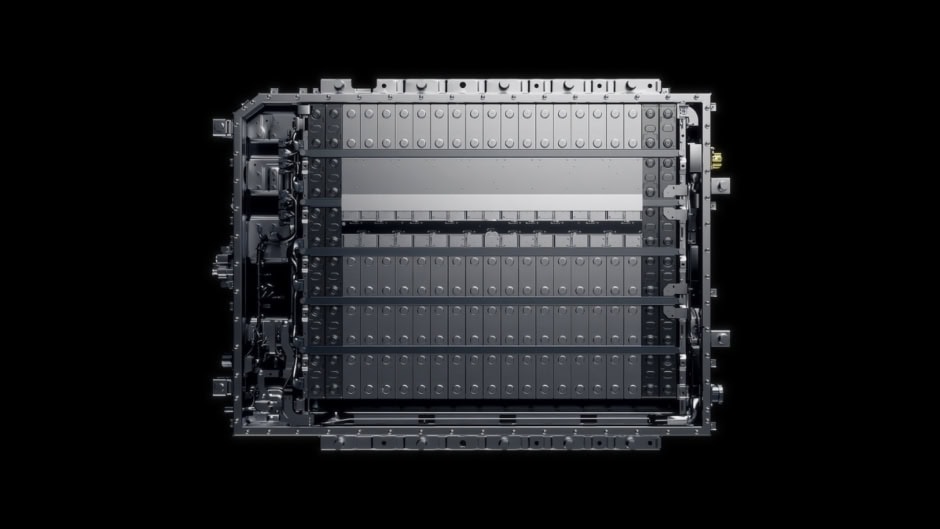
CATL has unveiled a new battery pack architecture called “One Shell, Two Cells” that allows sodium-ion and lithium-ion cells to share the same physical enclosure.
It is a design aimed at accelerating sodium-ion deployment across electric vehicles, battery-swapping networks, and energy storage systems without requiring new infrastructure. The company disclosed the platform at an industrial research event organized by China’s Ministry of Industry and Information Technology News Centre.
CATL is a global leader in zero-carbon new energy technology, committed to providing first-class solutions and services for global new energy applications, building a zero-carbon energy ecosystem with a comprehensive incremental strategy, promoting energy transition and sustainable development.
The design uses a standardized battery enclosure capable of housing either chemistry without changing the pack’s physical dimensions, thermal management system, or vehicle integration. Manufacturers and swapping station operators can switch between lithium-ion and sodium-ion cells depending on regional conditions or supply chain availability, removing the need to redesign entire platforms when adopting sodium technology.
The development targets one of lithium battery technology’s most recognized weaknesses: degraded performance in extreme cold. In regions such as China’s Xinjiang province, where winter temperatures regularly drop below minus 25 degrees Celsius, lithium iron phosphate batteries lose charging speed and usable capacity.
Sodium-ion batteries maintain stronger performance in those conditions, making them a practical alternative for cold-climate deployment. With a shared pack design, the same battery-swapping station infrastructure can support sodium-ion packs in cold northern regions while continuing to run lithium-based cells in warmer areas.
CATL Chief Scientist Wu Kai confirmed that the company has resolved manufacturing bottlenecks affecting sodium-ion production, and said future sodium-ion cells will deliver driving ranges up to 600 kilometers. CATL plans to begin commercial deliveries of its first sodium-ion energy storage systems later in 2026.
Industry participants at the same event reported further progress on durability. CATL and cathode supplier Ronbay Technology both reported reaching a 15,000-cycle benchmark for sodium-ion cells, a level that could support operating lifetimes of up to 20 years in stationary storage applications.
According to China EV DataTracker, CATL installed 88.58 GWh of batteries in Chinese EVs during the first four months of 2026. April installations reached 29.06 GWh, representing a 46.6% market share. Monthly market share remained between 45% and 50% throughout the January-April period