Bitcoin remained below $86,000 on Thursday after giving back gains following the release of lower-than-expected US inflation data. BTC/USD briefly rallied to around $85,600 before reversing, leaving the cryptocurrency trading above $83,000.
The US Personal Consumption Expenditures (PCE) price index rose 3.4% year-on-year in August, below the 3.7% market expectation. Core PCE inflation, which excludes food and energy, increased 3.0% year-on-year.
However, changes to the methodology used to calculate parts of the PCE data complicated the interpretation of the latest inflation reading. Market commentary from The Kobeissi Letter estimated that the methodology changes could lower core PCE inflation by up to 20 basis points. July headline and core PCE figures were also revised downward.
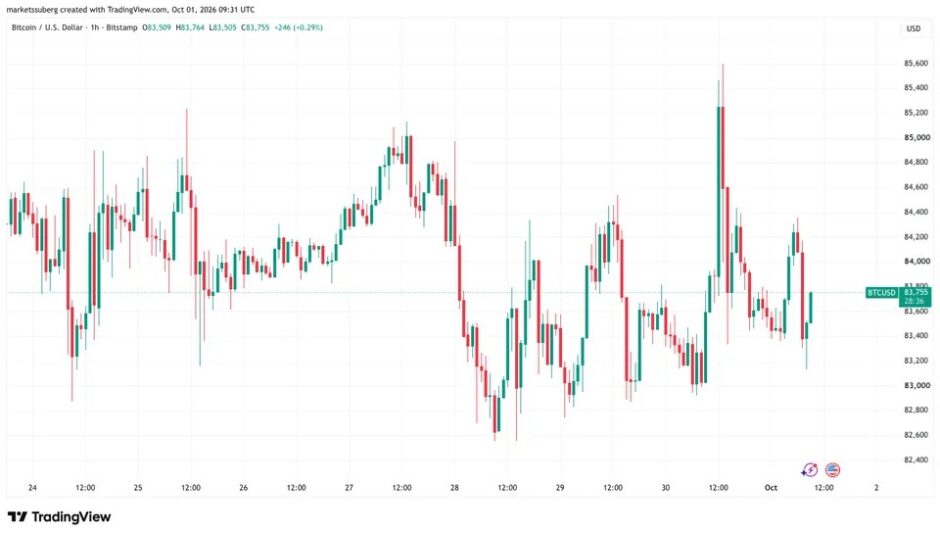
Bitcoin started the fourth quarter near $83,550 after gaining 42.7% during Q3, its strongest third-quarter performance since 2017. Despite the recent rally, BTC has struggled to break through the $85,000–$86,000 area.
Data from Glassnode showed that Bitcoin-denominated futures open interest has fallen almost 20% from its level at the August low, even as Bitcoin’s price has increased 35%. Glassnode said the decline in open interest could make the latest rally less vulnerable to large-scale leverage liquidations.
Market data also showed a significant liquidation cluster near $83,000, close to the $82,500 level that analysts have identified as an important support area. Meanwhile, sell orders around $85,000 and long-term holder holdings between $84,000 and $85,000 could continue to create resistance.
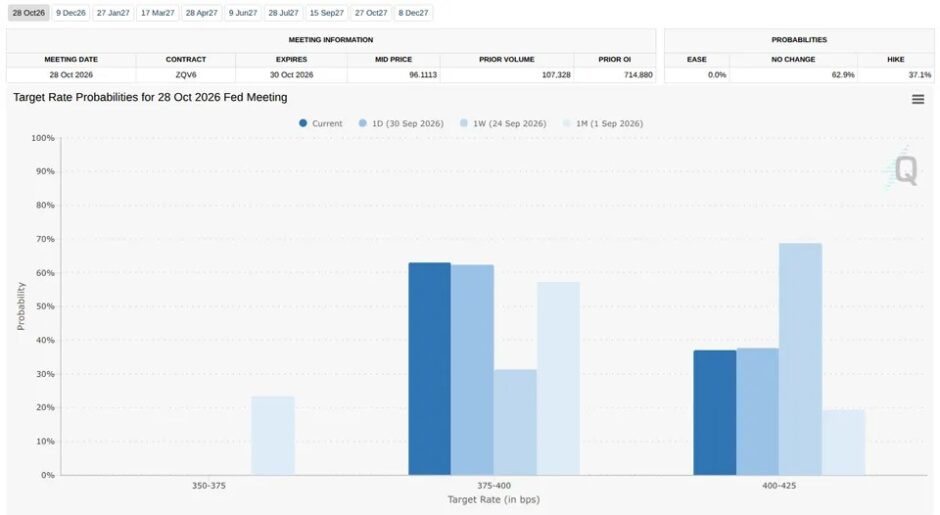
The latest price action leaves Bitcoin rangebound as traders assess the impact of US inflation data and changing expectations for Federal Reserve policy.