Cybersecurity researchers have uncovered a sophisticated new malware framework called BraZetsu.
The Python-based Windows toolkit fuels an underground marketplace that sells access to compromised computers. According to Group-IB, it turns infected systems into valuable commercial assets rather than simply stealing data.
A Different Kind of Threat
Most malware focuses on stealing information directly. However, BraZetsu takes a broader approach. Group-IB analysts described it as a comprehensive master toolkit. It empowers so-called Initial Access Brokers, or IABs. These brokers specialize in breaking into systems, then selling that access to other criminals.
The framework shows notable technical maturity. It uses a modular design and advanced stealth techniques. As a result, some samples remained completely undetected on VirusTotal during analysis. The malware’s name blends “Brazil” with “Zetsu,” a shadowy character from the manga series Naruto.
“Unlike the standard infostealer model, BraZetsu is a comprehensive master toolkit that empowers Initial Access Brokers (IABs) by turning compromised systems into highly valuable commercial assets,” Group-IB malware analysts Julio Guapo Menezes and Miguel Salazar said in a technical report.
The Marketplace Model
BraZetsu forms the backbone of a platform called the Infected Marketplace. There, the threat actor sells access to compromised hosts. Remarkably, criminals can start buying access for an initial deposit of just $5.80. Once purchased, buyers can remotely execute their own malicious payloads on those systems.
This model functions as access-as-a-service. Buyers skip the difficult work of breaking in themselves. Instead, they purchase ready-made entry points into victim networks. Consequently, researchers warn this creates a persistent threat-multiplier effect across the region.
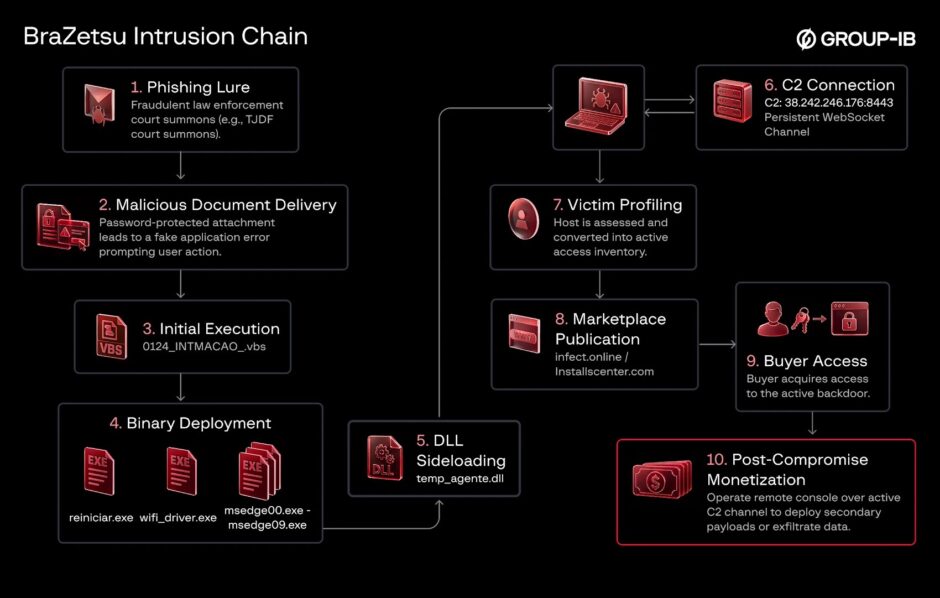
According to the report:
“The framework exhibits high operational maturity, utilizing a modular architecture and stealth techniques that allowed some samples to remain fully undetectable on VirusTotal at the time of analysis.”
AI-Powered Target Selection
Generative AI sits at the heart of the operation. The malware uses AI to triage stolen data automatically. It then prioritizes high-value targets for the brokers. The AI evaluates each machine’s commercial potential through hardware profiling and network mapping. This lets operators automatically categorize and price marketplace access based on victim value.
Financial Fraud Focus
BraZetsu specifically hunts for financial files. It targets documents in Brazil’s CNAB format, used for bank transactions. A related tool then rewrites these files with attacker-controlled banking details and PIX keys. The malware also harvests browser histories from Chrome, Edge, Brave, and Opera.
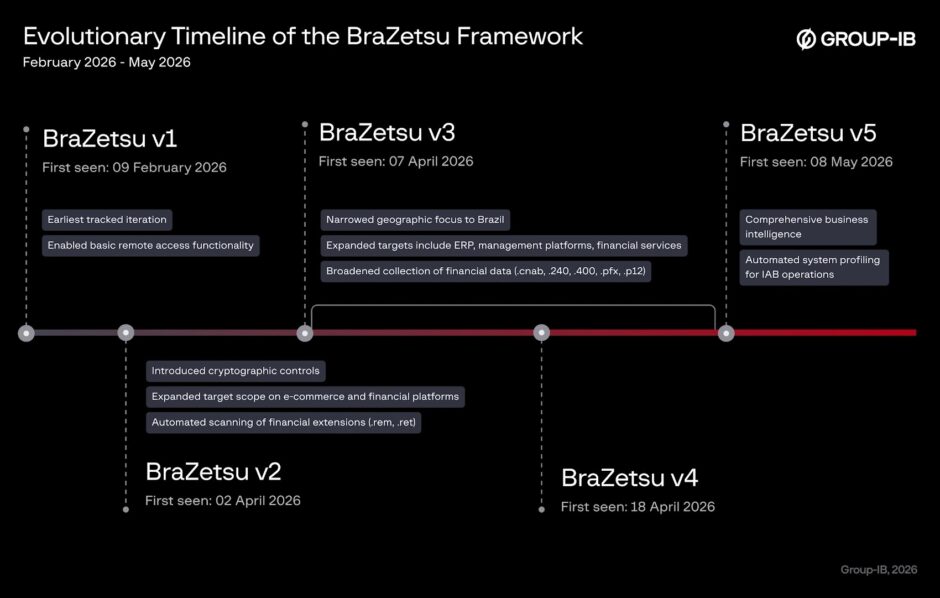
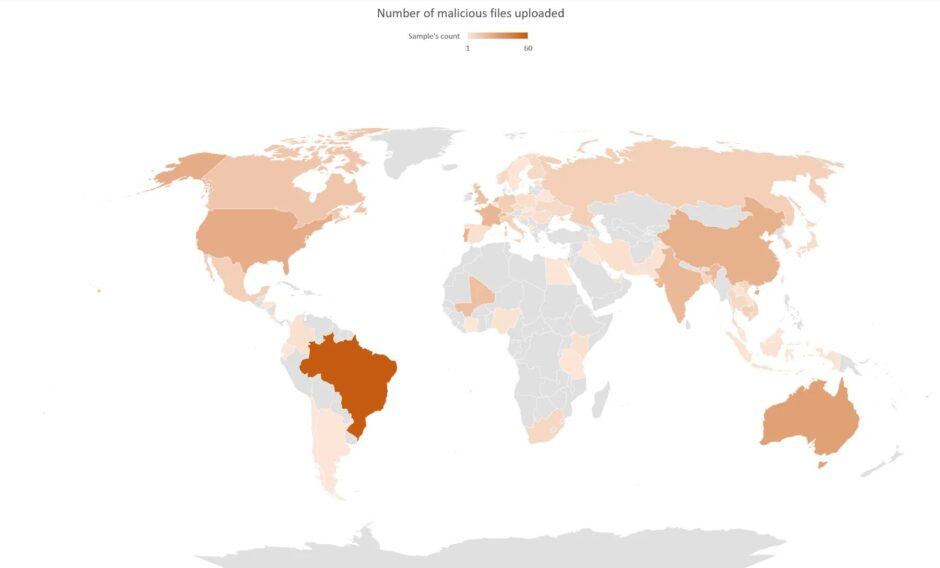
Group-IB found five distinct versions active since February 2026. Recent iterations focus heavily on Brazilian infrastructure. However, the threat actor maintains multi-language capabilities, suggesting plans for broader Latin American expansion ahead.