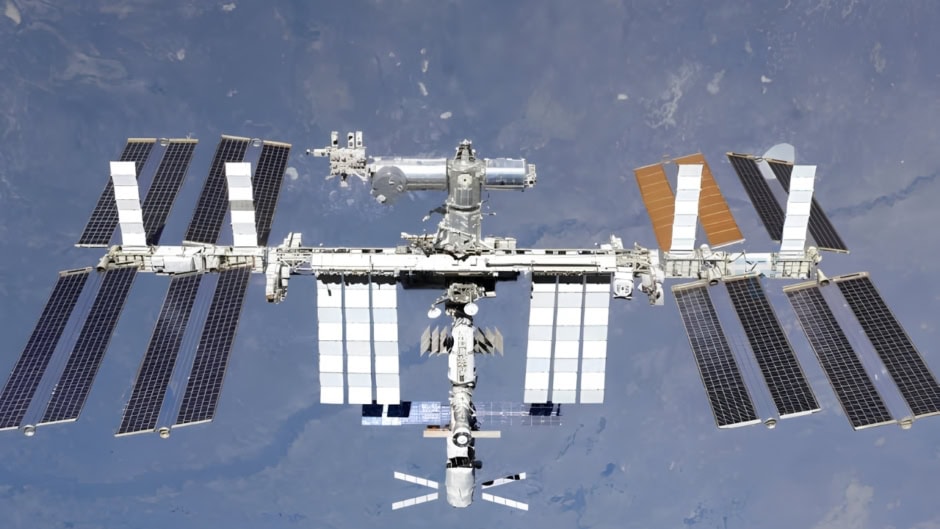
Japan transformed the International Space Station into a live programming arena where students compete using actual robots orbiting 400 kilometers above Earth. Taiwan’s iTron team claimed first place in the sixth Kibo Robot Programming Challenge on February 28, 2026, after their robot completed time-critical missions with superior image recognition accuracy.
Thirteen international teams from Indonesia, Japan, Taiwan, and Thailand competed during the on-orbit final round at JAXA’s Tsukuba Space Center. Unlike simulation competitions, the actual ISS environment introduces real variables. Airflow disturbances, unexpected robot behaviors, and microgravity conditions test programming far more rigorously than classroom coding ever could.
The competition operates three robot platforms. NASA’s Astrobee units are 12.5-inch cube robots launched in 2019. They move using fan-based propulsion and navigate through vision systems. JAXA’s Int-Ball is a 15-centimeter spherical camera drone with distinctive owl-like eyes. Int-Ball2, launched in 2023, increased diameter to 20 centimeters with enhanced video capability.
Student programmers faced realistic mission scenarios. Teams programmed Astrobee and Int-Ball to locate and seal a simulated meteorite breach before pressure loss became critical. The scenario included lighting variations replicating orbital transitions, gravity jitter simulating Space Shuttle docking, and unpredictable air currents distorting robot trajectories.
Teams accessed NASA’s open-source Astrobee repository to study actual space robot architecture. JAXA’s simulation environment allowed developers to debug code before competition day. Yet simulation cannot capture every real-world variable. The time-accuracy tradeoff forces engineers to optimize algorithms without sacrificing reliability, mirroring professional constraints.
The original Kibo-RPC from 2019 through 2020 attracted 313 teams representing 1,168 students from seven nations. The program expanded substantially by 2026. JAXA hosts preliminary rounds where regional teams compete using simulations. Winning teams advance to on-orbit finals where their code executes on active ISS robots. This hybrid format removes geographic barriers for talented teams from under-resourced nations.
Pakistan’s young population, median age 22, represents the demographic space agencies target for recruitment. Young engineers competing in robot programming competitions develop systems-thinking skills that space missions demand. Pakistan possesses strong software capabilities in AI and distributed systems. JAXA’s precedent of opening ISS infrastructure to emerging markets offers Pakistan a pathway to produce world-class space robotics engineers without requiring exclusive institutional access.