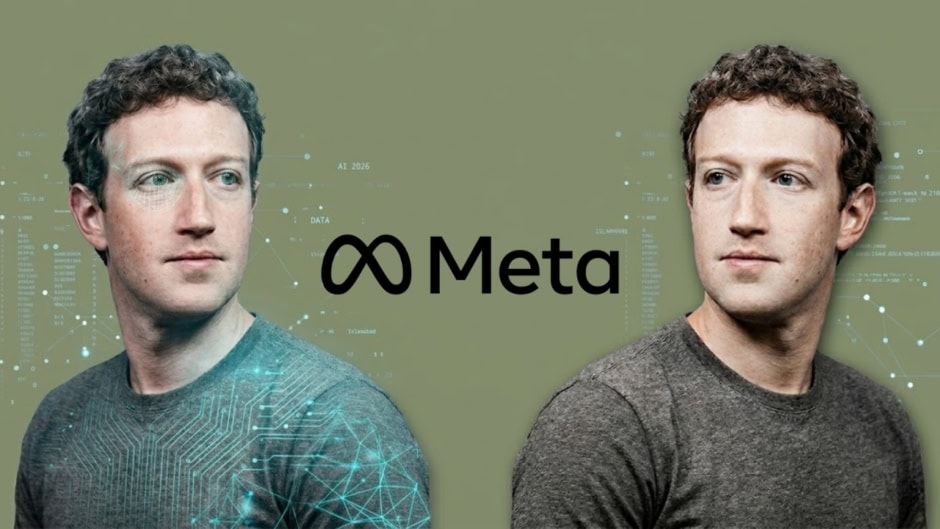
Meta is building an AI version of its CEO to talk to employees on his behalf. The system uses a photorealistic 3D avatar trained on Zuckerberg’s voice, mannerisms, public statements, and recent thinking on company strategy. The goal is to give employees access to leadership-style guidance when the real Zuckerberg is unavailable or simply does not want to engage directly.
As per media reports, Zuckerberg is personally involved in training and testing the AI likeness. He now spends five to ten hours a week coding on Meta’s AI projects and sitting in on technical reviews, a level of hands-on involvement that marks a shift from his earlier management style.
The project sits alongside a separate but related effort from Meta, which recently had to shut down their Metaverse program worth billions. The company is busy developing a distinct “CEO agent” that employees can query to retrieve information and get answers more quickly. The two tools are reportedly independent of each other, though both reflect the same internal push to replace or reduce direct executive interactions with AI systems.
Meta has attempted similar ideas before. In late 2023, the company paid celebrities millions of dollars to license their likenesses for AI chatbots. However, those chatbots made problematic statements on behalf of their real-world counterparts, drawing bad press. Meta shut the project down within a year. The new Zuckerberg clone appears to be a more controlled internal experiment rather than a public-facing product, at least for now.
If the internal test succeeds, Meta plans to offer similar avatar tools to creators and public figures. The idea is that celebrities and influencers could maintain a consistent presence across thousands of simultaneous conversations with fans, using an AI trained on their persona. But the project raises questions that Meta has not publicly addressed.
An AI trained on a CEO’s public statements and strategic preferences may produce confident, on-brand responses while missing the nuance of real-time human judgment.
Meta has not confirmed a public timeline for the tool.