

Picture a software house in Lahore that has spent the last decade building apps and maintaining code for clients in Europe and the Gulf. This year its engineers are working faster than ever because of AI coding assistants. At the same time, some of those clients have started using the same tools and are quietly moving parts of the work back in-house.
That is the uncomfortable situation facing Pakistan’s digital economy or any economy which relies on outsourced IT services. The technology that makes local firms more productive also makes them easier to replace. Most of the systems driving this shift are built, trained, and hosted outside the country.
Pakistan has started to respond with the Digital Nation Pakistan Act 2025 and the National AI Policy. How well these efforts work will depend on whether the country can bring its workforce, education system, digital infrastructure and public institutions up to speed with changes that are already happening.
The Changing Economics of Digital Work
On paper, the sector looks strong. The Pakistan Economic Survey 2025–26 shows ICT export remittances of US$3.38 billion between July 2025 and March 2026. The growth comes from real capabilities in software development, IT-enabled services, and technical talent development.
It would be a mistake to treat that growth as proof that the skills behind it will continue holding the same value. AI is changing what clients are willing to pay for. Routine coding, testing and data processing are becoming less labour-intensive. Designing, integrating, securing and evaluating AI systems is becoming more valuable. For a country whose digital economy still rests largely on exporting technical labour, it matters a great deal as to which side of that line most of its workers are on.
There is still little systematic information on how AI is actually being used in Pakistani workplaces, it is hard to understand where it is raising productivity, where it is replacing tasks, and where imported models are performing poorly in local conditions. A standing AI observatory, run jointly by government, industry bodies such as P@SHA and universities, could publish regular data on shifting roles and skills shortages. Without that evidence, training budgets will mostly be spent on guesswork.
Making Retraining a Permanent National Capability
A handful of new courses will not keep up with this kind of technology that changes every few months. Pakistan needs an ongoing partnership between employers, educators and policymakers, with practical ways to update curricula as the work itself changes.
This cannot be left mainly to universities. The Asian Development Bank’s 2025 diagnostic report found that only 13 per cent of Pakistan’s eligible 18 – 25-year-olds are enrolled in tertiary education. Most young people can only be reached through vocational institutes, workplace learning, and community programs. DigiSkills and the National Vocational and Technical Training Commission offer useful starting points, but they will only matter if the training tracks actual job demand and if the qualifications are the ones employers can trust.
Above all, the effort needs to last. Retraining a workforce takes years. Programs whose funding and priorities change with every budget or government rarely get the chance to mature. Multi-year funding commitments that are protected from short-term cuts would show that Pakistan is treating this as a long-term task rather than a temporary initiative.
The Capacity to Build and Govern AI Locally
Using overseas AI services lets Pakistan access powerful models without having to build them from scratch. That is a genuine advantage. But complete dependence on these models however, means paying in foreign currency even for routine applications, and leaves Pakistani institutions exposed to pricing and access decisions made elsewhere.
The risks are highest in public services. AI used in healthcare, education and government administration will handle sensitive data about Pakistani citizens. The institutions that hold that data need both the technical means and the legal authority to control how it is stored, processed, and accessed.
That requires shared computing facilities accessible to universities, public agencies and small developers, alongside secure local hosting and access to models that can be adapted for Urdu, regional languages and local conditions. None of this is feasible without reliable electricity and affordable connectivity. The World Bank’s 2025 Pakistan Development Update already flags expensive fixed broadband and uneven access as obstacles to the country’s digital economy.
Computing power alone, however, cannot produce systems that understand Pakistan’s circumstances. Digitising fragmented records in agriculture, health, education and public administration is painstaking institutional work. Data needs consistent standards, responsible stewardship and clear permissions for access. Models built using incomplete or unrepresentative information may be technically sophisticated yet unreliable in the circumstances where they are needed.
Safeguards must come with it. Connecting more public records raises the cost of weak cybersecurity. Citizens affected by AI-supported decisions need transparency, human oversight, and a practical way to challenge outcomes. Locally hosted technology without these protections will not deliver much public value.
Pakistan does not have to build everything itself. It does have to decide and figure out the requirement it has, where international partnership makes sense, and how to keep the expertise needed to make those judgements over time.
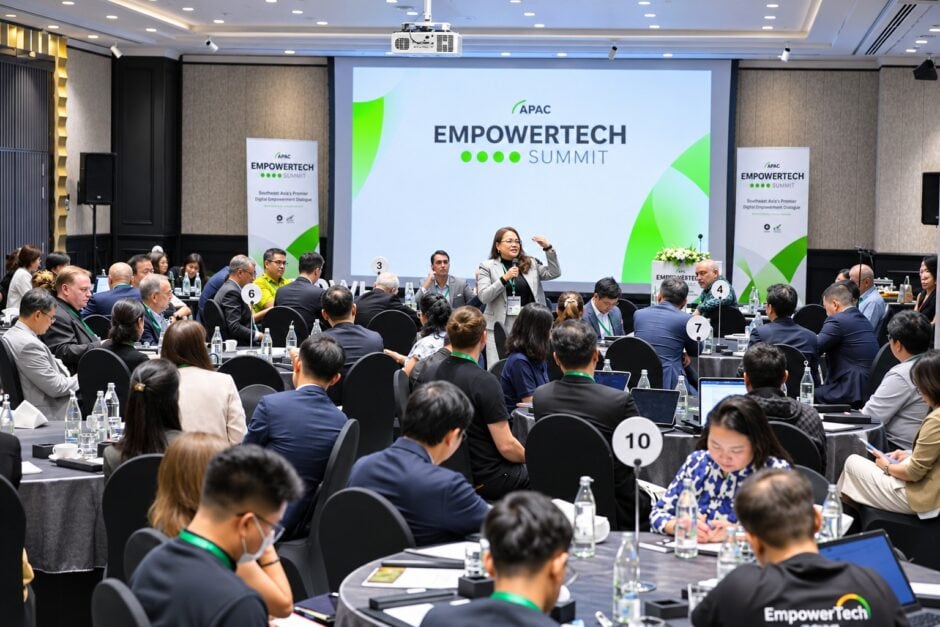
As policymakers and technology leaders meet at EmpowerTech Islamabad on 25 November, that is the discussion they should be having. AI is already reshaping Pakistan’s digital economy. The open question is whether Pakistan will shape that change or simply live with the version of it that arrives from elsewhere.