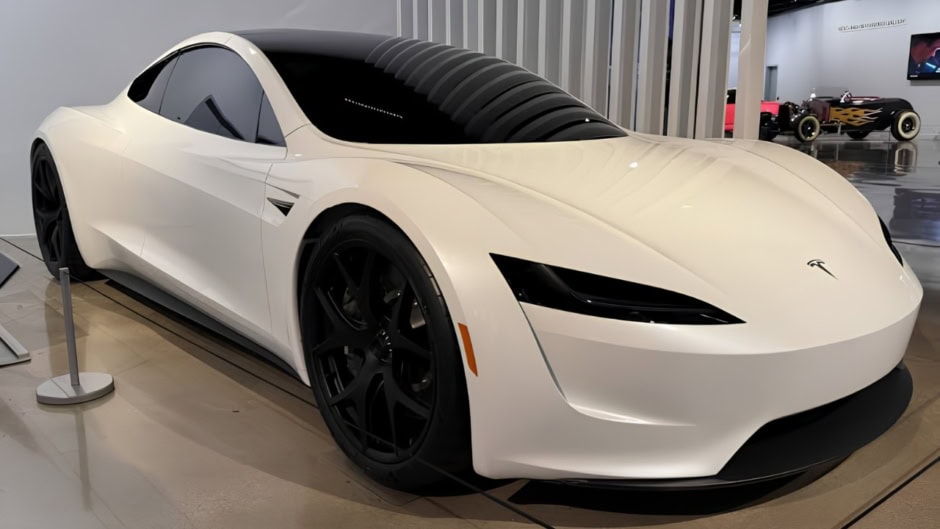
After a decade of delays, it is finally happening. Tesla will unveil its highly anticipated next-generation carbon-fiber Roadster on October 1. The electric vehicle (EV) maker confirmed the news through a post on X this Saturday. The post featured a graphic displaying a “10.01” date alongside the phrase “Go for launch”. Shortly after, CEO Elon Musk confirmed the event. He reshared the post by stating, “New Tesla Roadster Unveil 10.01”.
New Tesla Roadster Unveil 10.01 https://t.co/9J3YPT25fm
— Elon Musk (@elonmusk) September 13, 2026
A Complete Redesign with SpaceX Tech
The vehicle looks completely different now. Tesla abandoned the original 2017 design, which relied on Model S Plaid components. Instead, the company transformed the sports car into a fully redesigned, carbon-fiber hypercar.
Furthermore, the October event might feature a limited-edition model equipped with optional cold-gas thrusters. Tesla developed these thrusters alongside SpaceX. Musk claims this technology will actually allow the vehicle to “fly in some way.” Meanwhile, recent reports indicate the demonstration will take place at the SpaceX test facility in McGregor, Texas.
Nearly a Decade of Delays for the Tesla Carbon-Fiber Roadster
The journey to this launch has been incredibly long. Tesla initially introduced the second-generation sports car back in November 2017. At that time, the company promised deliveries by 2020. However, the program faced repeated delays over the years.
These setbacks even sparked a public dispute last year between Musk and OpenAI CEO Sam Altman. Altman complained about waiting 7.5 years after paying a $50,000 reservation fee. In response, Musk insisted that Tesla had already refunded Altman.
Even with the upcoming October 1 reveal, buyers must wait longer. Musk previously admitted that actual production will not begin for another 12 to 18 months following the event.
This Roadster announcement follows another major move for the automaker. Just last week, Tesla began offering rides in its new Cybercab in limited areas of Austin, Texas. This futuristic two-seater completely lacks a steering wheel and pedals. Ultimately, Musk views the Cybercab as a central piece of his plan to turn Tesla into a dominant force in the driverless vehicle market.