Former Pakistan President Arif Alvi developed a self-hosted artificial intelligence archive from scratch during his time in exile. He taught himself Python programming and compiling the system without external technical assistance or budget according to revelations shared by his son Awab Alvi on social media platform X on April 29, 2026.
The custom-built archive indexes and analyzes content spanning Alvi’s life, political career and presidency using artificial intelligence tools, representing what technology observers describe as a significant technical achievement for a former head of state working independently.
Awab Alvi, a dentist who regularly works with AI applications in his medical practice and side projects, expressed surprise at his father’s technical capabilities in the social media post:
“I’ve spent years thinking I was the tech expert in the family — I was wrong,” the younger Alvi wrote, describing himself as “genuinely floored” by the accomplishment.
The archive is, no doubt, a departure from typical political documentation approaches by employing custom code tailored specifically to Alvi’s analytical requirements rather than relying on off-the-shelf content management solutions.
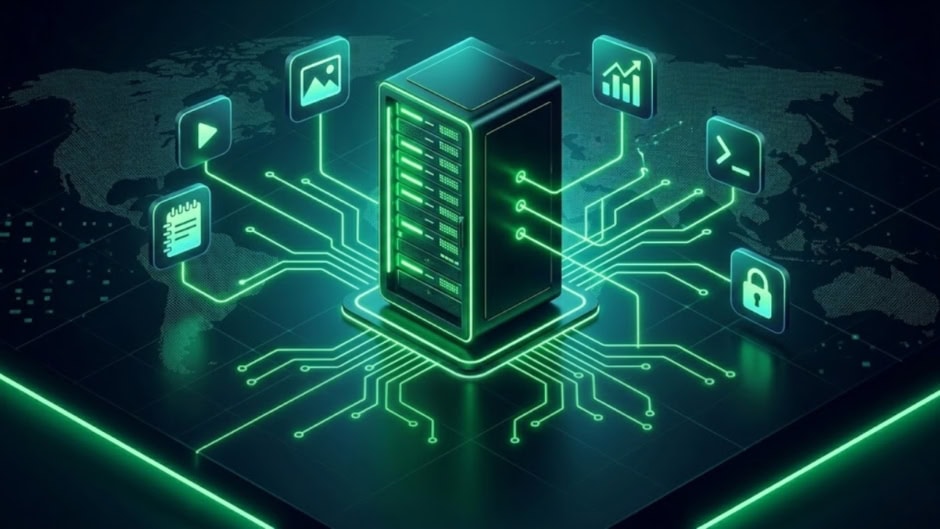
The self-hosted architecture means the former president maintains complete control over the data infrastructure without dependence on third-party cloud services, while the self-compiled nature indicates Alvi built the AI components from source code rather than using pre-packaged software distributions.
Awab Alvi positioned his father’s project as a potential blueprint for Pakistan’s developer community to leverage artificial intelligence tools for making sense of complex information sets.
“This is more than an archive; it’s a blueprint for how our local dev community should move forward to use AI tools to make sense of complexity,” Awab wrote, adding that he is attempting to convince his father to publicly share the complete technical architecture.
Arif Alvi’s interest in artificial intelligence is well-documented from his presidency. In 2018, shortly after assuming office as Pakistan’s 13th president, Alvi launched the Presidential Initiative for Artificial Intelligence and Computing, a mass education program targeting 100,000 students in its first year offering specialized training in artificial intelligence, blockchain, cloud computing and Internet of Things technologies.
Wikipedia notes that Alvi is an avid reader with interests including quantum physics, the fourth industrial revolution, artificial intelligence, blockchain and cloud computing. Python’s popularity as a programming language for data science and machine learning applications makes it a logical choice for building AI-powered archival systems.
The timing of the project’s development coincides with Alvi’s reported exile status following the conclusion of his presidential term in March 2024, though specific details about his current location and circumstances remain undisclosed.
News like this is also coming from other corners of the globe. Singapore’s Foreign Minister recently published the architecture for his “second brain for a diplomat,” which includes architecture diagrams, design rationale, and the related works; a complete developer-style writeup of his own system. It runs on a Raspberry Pi. It connects to his WhatsApp and Gmail, transcribes voice notes locally, ingests speeches and articles, and builds up a knowledge graph over time.