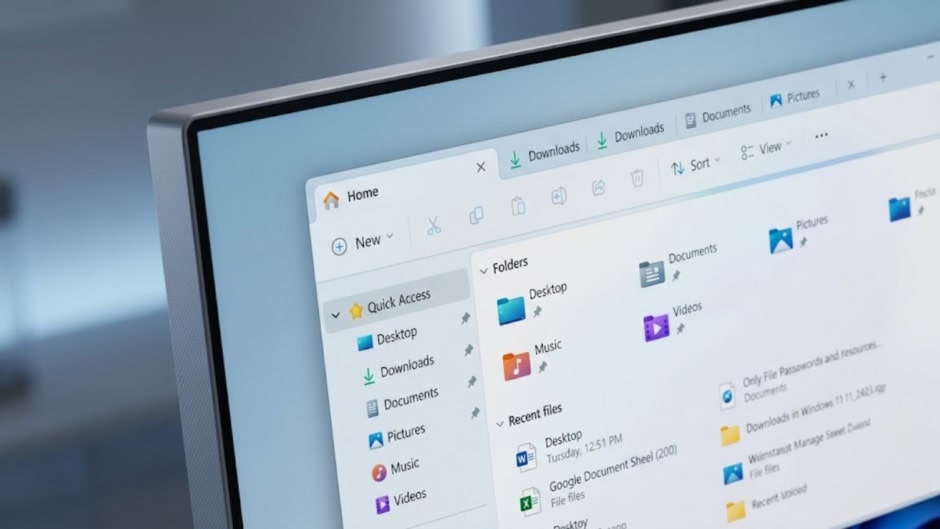
Microsoft announced WinUI 3 framework performance overhaul May 2026 cutting File Explorer launch time 25% with 41% fewer memory allocations and 45% fewer function calls addressing years-long sluggishness complaints from Windows 11 users worldwide before version 26H2 release.
The tech giant published benchmark data showing double-digit speed improvements through ahead-of-time compilation, memory trimming, and streamlined rendering pipeline. File Explorer and Notepad served as benchmark applications with internal tests revealing cold-start times dropping 40-55% according to Microsoft telemetry. Meanwhile, the optimizations will arrive with Windows 11 version 26H2 later this year.
Software engineer Beth Pan stated Microsoft wants to make WinUI 3 the best native UI platform for Windows experiences. The company acknowledged original WinUI 3 XAML renderer carried forward architectural decisions from Universal Windows Platform that introduced latency and CPU overhead. Consequently, UI elements defined in XAML markup were first converted to intermediate visual trees then rendered through Desktop Window Manager.
The Windows App SDK now includes first-class ahead-of-time support for WinUI 3 projects compiling entire applications to machine code before deployment. The XAML compiler analyzes visual tree at build time identifying unused styles, templates, and resources that can be stripped away. Furthermore, Microsoft plans to publish continuous performance dashboard allowing external developers to compare apps against baseline.
Insider builds already contain optimized File Explorer and Notepad with other inbox apps like Photos and Paint following suit. The broader developer community will access updated tooling via new Windows App SDK release currently in preview. End users will start feeling benefits with upcoming Windows 11 version 26H2 update expected late 2026 as Microsoft continues eliminating web app bloat.