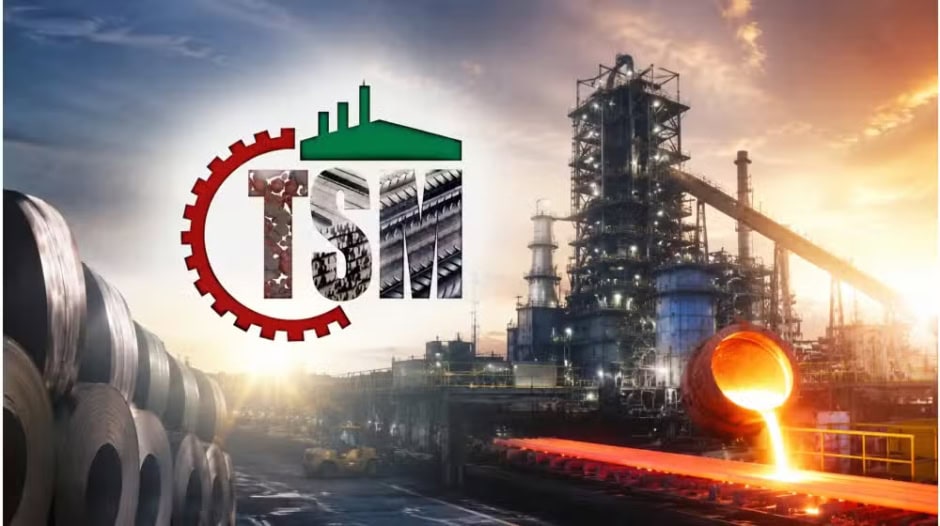
The government has taken a major step toward reviving the long-stalled Tuwairqi Steel Mills project after the Economic Coordination Committee (ECC) granted in-principle approval for the supply of natural gas to the Saudi-backed steel complex.
The decision comes after nearly two decades of inactivity on the project, which was originally launched during the tenure of former president Pervez Musharraf but remained incomplete due to unresolved issues over concessional gas pricing and supply arrangements.
Under the latest approval, the ECC has allowed the provision of 40 to 45 million cubic feet per day (mmcfd) of natural gas, a key requirement for steel production. However, officials clarified that gas supply will remain subject to availability and national economic priorities, and the government will not guarantee uninterrupted supply.
The revival effort is being driven with support from the Special Investment Facilitation Council (SIFC), which has pushed for restarting the long-delayed industrial project and improving investment confidence in the steel sector.
Officials said all future large industrial gas requests exceeding 10 mmcfd will now require ECC approval. The Petroleum Division has also been directed to review the Natural Gas Allocation and Management Policy introduced in 2005.
The SIFC has recommended allocating up to 50 mmcfd of gas for the project and proposed a dedicated tariff category for large industrial consumers. Earlier proposals suggested supply at around Rs. 1,900 per MMBTU, but disagreements among key ministries delayed approval.
According to Sui Southern Gas Company (SSGC), the project had previously been offered gas supply but the arrangement was not finalized. The SIFC has now instructed SSGC to issue a 10-year gas supply commitment with an option for extension.
The Tuwairqi Steel Mills project, backed by Saudi Arabia’s Al Tuwairqi Holding and later joined by South Korea’s POSCO, was initially designed as one of Pakistan’s largest private sector industrial investments, with planned production capacity of 1.28 million tonnes of Direct Reduced Iron annually at Port Qasim.