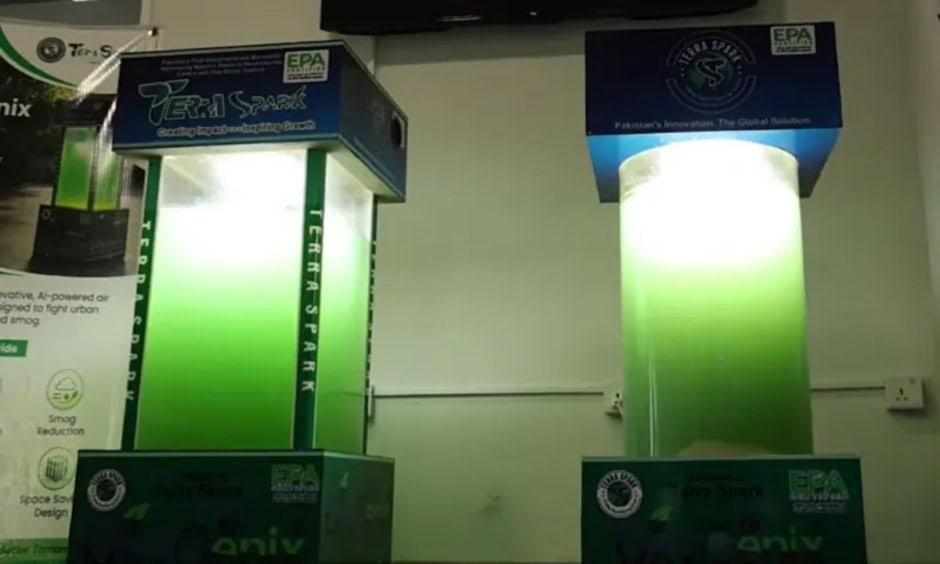
The Punjab government has announced plans to expand its Liquid Tree project, using microalgae-based biotechnology to reduce carbon dioxide and combat smog in urban areas.
The Punjab Environmental Protection Agency runs the initiative, which uses microalgae to absorb CO2 and improve urban air quality where traditional tree plantations cannot be established.
Pakistan’s first EPA-certified liquid tree, currently located in Faisalabad, will be relocated to Lahore as part of the project’s initial expansion phase.
Chief Minister Maryam Nawaz stated that more than 100 types of microalgae have been collected from across Pakistan, spanning regions from Karachi to Khyber for the project.
In the first phase, liquid trees will be installed in major shopping malls, as well as indoor and outdoor public spaces, to help reduce urban air pollution.
CM Maryam described the initiative as a scientific and effective solution to combat rising carbon dioxide levels and smog affecting densely populated urban centres across the province.
She said artificial tree installations in commercial and public spaces would contribute directly to cleaner air and represent a significant step towards broader environmental improvement in Punjab.
The EPA earlier this week demolished 36 fat-melting units across the province, sealed 6 others, and registered legal cases against owners for conducting environmentally hazardous operations.
In April, the EPA accelerated efforts to establish plastic-free zones in major city markets, announcing a complete ban on plastic bags below 75 microns thickness.
The agency has also introduced a regulatory framework mandating green buffer zones around industrial areas, compulsory plantation drives, and strict controls on tree cutting to reduce pollution.