When Meta Head Tom Alison announced Facebook’s full-screen video test on July 24, he was deliberately vague.
“People are showing us they want more immersive, visual, video-forward experiences, and video is where conversations are happening, communities are forming, and even commerce is starting to take place.”
Since then, Meta still hasn’t disclosed which nations made the cut. Which begs the question, what are the countries where “video is conversation,” and is Pakistan one of them.
Pakistan, home to nearly 80 million TikTok users and 51 million monthly Facebook users, sits in an uncomfortable middle ground. The data suggests Pakistan absolutely qualifies, yet we see a missing link. TikTok has 79.9 million users aged 18 and above in Pakistan, making it arguably the nation’s largest social platform by recent metrics. Facebook maintains a 63.2% daily engagement rate among its 51 million-plus users, trailing only YouTube at 63.5%. This positioning mirrors Indonesia, Brazil, and India, where Meta previously tested identical video-first features.
The confusion deepens when examining Meta’s test pattern for similar features in the past. Instagram tested a Reels-first interface in India in 2025, converting the app to open directly into algorithmic video. India and Pakistan share comparable internet penetration rates, similar age demographics skewed young, and nearly identical TikTok dominance. If Instagram tested Reels-first in India, why wouldn’t Facebook test video-first in Pakistan or announce it clearly?
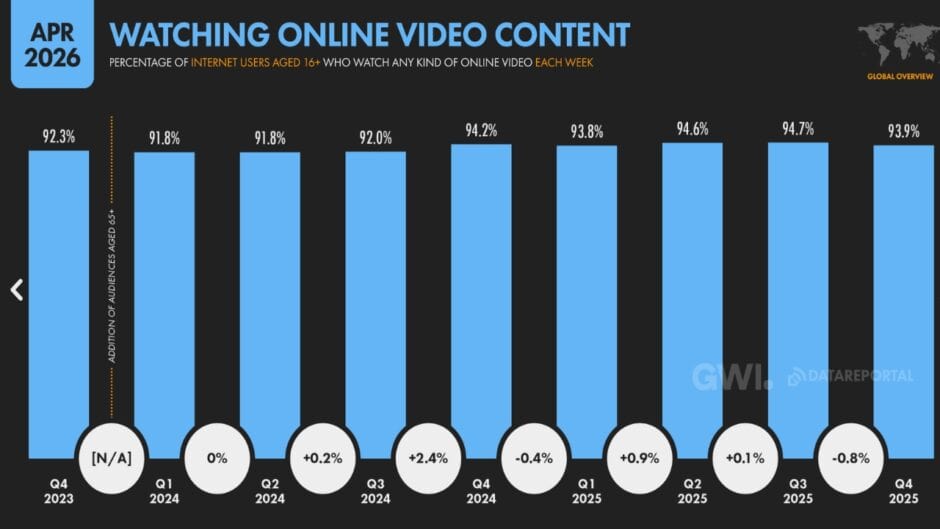
Here is what TechJuice found in their own pattern-recognition research. Meta likely prioritizes countries where Facebook engagement has already shifted dramatically toward video. 15% of Facebook feed content is now recommended by AI, heavily leaning toward video, and Facebook is surfacing over 25% more Reels than the prior quarter. This means all the metrics show Pakistan is clearly in the video-consuming category, yet we do not see many tech companies prioritizing Pakistan as testing grounds.
To that end, there is strong indication that Meta may also be optimizing for geopolitical stability and regulatory predictability. Pakistan’s telecommunications authority has banned TikTok multiple times since 2019, creating regulatory unpredictability. Meta might avoid test markets where government intervention could disrupt data collection or force sudden rollbacks.
Meta’s data scientists understand velocity. Testing in a high-volume market like India or Brazil provides Meta with rapid, statistically significant feedback on user behavior within days or weeks, whereas a smaller market like Pakistan takes much longer to generate equivalent data volume. If the algorithm changes break a specific demographic segment or cause unintended engagement loops, India’s massive user base surfaces the problem within 72 hours, whereas, Pakistan’s smaller base might take weeks to generate the same statistical confidence.
Meta announced US rollout for 2027, suggesting international testing compresses into Q4 2026 and early 2027. If Pakistan is selected for testing in the future, users could see the change within four months. If not, Pakistan might face a longer wait until Meta expands beyond initial test countries in 2027.
Pakistan has emerging tech talent, particularly in Lahore and Karachi. But the concentration is far thinner than Bangalore’s density. Meta would need to import talent, establish physical presence, and build local infrastructure before running an equivalent test. The operational overhead compounds the data efficiency problem.
Until then, Pakistani tech enthusiasts will have to take a back-seat and enjoy the features as they roll out in “video-heavy” regions.